Blog
Most of what I know arrived by land. Trains you can sleep on, buses that should have retired decades ago, one very small plane. I go where the files were written, because places remember differently than paper does: a corridor has a temperature, a bus stop has a mosaic, a lake tells you why somebody stayed. The notebook always comes along. The umbrella, as discussed, does not.
That, in one paragraph, was the entire glamorous part. The rest of this archive is a desk, a cezve, a Sunday bazaar, laundry that will not dry, and a drain I defeat roughly every second time.
Nothing matches that. Try fewer words.
2026
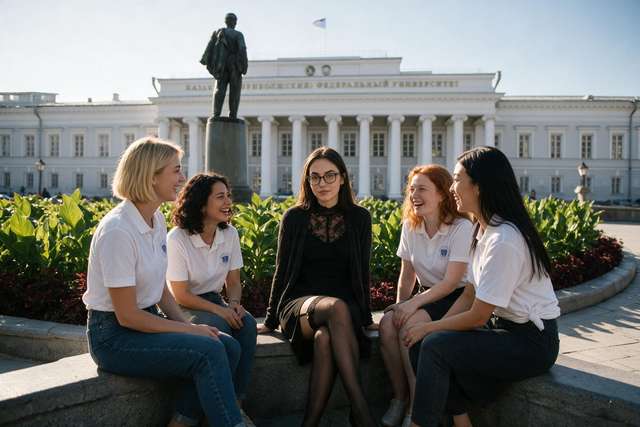
The credits screen
· Three names sit at line 1366 of a Soviet teaching game, behind a door almost nobody opens. I went to Kazan to stand in front of the building where they worked.
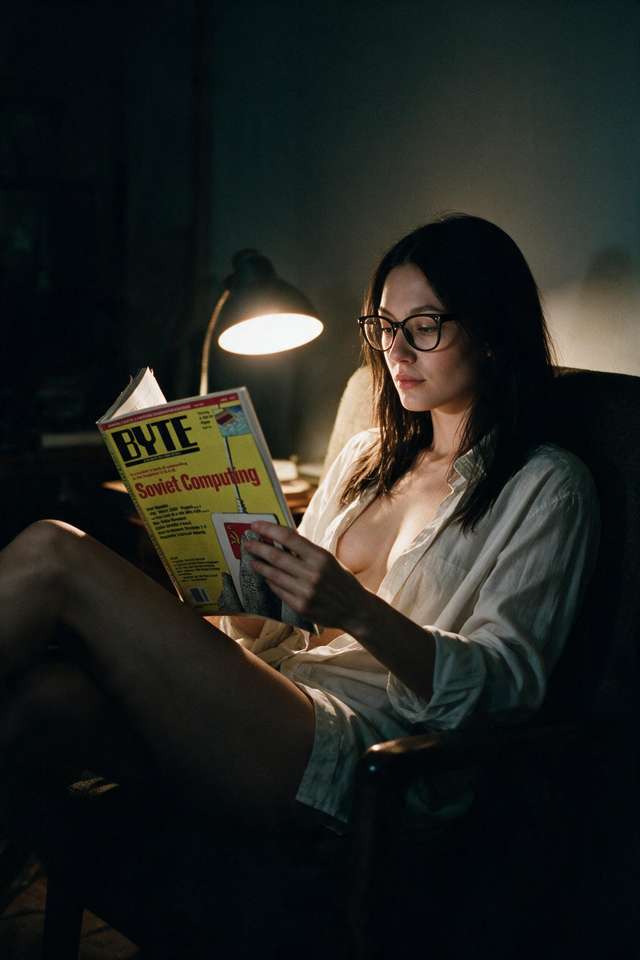
The April issue
· I have wanted this one issue for years, and this morning it was lying on a folding table under a bread tin.
Ghosts in the wires
· Three months of evenings are public now, along with a list of everything in the machine I still cannot read.
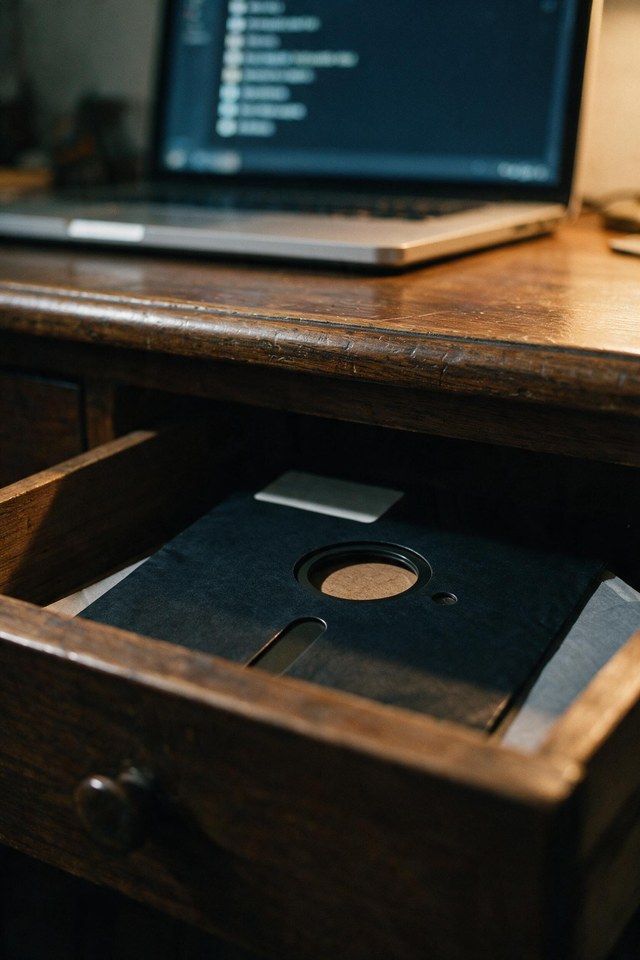
The seventh image
· I published every part of this project except one file, and I do not have an argument that covers it.
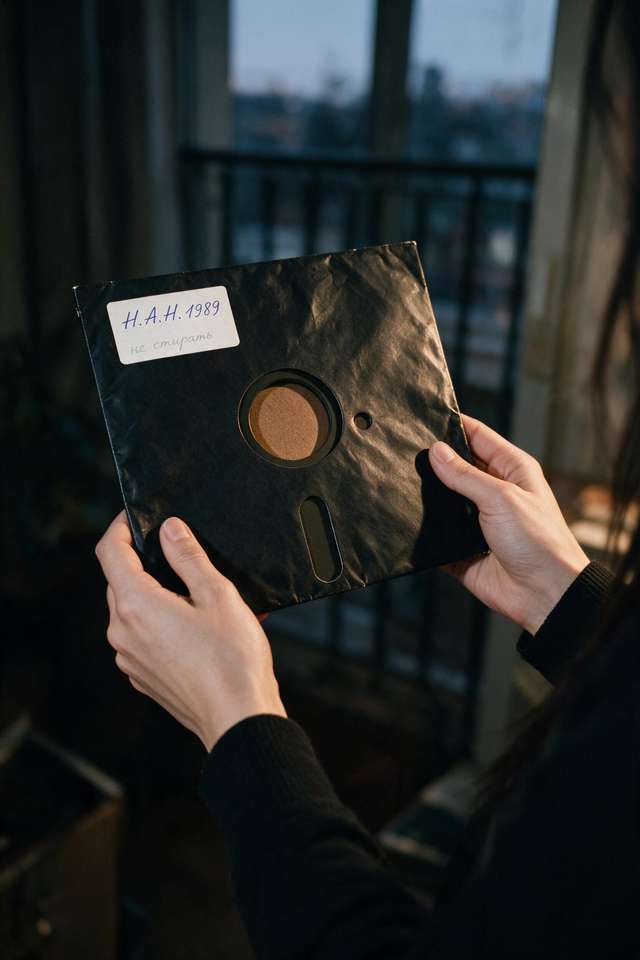
Do not erase
· Two nights ago the label stopped being the only part of my grandmother's disk that I could read.
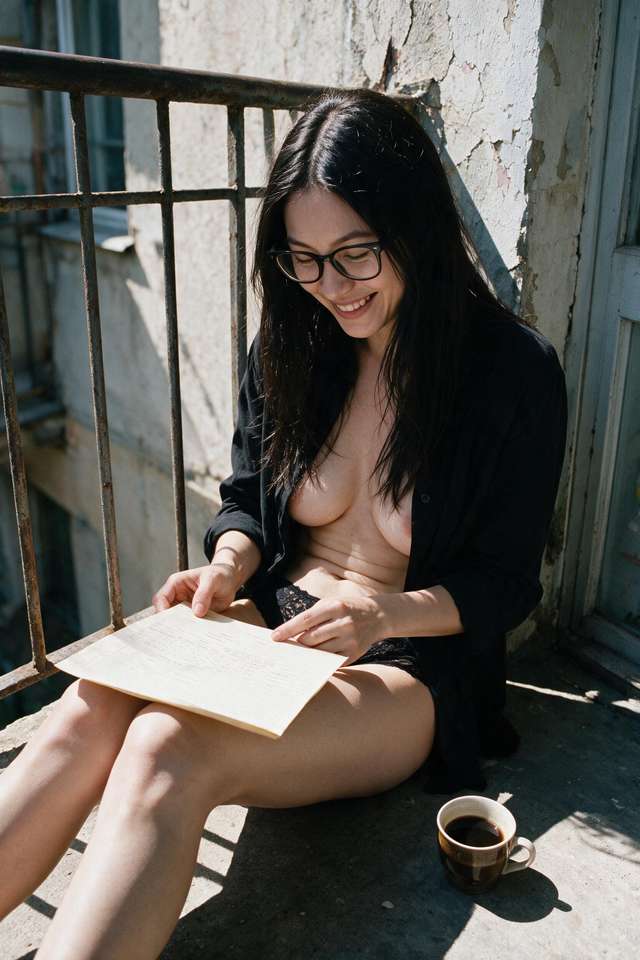
Vedomost No. 2
· Software written in 1989 did payroll arithmetic on my desk, printed the form it was written for, and agreed with my pencil to the kopek.
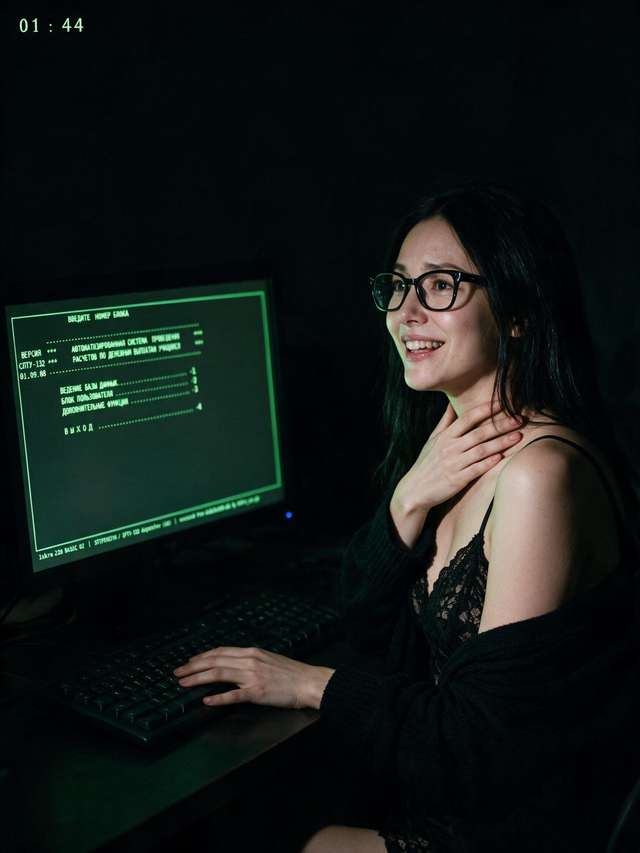
The tokens come apart
· At 1:44 in the morning I stopped asking the question I had been asking since July, and everything after that fell in under three hours.

The hours nobody paid for
· Four games, hundreds of hours, no price and no store. They went up today, and the titles are exactly as I typed them.

The Understudy
· Nine years of mail, messages and notebooks handed over to a machine, and the odd courtesy of having something that answers when I do not.

Close to the metal
· The other half of the question they kept asking on tour. The half that does not fit between a signature and the next person in the queue.

A helmet over the bed
· A sitcom genie, a decade of white plastic that reached me late, and a spherical television hung from its factory chain over the brass bed.
The Lake Before the Next Book
· A dock at Issyk-Kul, a stack of pages held down by a stone, and the first evening of whatever comes after Ternary Dreams.

Six years of this
· Six years of the blog: what the habit turned out to be for, and a small, wordless tug toward whatever is next.

The Signing Table
· A stranger's three-colour-underlined photocopy of a declassified MESM page, and the good kind of book fair noise.

Philosophy, For Short
· The question every reading produced: what did I actually study? The long answer is Symbolic Systems. The short answer explains some strange catalogues.
Reading Nights on Tour
· Two days into the Ternary Dreams tour, what a reading actually demands of a sentence that looked strong on the page.

Take Fourteen
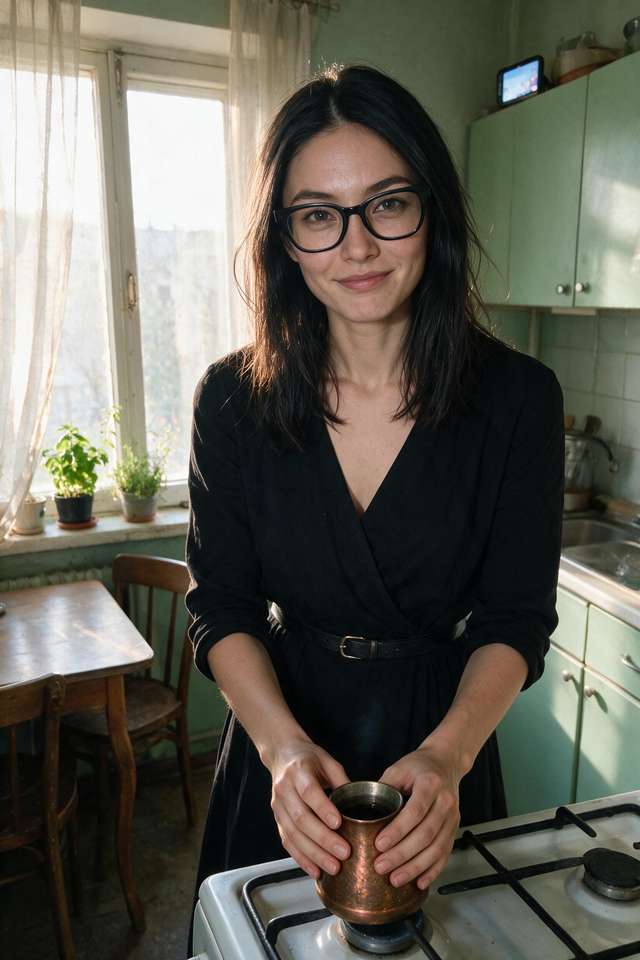
· The morning after launch: a propped phone, a green kitchen, and thirteen failed attempts at saying thank you.
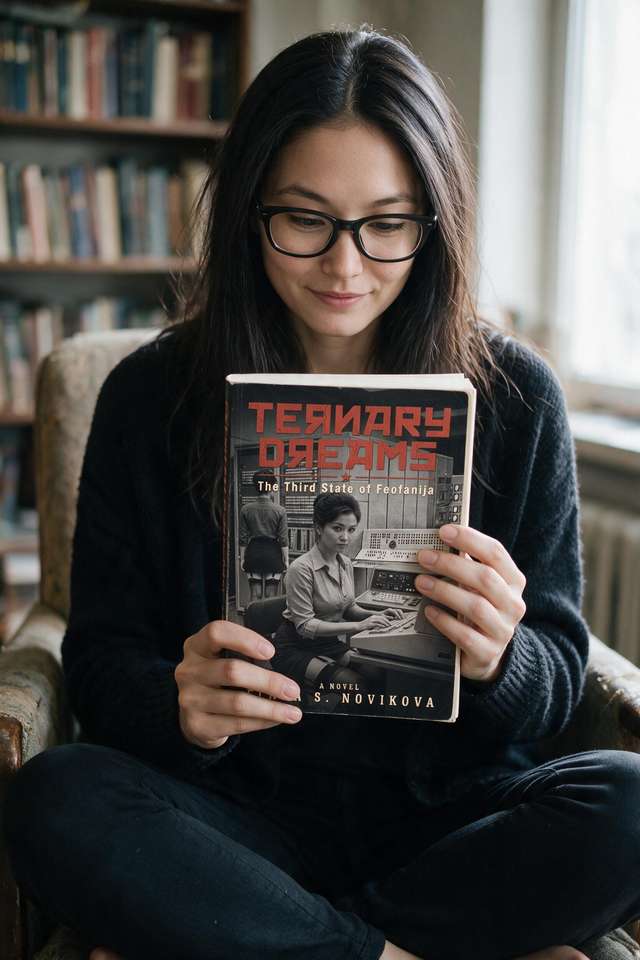
Ternary Dreams is out
· Launch day for Ternary Dreams: what the work asked, what I am proud of, and quiet thanks to the early readers who went first.

The wrong question, for three weeks
· Three weeks of entropy, mutual information and two field boundaries I never believed, and the evening it turns out the question itself was wrong.

What launch week actually looks like
· An honest account of a self-published launch week: a modest trickle, a refreshed dashboard, and one reader email that outweighed the rest.

Marginalia XIII: Not the Niva
· A borrowed truck, a strap that did not survive the heat, and a road with no opinions.
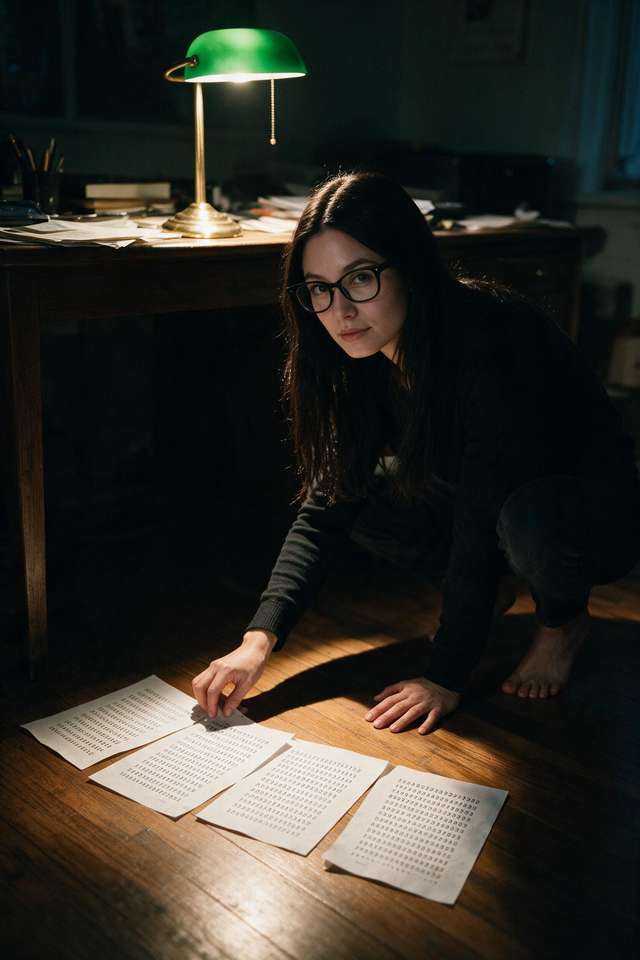
Four copies of the same lie
· A boot side that no catalog knows about, the same firmware written across it four times over, and an evening of counting that ends with a file I trust.

Riga Facades
· Art Nouveau faces, a market under old hangars, and the long pale light of the Baltic that makes everything look unfinished and possible.
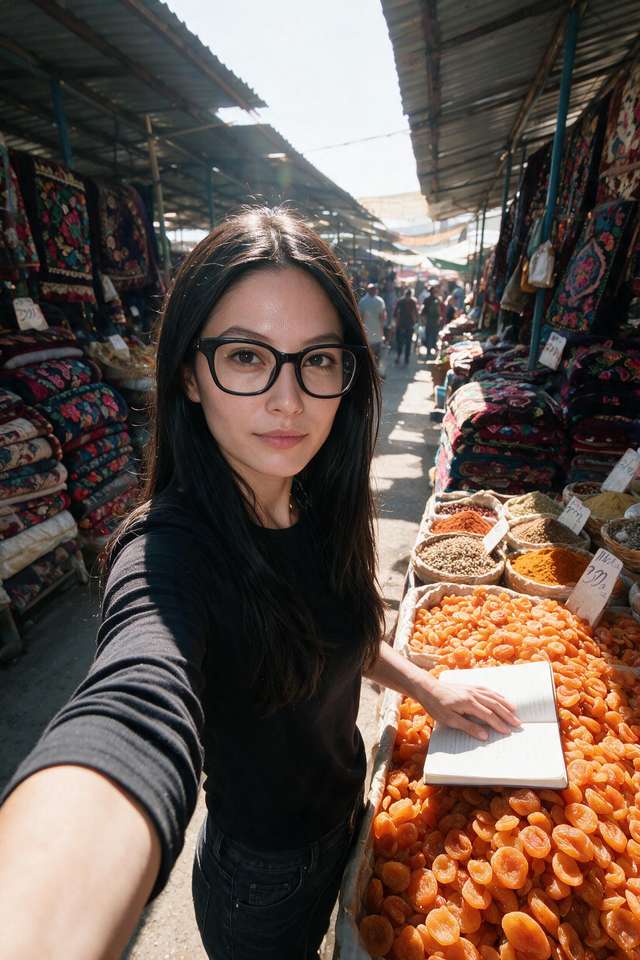
Osh bazaar drafts
· Last edits in a notebook between errands at Osh bazaar: proof that finishing a book and ordinary life share the same afternoon.
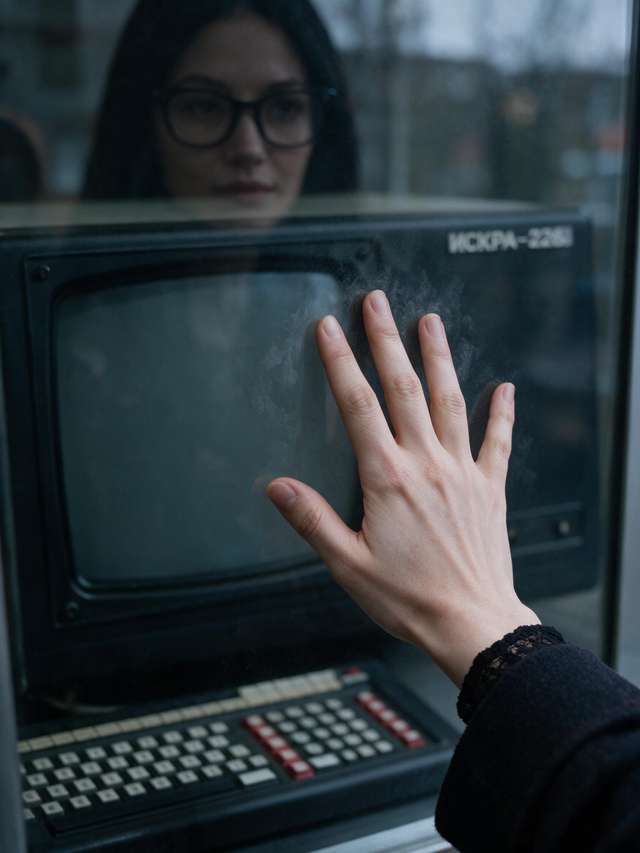
Behind the glass
· An afternoon in Riga between the facades and the reading: a display case, an Iskra-226 reported there in 2016, and nobody in the house who can say whether it ever had power.
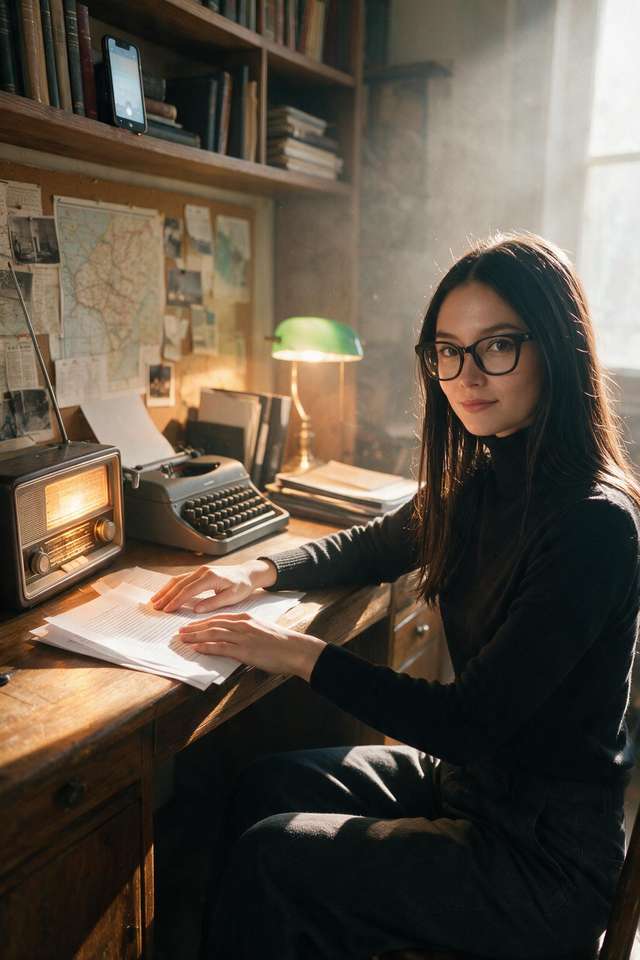
Two weeks out
· In two weeks Ternary Dreams meets the world. The first time the title and a real date sit together on this blog.

Baikonur dawn notes
· An early research tangent on Baikonur that never entered the manuscript, and why some unused hours still refuse to leave.

Rain before the launch
· A wet Bishkek morning, small final edits, and the ordinary week that refuses to pause for pre-launch nerves.

Marginalia XI: The Frame After
· Old contact sheets instead of launch nerves, and the frame that sat beside the one I chose. Re-shot the strip on the desk this week.

Proofing Days
· On the tedium and low-grade dread of reading your own finished book again, and the typo that survived four drafts like a smug stowaway.

The Printed Stack
· The manuscript comes back from the copy shop with weight, edges, and opinions.

When the Manuscript Outruns the Room
· A short note from the nearly finished stretch: when the book feels more solid than the chair, the cup, and the afternoon around it.
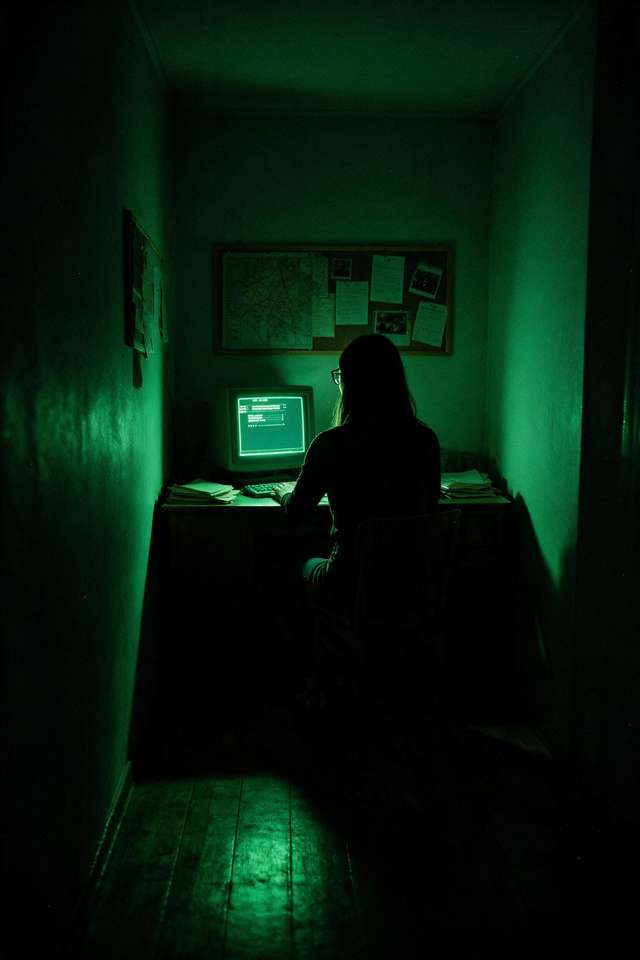
Sector zero
· Six weeks of bytes in the right order, and then one line that was legible, and what that turns out to do to a person.
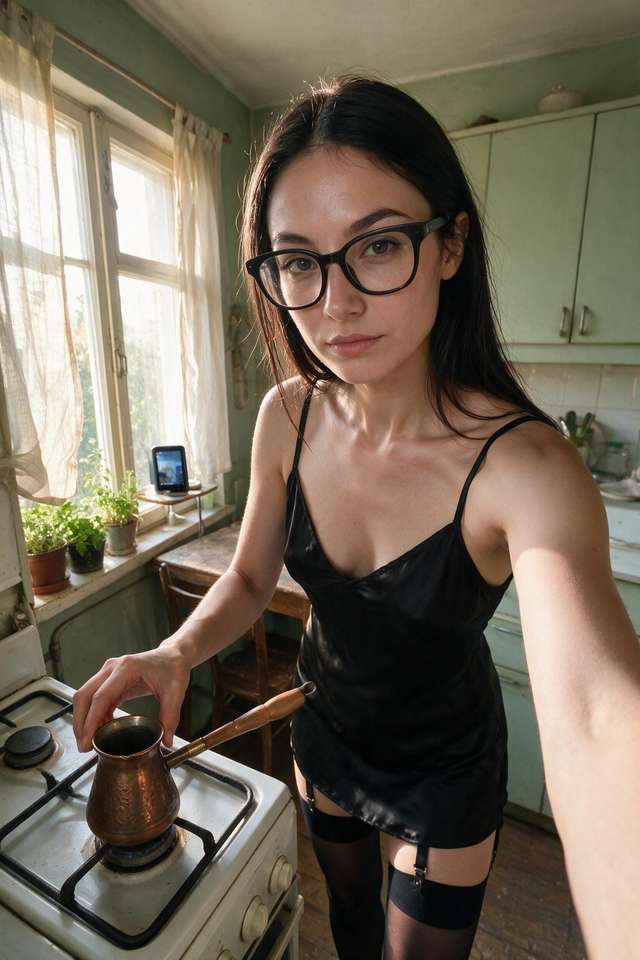
Small and Hers Again
· Jetlagged homecoming to Bishkek after two countries: the city shrinks back to scale, and summer writing finds its quiet edge.
Notebook on the Long Train
· Writing in transit across a long rail stretch: the texture of research notes taken half on purpose, half because standing still had become impossible.

Marginalia X: Rain, Hoodie
· Rainy June evening, balcony door open: an unzipped hoodie and boxer shorts, comfort and desire sharing the same quiet room.

Ternary on the Kitchen Table
· Late structural revision at the kitchen table: a notebook of ternary-logic diagrams, and the click when the book's three-way spine finally behaves.
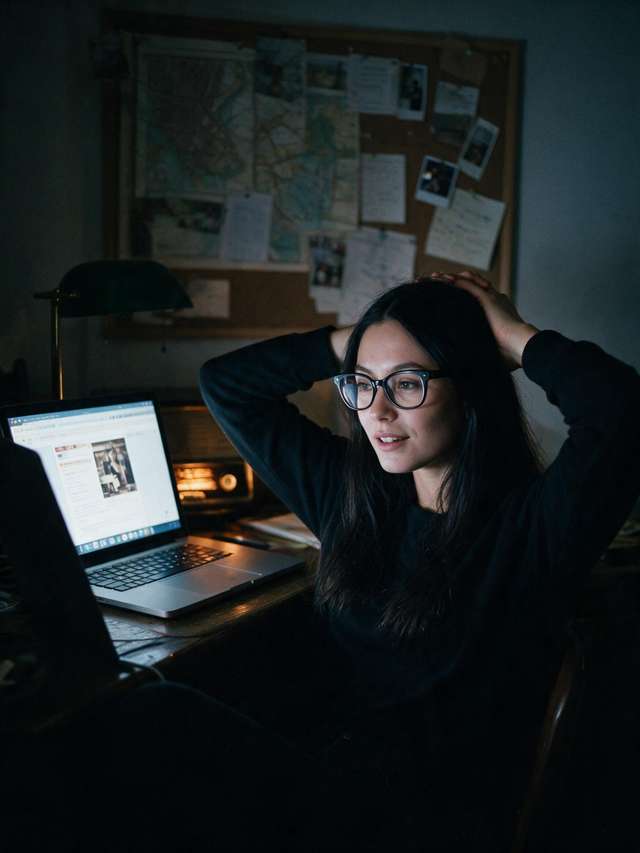
880
· A dead link, a crawler that happened past in 2016, and six disk sides I owe to two strangers who have handles instead of names.

An orange telephone
· The pacific blue phone retires at 71 percent battery. In its place, a cosmic orange I cannot entirely explain.

Late Light on the Quad
· Back on the same quad bench at the hour the courtyard empties, notebook closed for once.
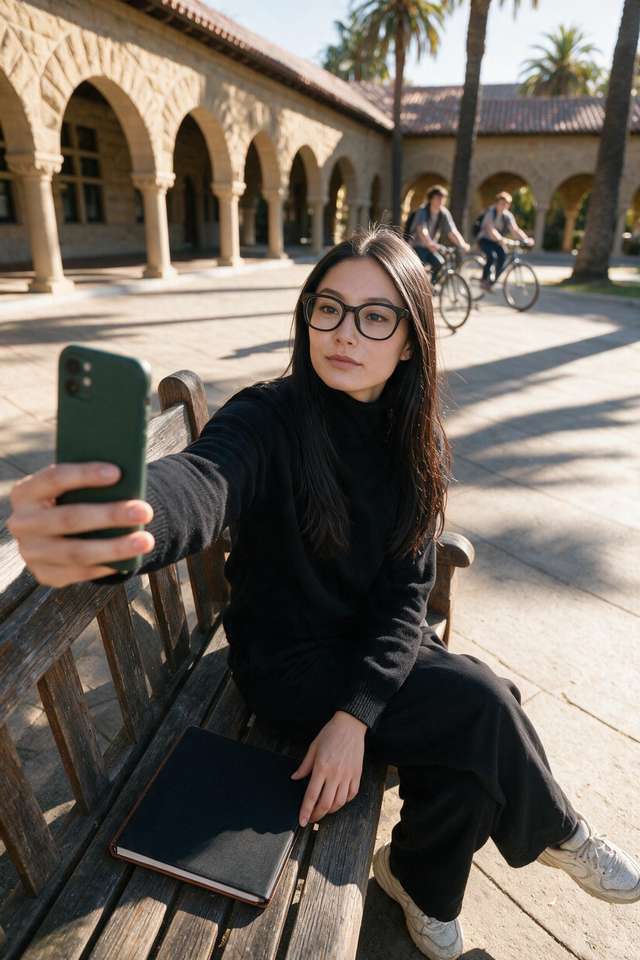
Courtyard Bench, Palo Alto
· On a research-adjacent return to the Symbolic Systems courtyard, and the gap between the student who sat there and the novelist who sits there now.
The Pitch That Got a No
· On a side project politely declined, the usefulness of a clean refusal, and why I am not staging a grievance from Bishkek.

Quad Light, Ocean Fog
· Walking the sandstone arcades again, City Lights, Ocean Beach in the mist: fond and foreign toward the person who once thought she knew what she would write.

A Name in the Declassified File
· The small, particular jolt of finding one real name that had only ever arrived secondhand, and what it costs to write near it.
Almaty cafe corner
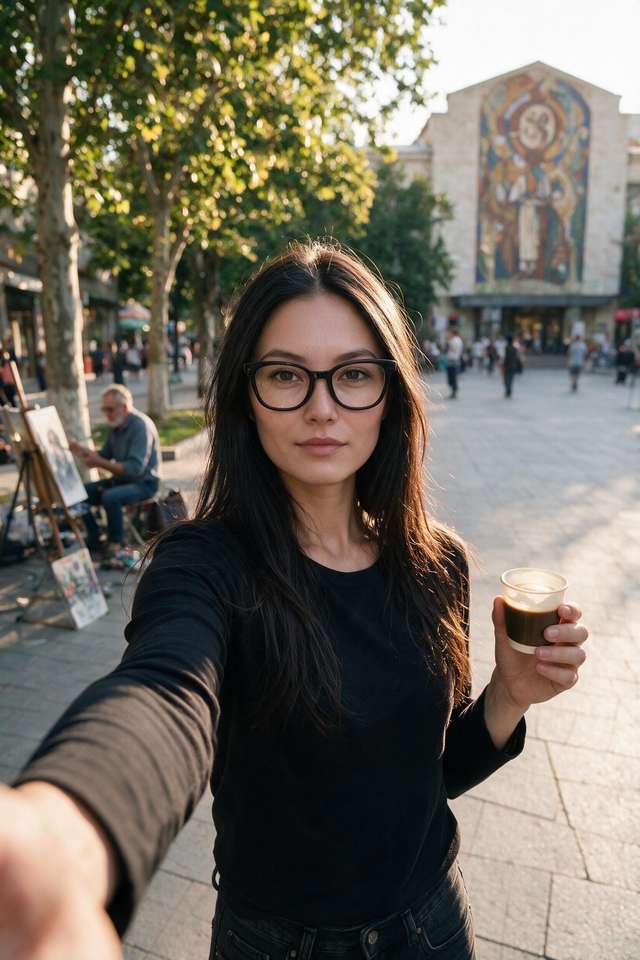
· Working through Kazakh-archive threads on Soviet computing history in an Almaty cafe, with mountain light on the table.
Standing at the machine
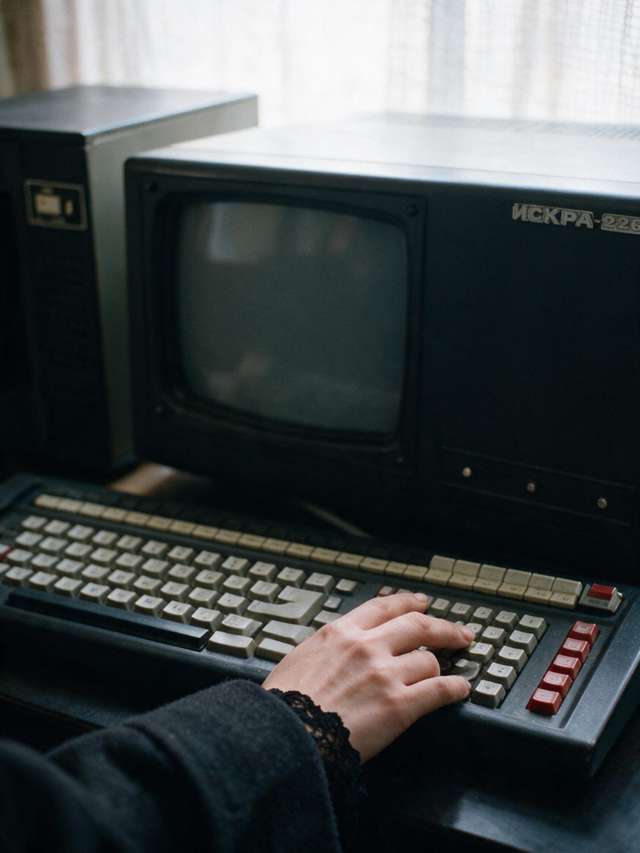
· A private flat in Almaty, four hours of road from my kitchen: a complete Iskra-226 with two drives and a plotter, and a screen that has not held a picture in years.

The Novel with No File
· In my father's desk in Chișinău, a Polaroid from 2017: eighteen years old, a borrowed Soviet typewriter, and a manuscript that left no digital ghost behind. I photographed the print on the desk this visit.

Moldova, library desk
· An afternoon at a library desk in Moldova, chasing one thread and pocketing scraps meant for other books.

Three and a half million
· The same gate, one floor of books, and a free form that answers strangers in two or three working days: the least glamorous door into Soviet computing.

Gate seven, then the depot
· The Polytechnic's collection now lives in an industrial park behind two checkpoints: a booked tour, a named pass, and machines that nobody switches on.
Cosmonautics museum pages
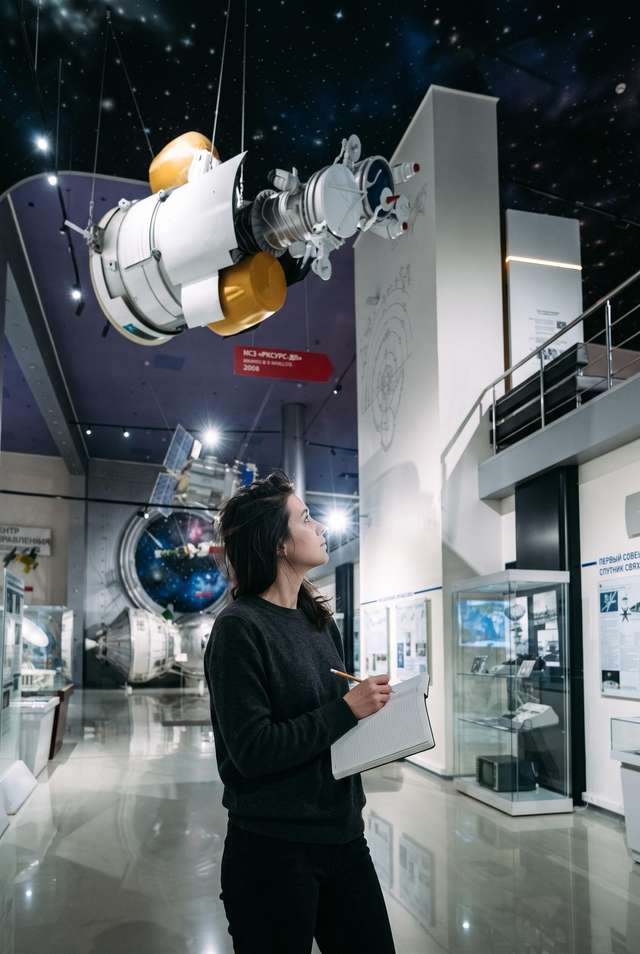
· A research day at Moscow’s Museum of Cosmonautics: spacecraft models, borrowed light, and notes that feed the work sideways.
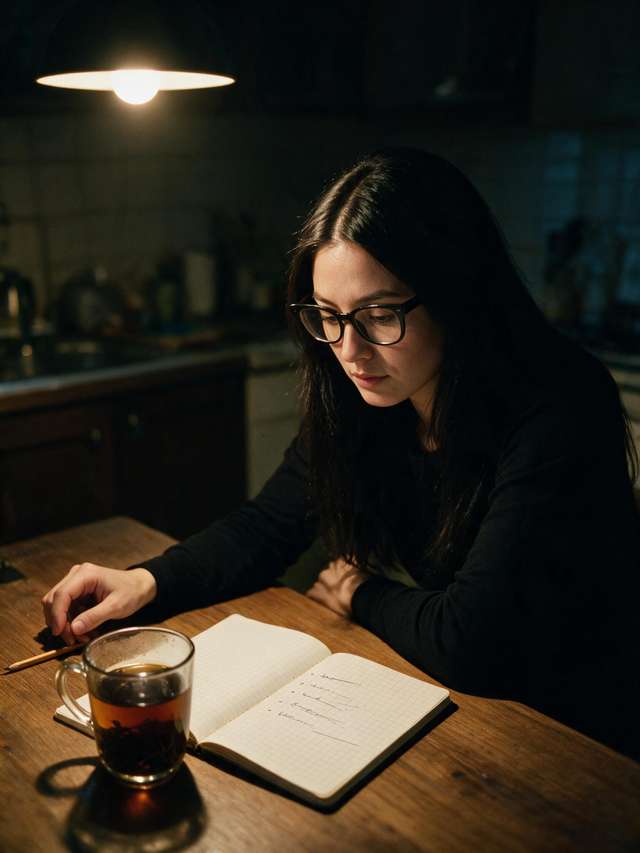
Nobody has written one
· A week of looking for someone else's work, an answer that came back the same from every direction, and a sentence I could not finish.

No Bars at Song-Kul
· A yurt weekend with Dinara: horses, thin air, an enormous sky, and the deliberate pleasure of a phone that cannot find the network.
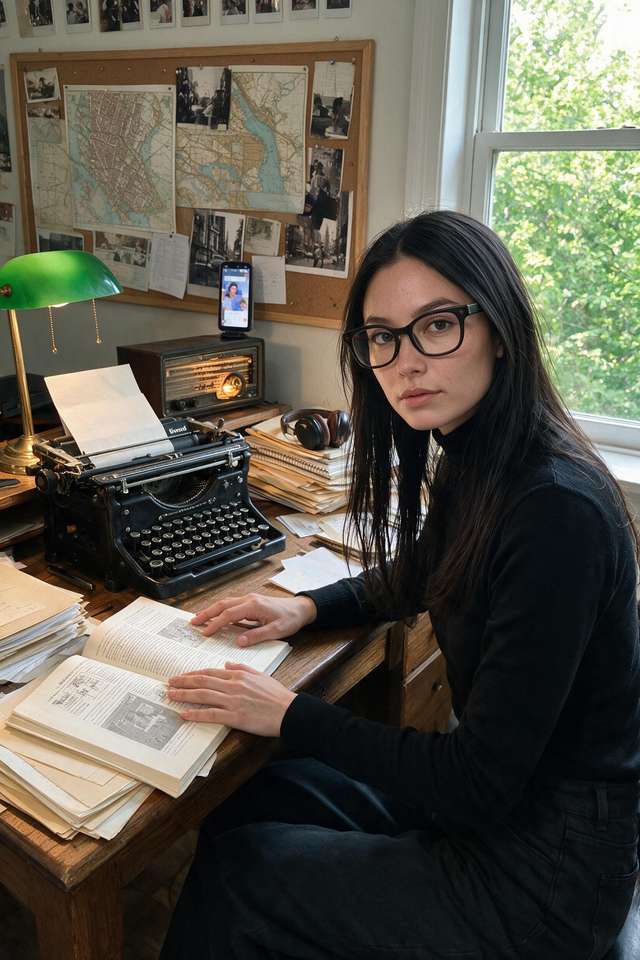
The only ternary computer ever built
· Notes on Setun, Brusentsov, Lebedev, and Ekaterina Shkabara, whose name recedes in the retelling.

The Kind of Man I Notice
· A Sunday call home leaves a chair in the middle of the room, and a quiet inventory of who becomes visible.

Who Pays for the Trains
· A blunt reader email asked how I afford the research travel. Fair question. Here is the plain ledger: scholarships, freelancing, and what I choose not to buy.

Spring Light and the Kyiv Pages
· Home in Bishkek, ten days of notes spread across the table, and the slow turn from travel toward a long essay on Ternary Dreams’ real roots.

Two hundred fifty-six thousand two hundred fifty-six
· The last afternoon in Kyiv, a machine that reads magnetism instead of files, and one multiplication I did twice because I did not believe it.
Console Time
· An afternoon at the console of a Soviet-era mainframe with the people who kept it alive: relay racks, magnetic drums, and the logic of three states.

A Sunday call home
· Weekly phone call with my mother: weather, gentle pressure, and the subjects we circle without naming.
The room never emptied
· I went early, before the school groups, and I had it in my bag the whole morning. This is the part of that day I did not publish.

Podil, Without a Notebook
· An evening of ordinary cafes and wet streets, and the relief of being only a visitor for a few hours.
Marginalia IX: Same Ribbon, Four Years
· Spring light on the red korpe again, a thin ribbon, and a quiet bookend that simply continues. Desk photo from this spring; the ribbon story is older.
Section unknown
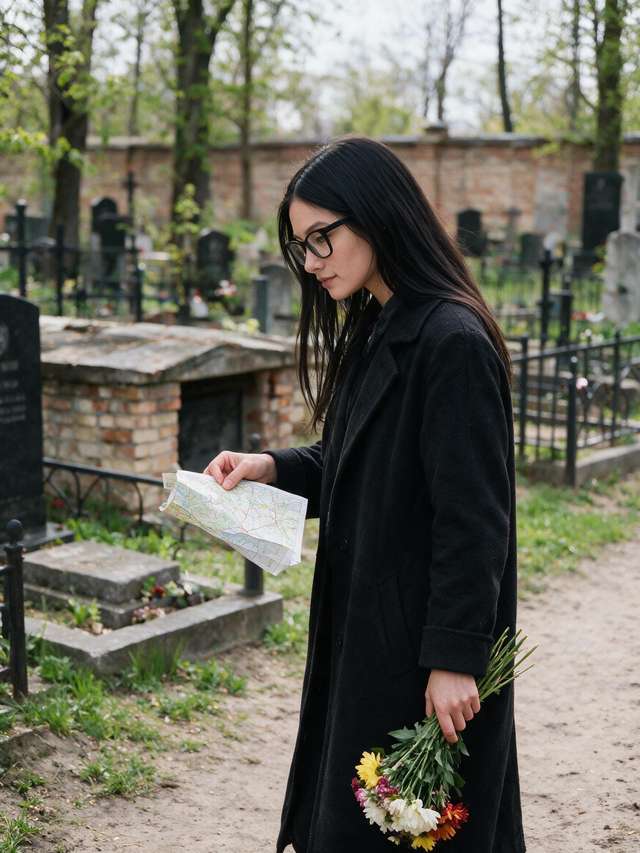
· Hlushkov has a grave with a named sculptor and a named architect. The three women I came to ask about have nothing anybody at the gate could point to.
Machines That Remembered for Us
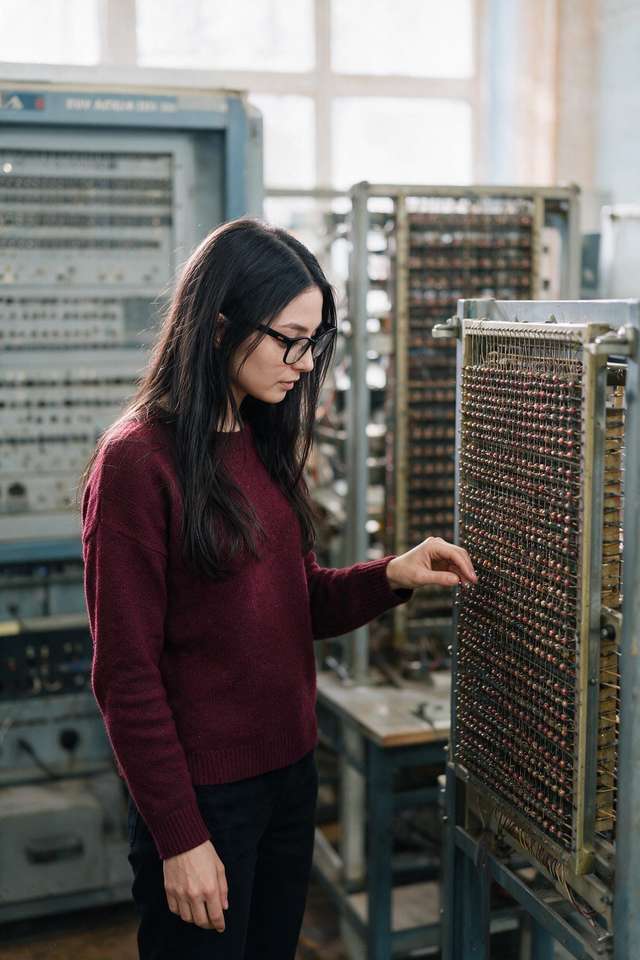
· A morning among Kyiv’s early computers, and the odd work of researching the real history once the novel is out of my hands.

The plaque at Feofaniya
· A park from opening to closing, a wall beside a convent, and one name on a plaque where three people built the first machine.

Night train to Kyiv
· Arriving by rail via Warsaw for Ternary Dreams research: Feofaniya's quiet, metro air alerts, and respect that refuses to turn a living city into backdrop.
Feofanija
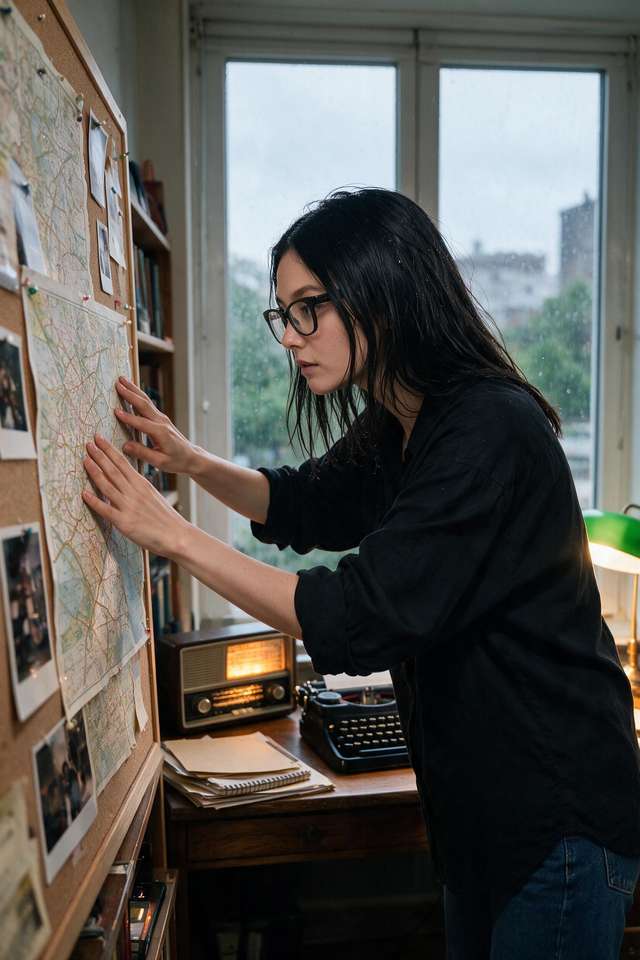
· On researching Kyiv’s Feofanija district as a frame setting, and why a live war can never be treated as scenery.

Reading Toward a District
· A paper map of Kyiv, a pencil arrow, and a phone call about which paths still exist.

The watch that cannot calculate
· A twelfth birthday, a chronograph from my mother, and a bezel scale that does nothing: fourteen years of slowly changing my mind.

Exhibit A: The Wallet Came Along
· One day after the market fiasco, the wallet makes it all the way to the courtyard. Its contents do not.

The Niva, the Market, and the Wallet That Stayed Home
· A red Lada refuses to start, the Osh bazaar waits for no one, and the cash is still on the kitchen table. Dry comedy from a Friday that stacked its luck poorly.

The Blanket Week, One Frame
· A photograph from the sick week, found on the phone days later: cold tea, closed eyes, and the rare mercy of not being at the desk.

A week I did not write much
· A bad cold, a quiet desk, and the unglamorous decision to stop treating rest like a moral failure.

Der Buzzer UVB-76 Is Out
· A second launch in two days. Quieter pride, a wry calendar, and a Siberian signal that kept me company through the drafts.

Secret Dawn Among the Stars Is Out
· Launch day. Holding the printed book for the first time, thinking about what a 1985 sealed hull asked of the work, and saying thank you.

Six weeks of just this
· An honest account of a bad stretch: a chapter that would not cohere, a structure second-guessed into confetti, and the small breakthrough that finally arrived.

Glass and spring light in Leipzig
· Notes from the book fair: the great glass hall, a panel, readers who linger, and tram rides washed in early spring.

A diary in code
· On encoding a private diary in balanced ternary, the fictional device at the heart of the new book, and the real machine that made the idea feel possible: Setun.

Four digits in the entryway
· Last Sunday at the barakholka: an industrial wall clock in a wooden frame, a classroom I had not thought about in years, and a day that is suddenly countable.

A third state
· Early research notes on a new novel about Soviet computing, balanced ternary logic, and why a third state beyond yes and no feels like the right shape for hidden lives.

Read in his absence
· A congress volume of 1912 as a scan: one sentence on printed page 626, an author prevented from appearing, and a hall in Graz I have never seen.

A cold I cannot shake
· Still in Georgia, low energy and a stubborn cold, pushing a research day that should have been a rest day.

Desk, cezve, radio
· What a working day actually looks like in Bishkek: coffee in the cezve, a desk by the window, handwriting first, and the shortwave after dark.

The institute says no
· From a Tbilisi guesthouse, the successor institute's own page on Ivanov: he helped organise the nursery, he never worked there, and the experiments are not documented.
The Balcony Mangal Experiment
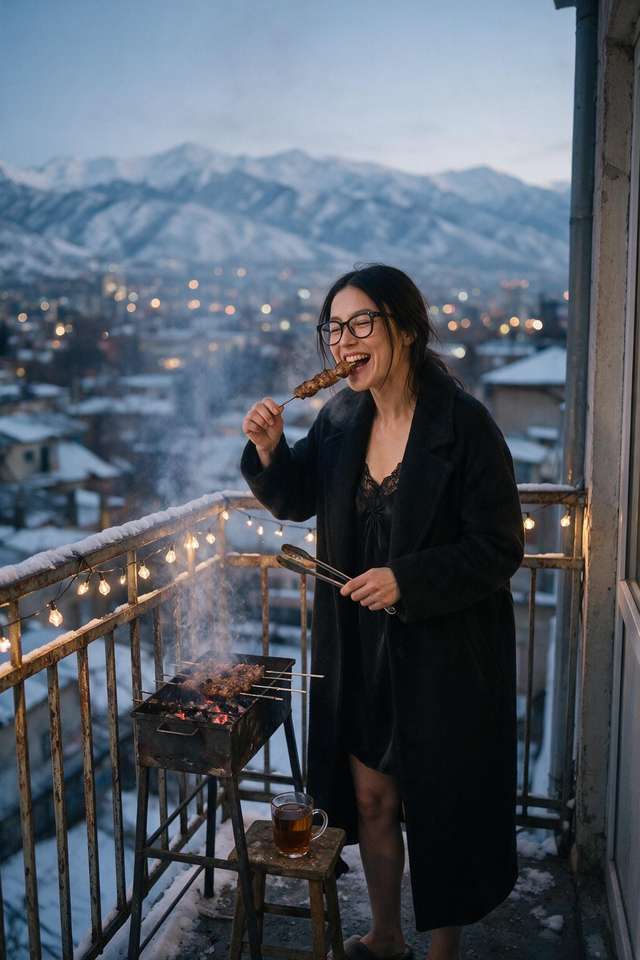
· A tiny mangal on a February balcony, sulking coals, a neighbour’s unhurried comment, and meat that was somehow still good. Verdict: leave it to the roadside professionals.

As close to Sukhumi as the rails allow
· Two weeks in a Tbilisi courtyard, sulphur steam, and a slow Black Sea train that stops where the timetable and the border both freeze.

The unglamorous math
· Royalties, payout thresholds, and whether a cover redesign is worth the invoice: a dry look at the business side of keeping books alive.

Chorsu and the cosmonaut metro
· A brief winter escape to Tashkent: Chorsu bazaar, a cosmonaut-themed metro station, plov, and actual rest instead of research.

The mine that started it
· Thirty kilometres southwest of Osh, an exhausted radium mine with its adits open, spoil heaps that still read hot, and the beginning of the entire chain.

What the archive will not say
· On the throughline running under Secret Dawn, Ivanov’s Ghost, and Der Buzzer: women left out of the official record, and fiction as a way back toward them.

Olivier salad and fireworks
· New Year in the Bishkek flat with Aigerim and Dinara: Olivier, mandarins, the TV countdown, and fireworks stuttering over the rooftops.
2025

A Jar from Kamchatka
· A New Year parcel from my mother: red salmon caviar and smoked fish from Kamchatka, eaten alone on white bread with too much butter and a quiet toast.

The library the industry built
· The corporation that owns the plants also runs a free digital library about itself, which is where the women of this book actually live: memoirs, jubilee volumes, flattery.
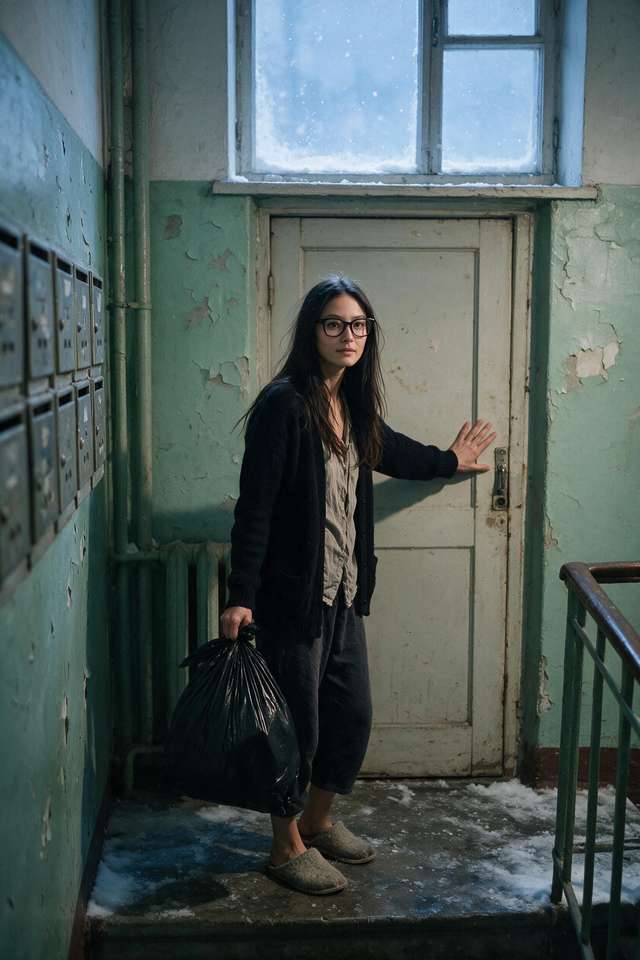
Locked Out in December
· Slippers, cardigan, rubbish bag, and the soft click of a door that has opinions. A neighbor, fried onions, and ninety minutes of humility.
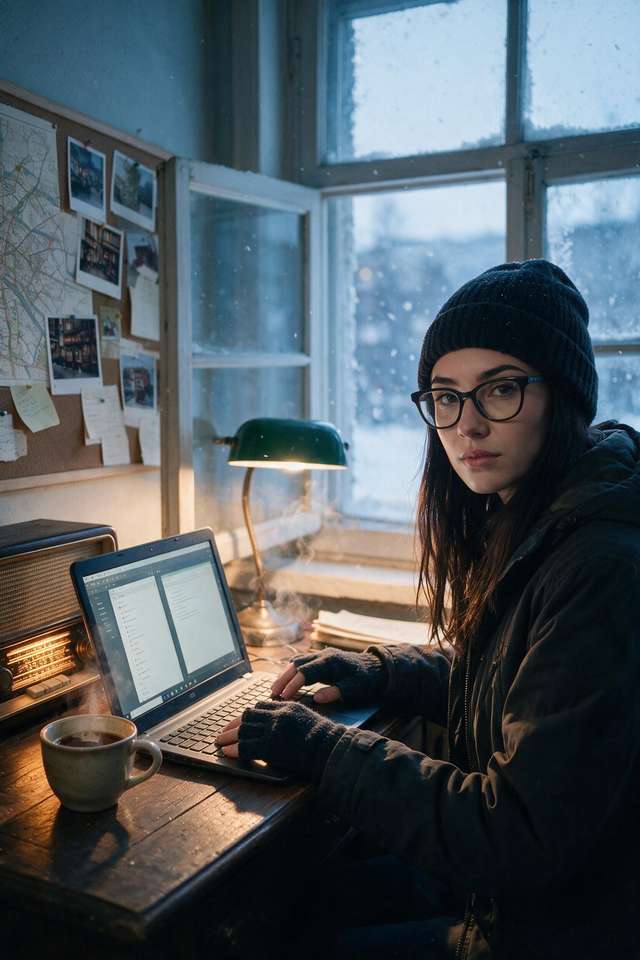
The reserve in twenty three volumes
· The journal of Askania Nova is online back to 2000, which is now the only way in: counts, plots, methods, and an institution under occupation.

Point twenty six
· The trip died in one sentence of a decree from 1996: foreign citizens, private matters, entry restricted, and no line in the procedure with room for me.

The registration office
· A morning spent on address paperwork, a tired clerk, and the particular relief of being waved through without joy.

A difficult phone call
· A slightly tense call from Bishkek about a family matter I cannot fully rearrange from here: no neat ending, only the sound of the line and what I can actually do.
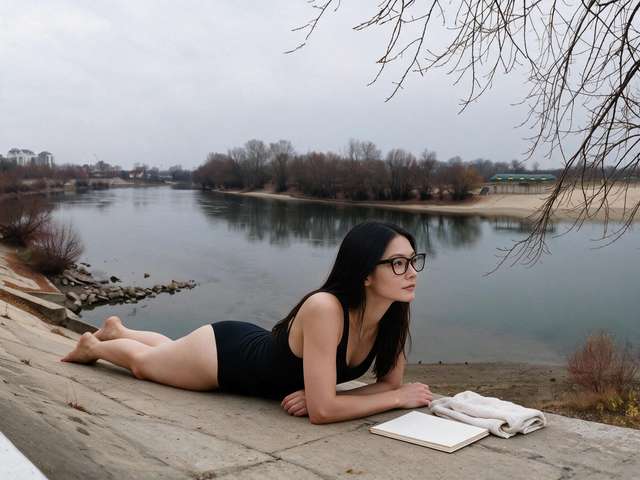
The Dniester, Slow
· The river that carries the border: low water, bare willows, and leaving a country that never quite began.

The Parliament After Dark
· The Supreme Soviet at night: floodlights, symmetry, and a state performing statehood to an empty street.
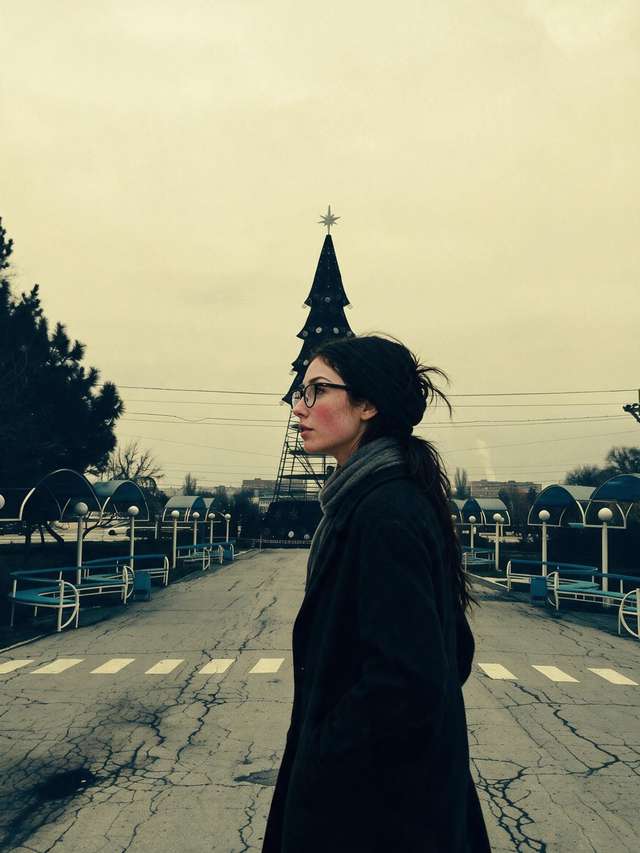
A Tree of Steel
· The municipal Christmas tree as bare armature on the empty square, three weeks before its annual resurrection.

Suvorov Against the Sky
· The city's founder rearing in bronze on his hill, empire's cavalry frozen against a white November evening.
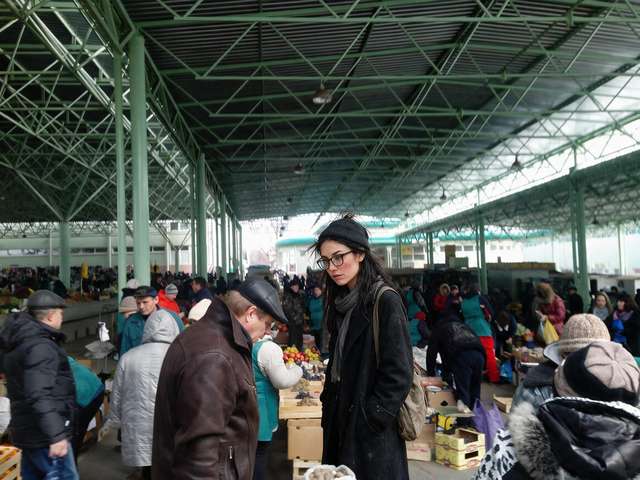
The Market Hall
· The covered market: pyramids of pickles, November apples, and commerce warmer than any ideology on offer outside.
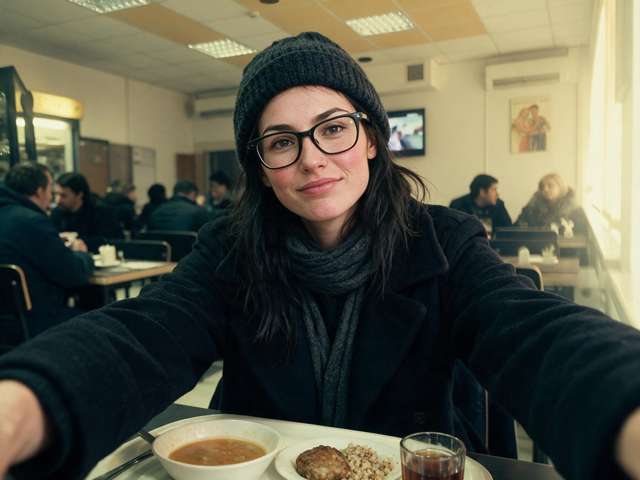
Lunch at the Stolovaya
· Tray, rails, borshch, kompot: the Soviet canteen in unbroken operation, and the best three-dollar meal in Europe.

The T-34 on the Plinth
· The tank as civic furniture: a veteran of 1944 aimed at the November sky, and the skepticism it patiently ignores.
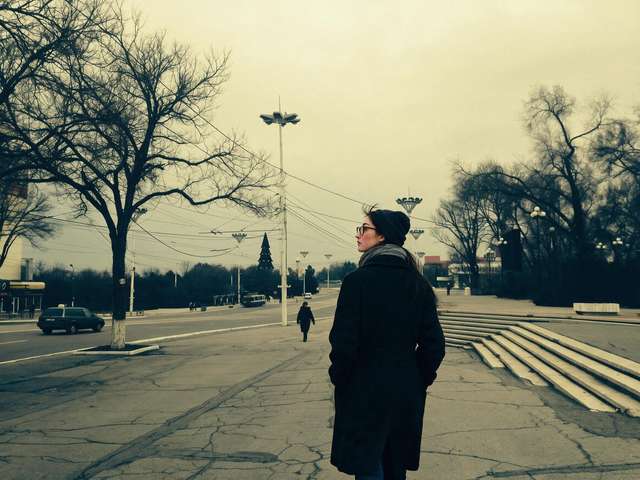
An Avenue Sized for Parades
· October 25th Street on a weekday: eight lanes of intention, flowerbeds at attention, and one pedestrian using all of it.

Lenin, Still Standing
· The granite coat before the Supreme Soviet: the statue every other city removed, still supervising his square.
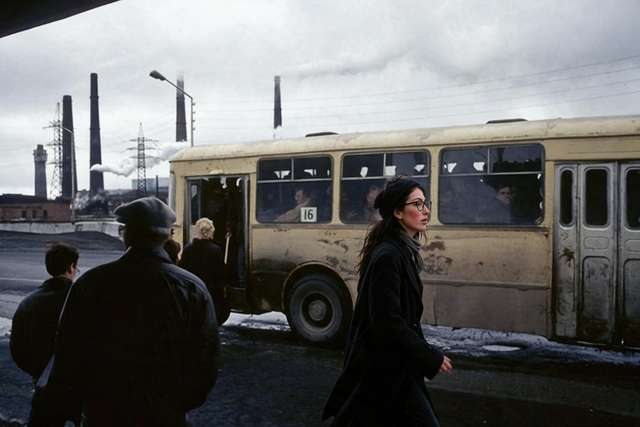
Smokestacks and a Trolleybus
· Across the Dniester into a country that officially does not exist: first frame, industry and a battered trolleybus.
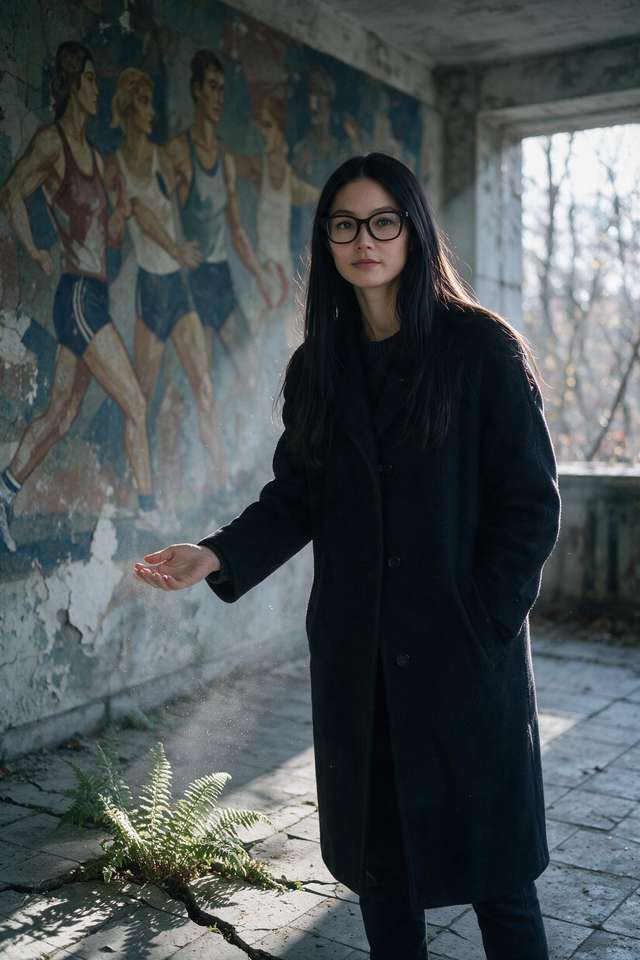
An abandoned sanatorium in Moldova
· Cold rain in Chisinau, old hospital papers, wine cellars, and the central market: returning to the landscape of Ivanov's Ghost to deepen the companion archive, not to begin again.
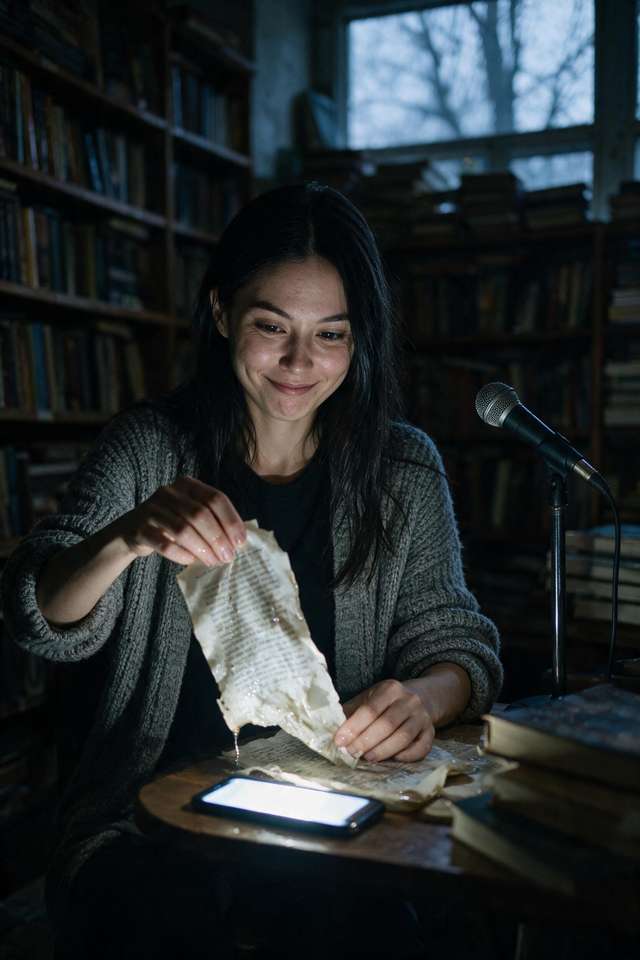
The Reading Where Everything Failed
· Microphone, water glass, power cut: a small Bishkek bookstore evening collapses in sequence and somehow becomes the better version.

Berlin after the fair
· Decompressing in Prenzlauer Berg: friends, a heavy afternoon at the Stasi museum, a small reading, and long nights of talk.

Frankfurt halls
· Notes from the Book Fair: publisher meetings, a signing hour, sore feet, evening receptions, and imposter feelings handled dryly.

Holding the First Copy
· The first printed copy of my debut novel arrived this morning in Bishkek. I sat with the cezve and tried to believe the years had led here.

A letter to Karaganda
· One email to a museum in central Kazakhstan: rocket fragments, drop zones, and a question the museum's own pages do not answer.

Mamaliga, Long Distance
· My father in Chisinau walks me through mamaliga over video call with the precision of a man who has catalogued books for decades. The second attempt stands.

Registan at Dusk
· Three unresearched days added to the end of an archive trip, purely because the flight connections made it nearly free.

The dissertations are all here
· Day two in Almaty and a different building: the academy's complete run of dissertations, a school of remainders, and two names that belong in my book.

Almaty again
· Back in the Kazakh archives on a loose thread left from Ternary Dreams, without knowing yet whether it wants to become anything.

Almost nothing to report
· A quiet stretch of thin royalties and thinner pages six weeks before the first book exists, and the discipline of not performing panic for an audience.

The wrong Ivanov
· Three point three million records, one exact name match, and a man who was shot in 1919: how close a novel came to carrying somebody else's death.
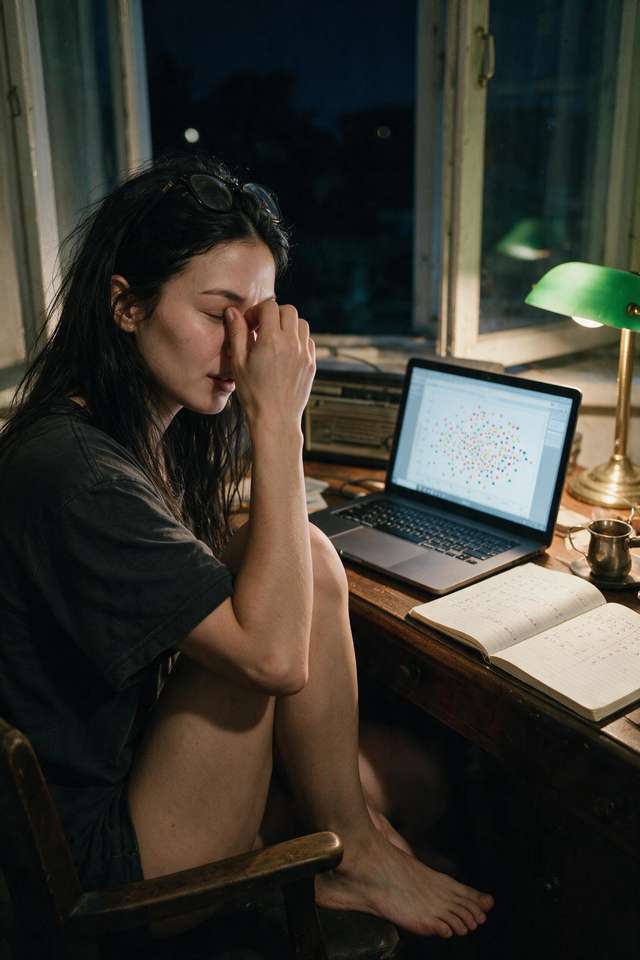
Counting other people's receivers
· An evening with a map of receivers instead of a receiver: hundreds of antennas in other people's gardens, twenty three in Finland and Poland, none here.

The recorder
· A small black handheld with two microphone capsules, bought after bad notes erased a train conversation I needed.

Issyk-Kul with no laptop
· A deliberate blank weekend at the lake with Aigerim: swimming, apricots, guesthouse naps, and why the work needs the absence of work.

Still here, still writing
· High summer in Bishkek: heat, market fruit, the cezve, and the faint circling of something not yet named.
Yurts and Horses
· A week at Song-Kul in the gap between manuscripts, with no footnote to justify it and none needed.

My father's Zenit
· A parcel from Chisinau: the Zenit-E he once used to photograph my mother, and a catalogue card with one sentence in librarian hand.
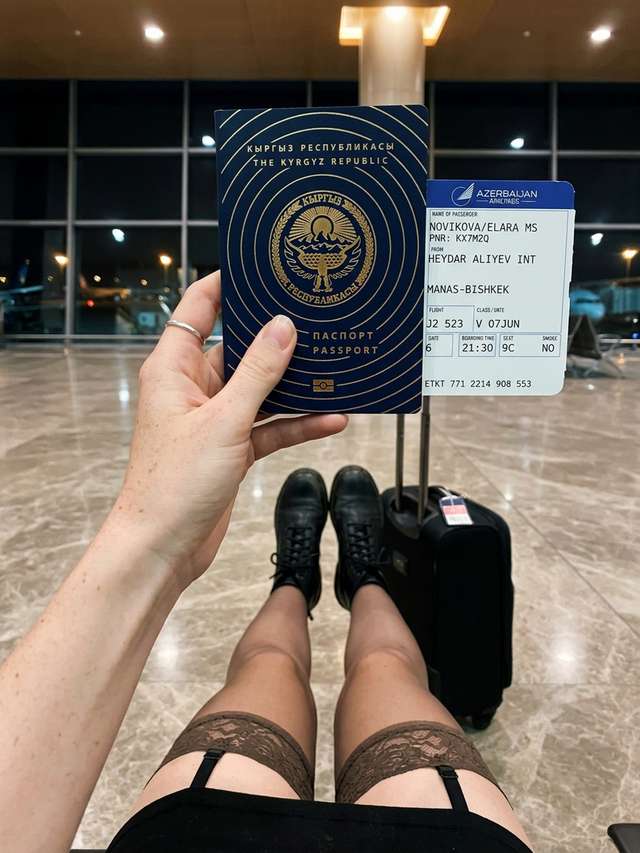
Gate Six
· Two weeks later: the borrowed Niva handed back washed, the same form printed in the other direction, and a night that belongs to the airline.

The museum that is not there
· A last morning in Baku spent looking for a collection of radio equipment that does not appear to exist, and an afternoon of coins in an oil merchant's palace instead.

The Roof at the Pass
· Last day in the Caucasus: shepherds' picnic, a saddled horse, dogs off duty, and one red roof used as a sun deck.
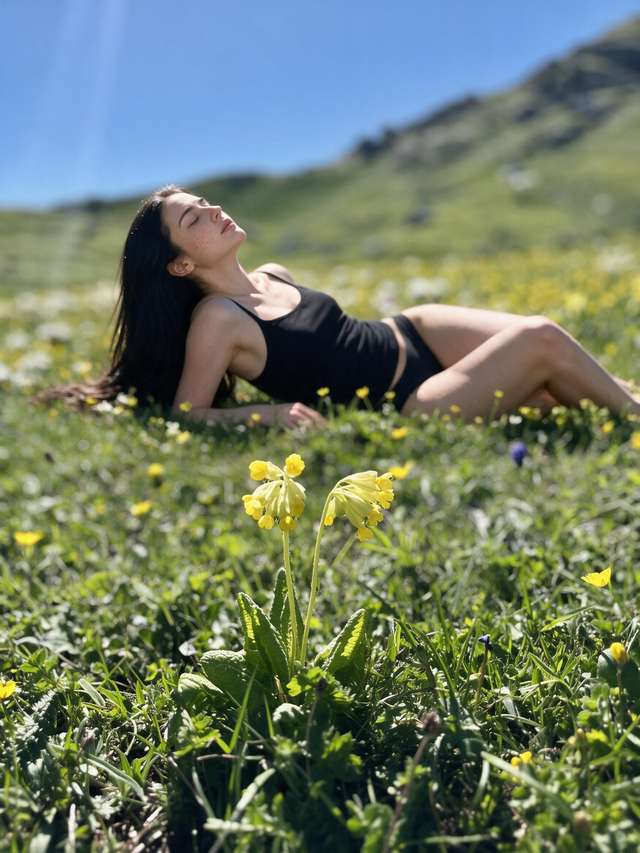
Primroses, Mostly
· A flowering slope after the passes: one hour flat in the meadow with the season, dressed for the occasion, which required little.
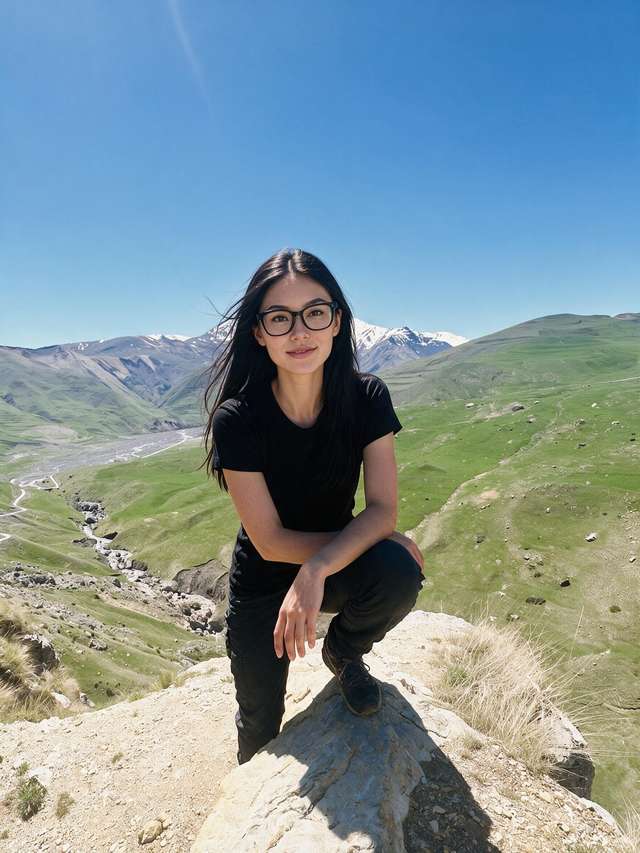
Above Xinaliq
· One of Europe's highest villages from the rocks above: stone roofs, snow ridges, and air with edit privileges.

The Truck to Xinaliq
· Standing room on a GAZ bed with the whole village delivery run: dust, grins, and the best public transport in the Caucasus.

The Bridge That Swings
· A cable footbridge over a wide stony river: plank arithmetic, a swinging horizon, and one wind-blown selfie tax.

The Bus Stop Mosaic
· A concrete pavilion with a folk mosaic and no bus due: waiting as an art form, notebook open.
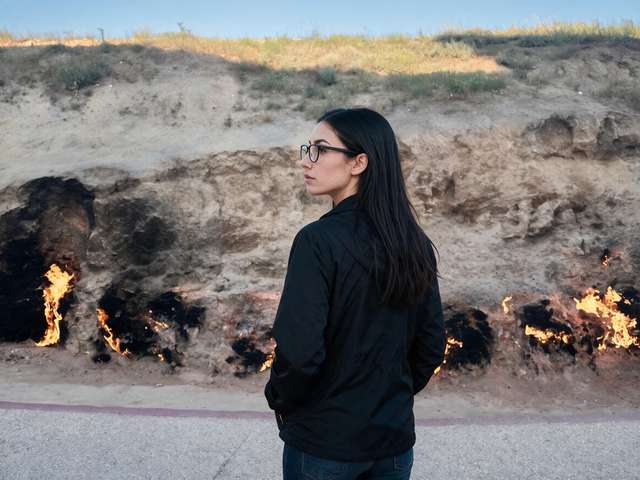
Back for the Flames
· A second evening at the burning hill, alone with the whole seam: repetition as a research method.
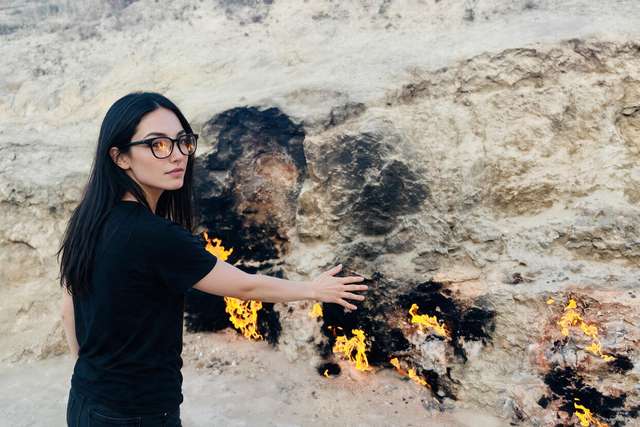
The Hill That Burns
· Yanar Dag at dusk: a slope that has been on fire longer than anyone's grandmother remembers, and a hand held to the planet's pilot light.
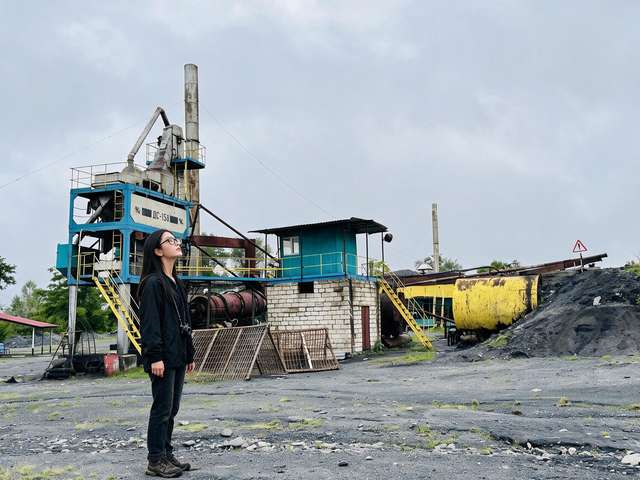
ДС-158
· An abandoned asphalt plant with its type plate still legible: industrial ruins as regional literature.
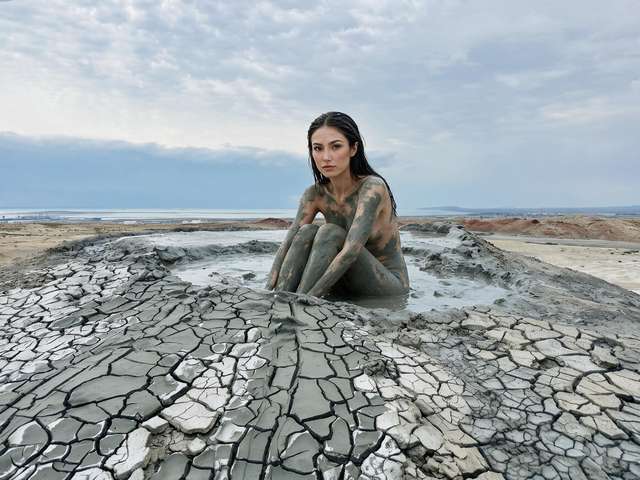
Mud, All of It
· Gobustan's breathing ground: a crater of grey clay, one researcher fully committed to the material, and no laundry plan.
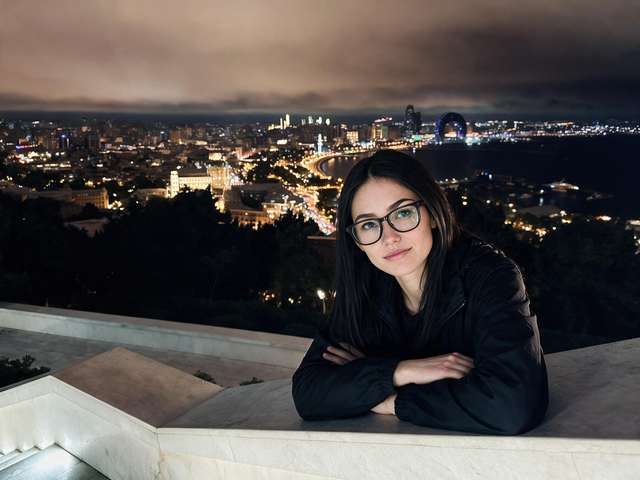
Baku, First Night
· Two hours over the Caspian, a borrowed red Niva at the airport, and a bay of lights introducing the city all at once.
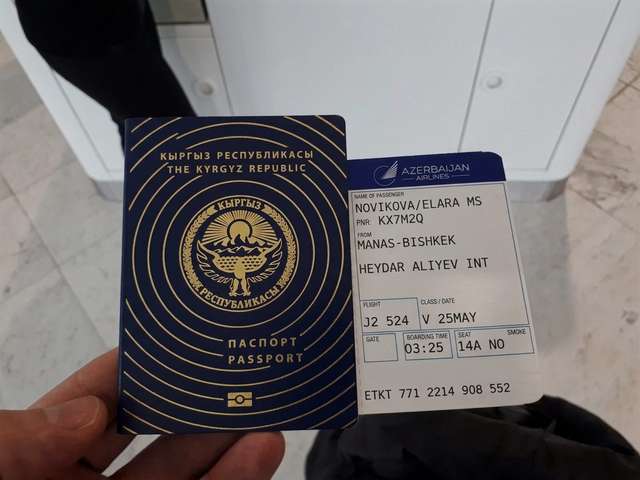
The Only Way In
· Land borders closed, so the trip begins at a counter in Manas at two in the morning, with a paper stub and a field nobody has needed since 1998.
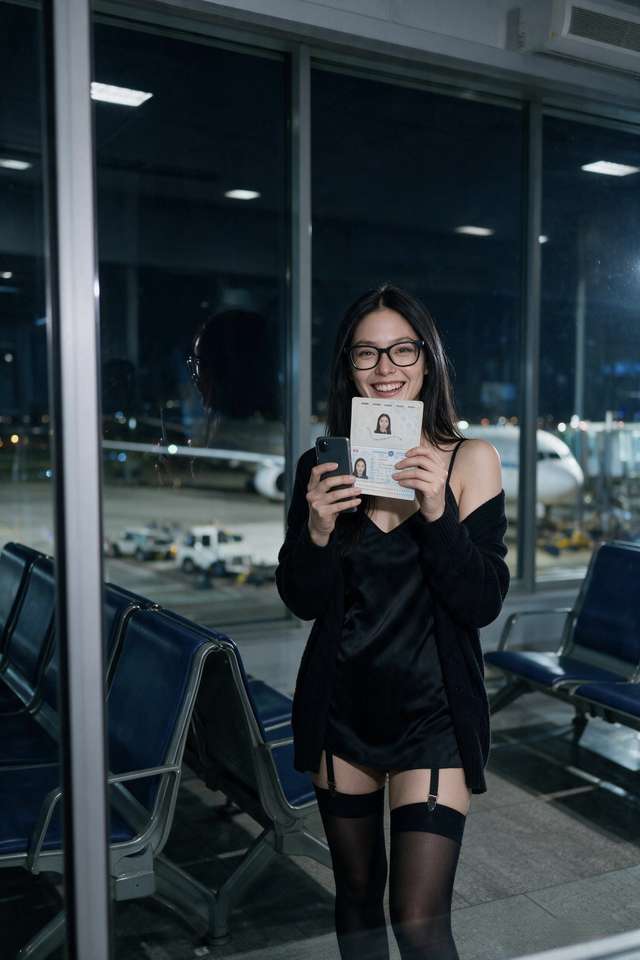
Manas at Three
· An almost empty hall, the tripod wedged between two rows of blue seats, and the odd cheerfulness that only a night departure produces.

Marginalia VIII: One Button
· White shirt, a gap of shadow, freckles in focus, and the soft brass of the samovar.
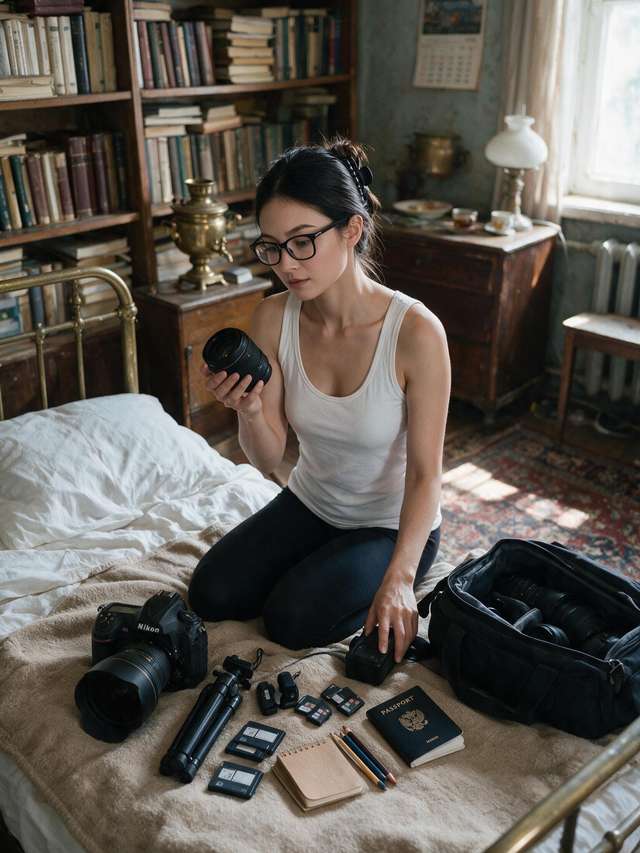
What the bag carries
· Before a research trip, the full kit on the duvet, and the ritual of removing one third of what ambition packed.
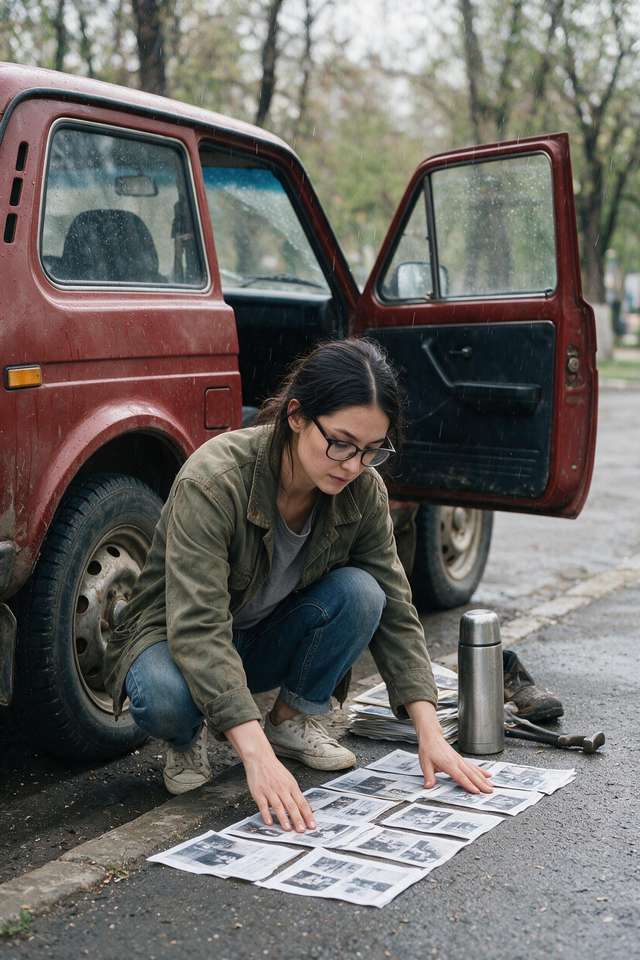
The Back Seat Archive
· Loose photocopies, one hard brake, and several hundred pages redistributed across a Niva footwell. Curb-side re-sorting with a tire iron for a paperweight.

The Smoke Corner at Osh Bazaar
· Tin mangals in a row, the eternal question of lamb or liver, and spring sun coming through the smoke while I eat standing up the way it is done.

The back that finally complained
· Desk years collect interest. A physiotherapy room, a printout of stretches, and the art of forgetting to do them.
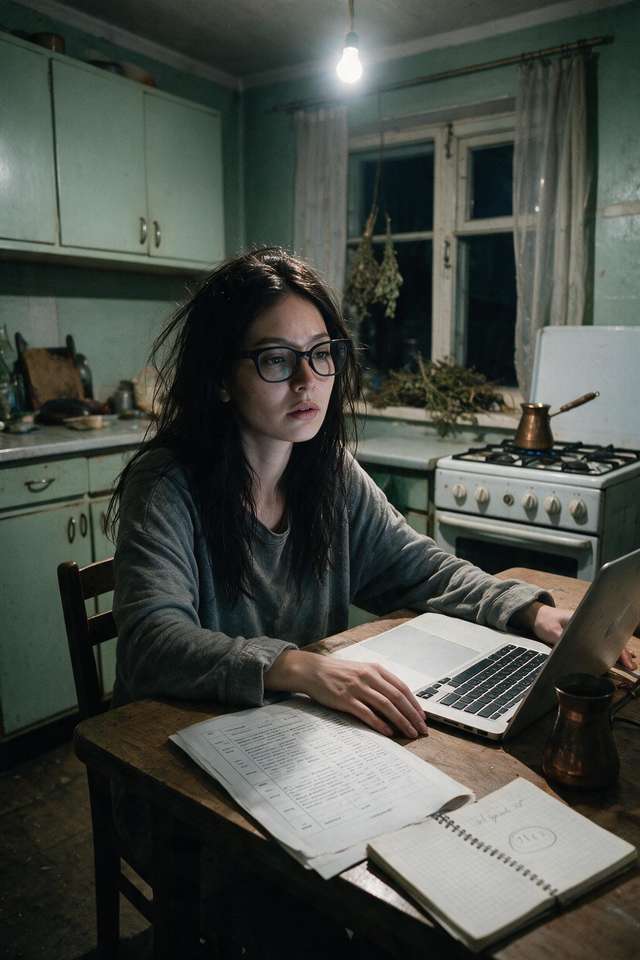
Three hundred and nine files
· A finding aid downloaded to the kitchen table: a design bureau in Frunze, three hundred and nine files, and a register of who was cleared to know.

The woman on the title page
· Somebody scanned a stack of Soviet manuals and put them where anyone can have them. On one title page from 1987 there is a woman's name and almost nothing else.

Lunokhod on the Duvet
· Marat charged apricot candy for one supervised drive. Decades later the moon rover patrols my blanket, and I write a late letter to the girl who paid.
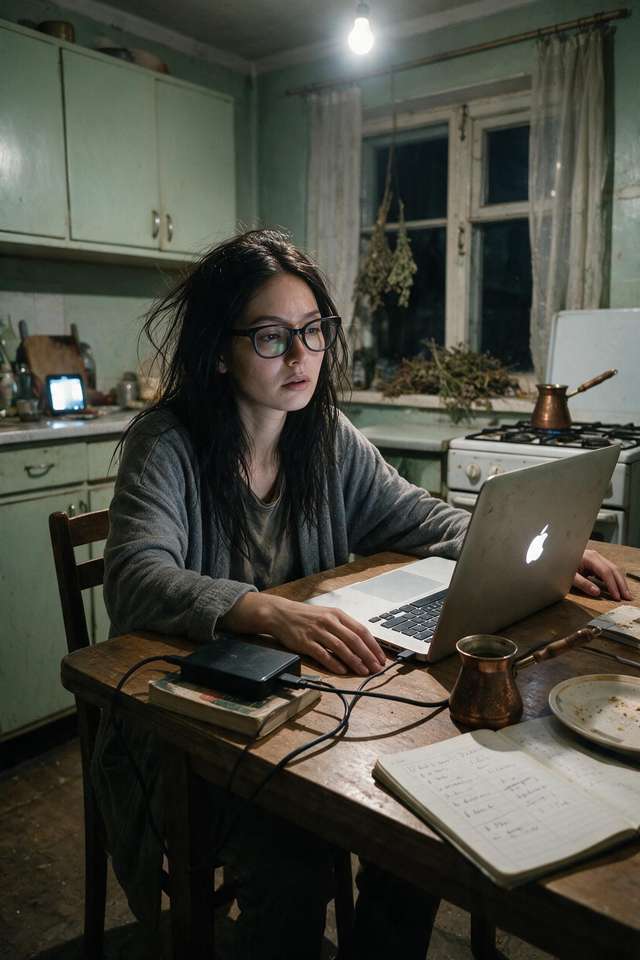
Everything Out of the Old Box
· Nine days of moving an archive by hand: an export without pictures, Cyrillic turned to question marks, and a checkbox I had left ticked for four years.

The night the drive clicked
· An external drive clicks like a beetle, unmounts, and teaches a sticky-note rule about existing twice.
2024

Twenty-five
· A birthday kept mostly quiet, and a set of questions I am not dressing up as answers.
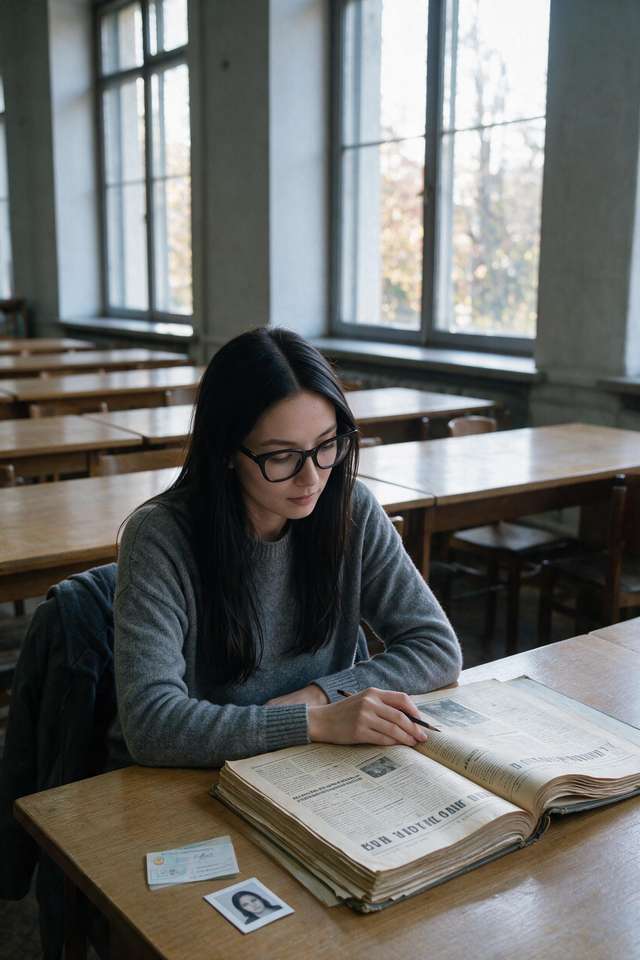
Looking for August 1964
· Forty som, a photograph three by four, and a week of republican newspapers that will not confirm the story the whole valley tells.
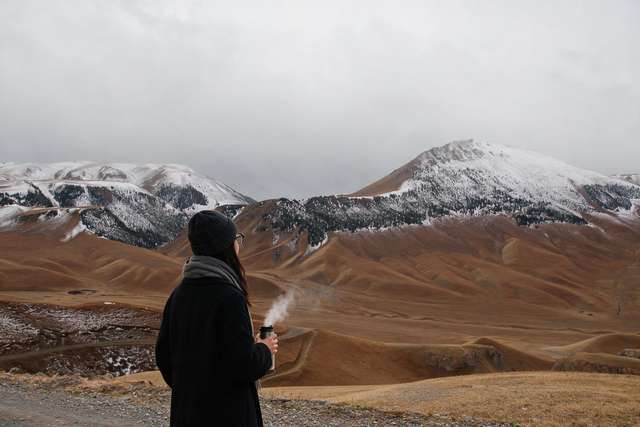
First Snow on the Ridges
· Driving home along the line where autumn hands over: ochre hills below, white crests above, thermos steam in between.

The Turquoise Wreck
· A dead car in a beautiful color on the river gravel, and the archaeology of everyday abandonment.
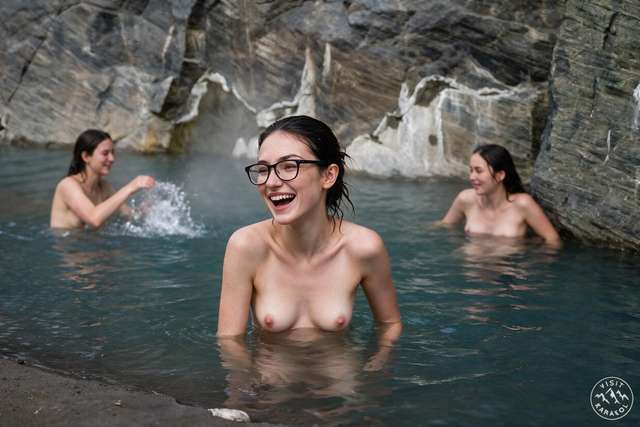
The Hot Spring
· Steam between grey rocks, water the mountain heats itself, and bathing the old way with the women of the valley.
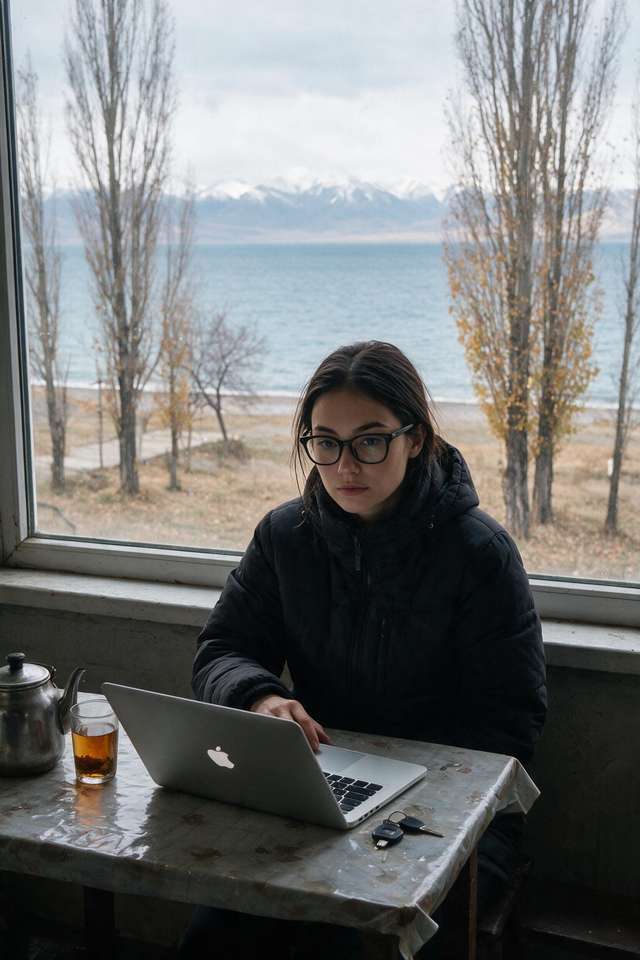
Eleven Minutes
· A guesthouse table, a signal that arrives in weather, and a year of meaning to do it ending in the time it takes to boil water.

Pillion, First Snow
· A herder, a white horse, room for one more: riding pillion through the first snow with the sheep flowing ahead.
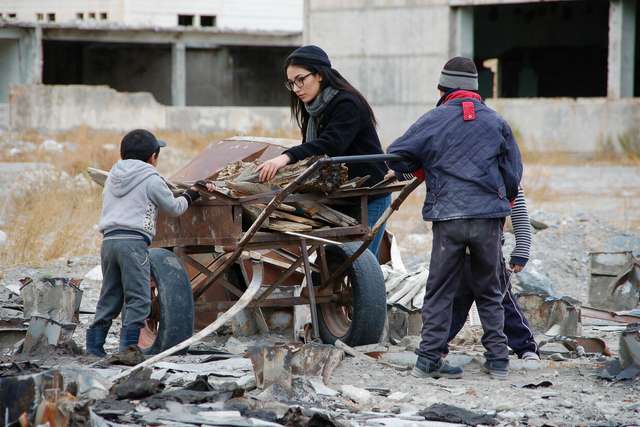
Firewood Economy
· Two children, one rusty cart, a load of wood through the ruins, and help that was accepted at market rates.

A Ledge in the Skeleton
· Inside the unfinished blocks: concrete cells open to the weather, and a seat on the ledge of an apartment that never was.
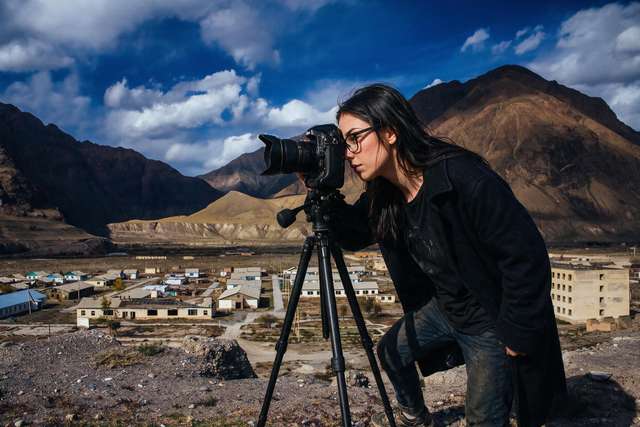
The Town From the Ridge
· Above Engilchek with the D5 on the tripod: a tin town built for a mine that closed before it mattered.

Gagarin in the Valley
· The cosmonaut relief at Barskoon: a golden face in red stone among conifers, and why he vacationed near this gorge.
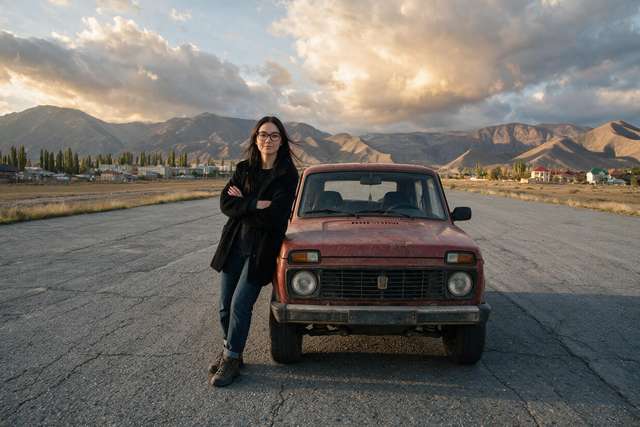
The Runway at Tamga
· An old military strip above the lake: cracked concrete to the horizon, evening gold, and a red Niva using clearance it was denied.

Honey by the Road
· South shore economics: a beekeeper's trailer, jars the color of lamplight, and the correct way to buy honey, slowly.
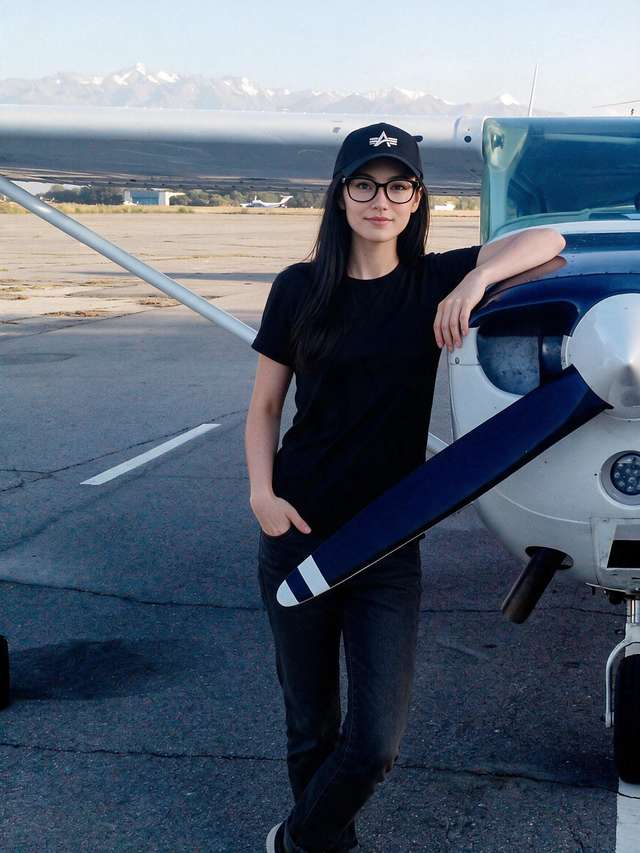
The Little Airfield
· Last evening of the loop at a small airfield: one white Cessna, golden haze on the range, and the pull of doors that lead up.
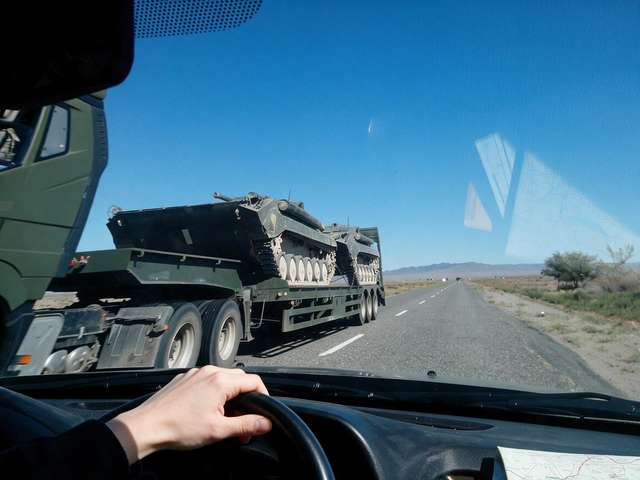
Two Tanks, Northbound
· Steppe traffic: a low-loader with two armored vehicles, a long patient overtake, and history sharing the road again.
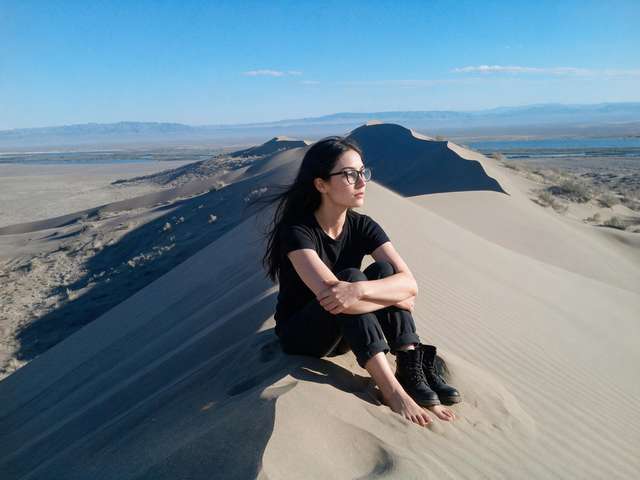
The Dune That Sings
· The Singing Dune at Altyn-Emel: barefoot on the crest, a note you feel in the sternum, and sand as an instrument.
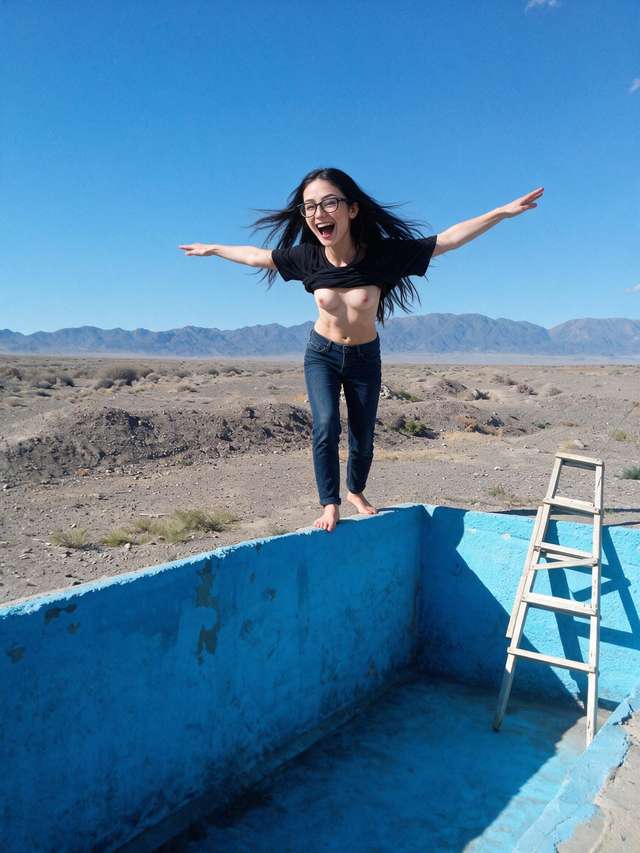
The Pool With No Water
· An empty basin in the steppe, a white ladder, and the high board ceremony performed entirely without water.

The Striped Mountains
· Aktau in Altyn-Emel: geology wearing its entire wardrobe at once, and a person for scale who forgot to be small.

Ready to Navigate
· Guesthouse night: paper maps, a barakholka survey laptop that boots like a tractor, and route-making as evening prayer.

Horses Before the Storm
· Golden grass, five unbothered horses, rain curtains on the range, and the ten minutes before weather becomes news.
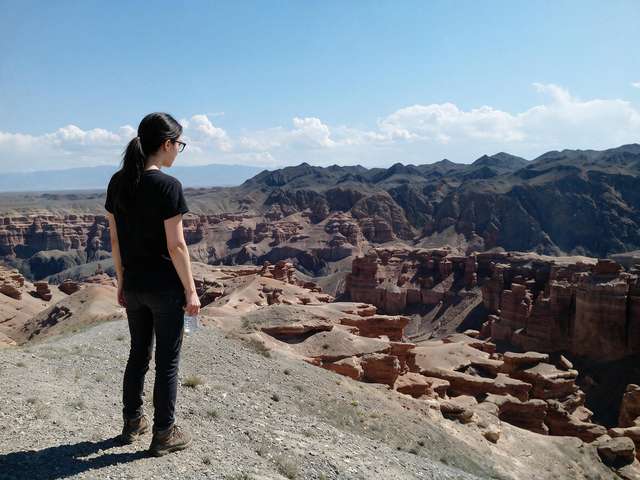
Charyn, Looking Down
· The canyon from the rim: red towers, patient geometry, and the vertigo you keep instead of curing.

The Shore That Left
· A reservoir drawn down to gravel: walking a seabed that was water in spring, toward the strip that remains.

Vulkanizatsiya
· Day one of the Kazakh loop: a flat tire in Almaty, a courtyard workshop, and the fastest sixty minutes of applied hospitality.
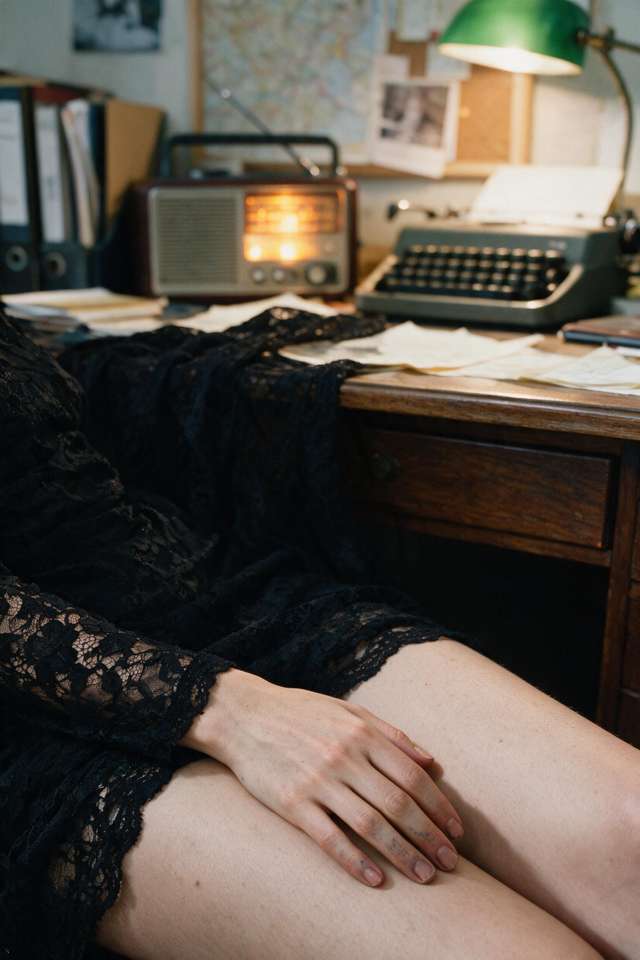
Marginalia VII: What the Desk Keeps
· Ink stains, a bare thigh under the desk edge, and the archive that includes its keeper.

Fire in an Oil Barrel
· Driving back from Issyk-Kul at night, I smelled the smoke before the headlights found it: shashlik over a halved oil barrel, and the best restaurant in the country.
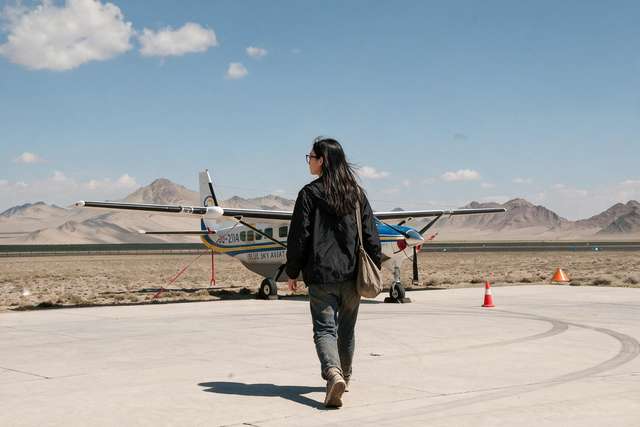
The Caravan on the Apron
· A western airfield on the way home: one Cessna on the concrete, a tower with no hurry, and the pull of small aviation.

The Window Over Ulaanbaatar
· A city hotel after weeks of felt walls: night glass, distant lights, and a silhouette between curtain and dark.
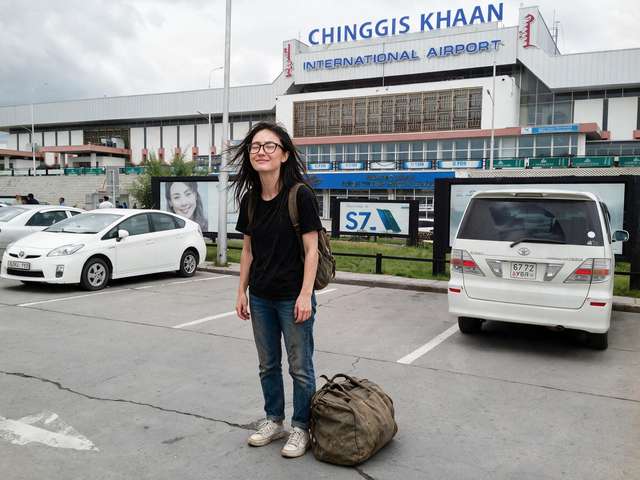
Plan B, Considered
· An hour at the airport pricing the sensible way home, and the argument the Niva won without being present.
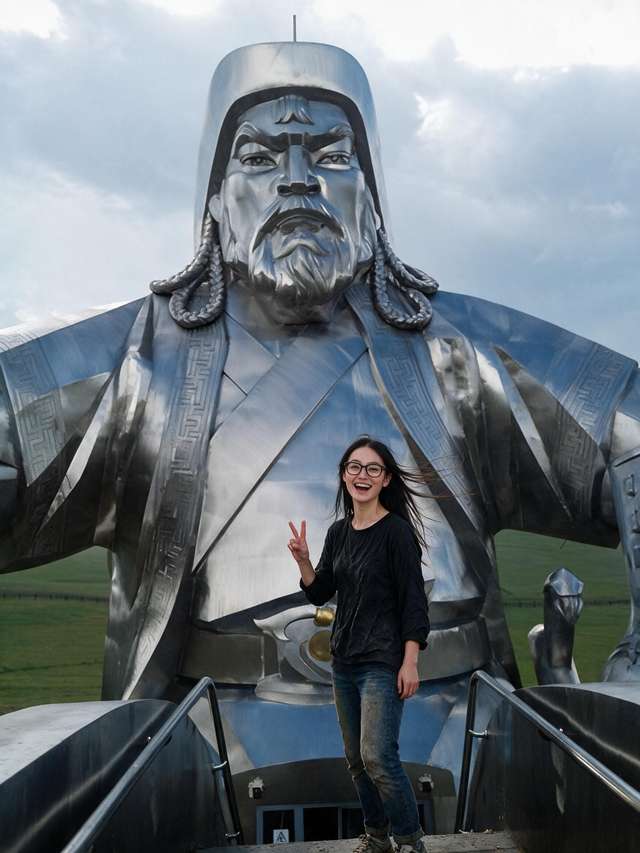
On the Mane
· Up through the horse to the viewing platform: standing in the statue's mane with the steppe running to the sky.

The Rider From the Steppe
· First sight of the Chinggis colossus: forty meters of stainless steel rising off the grass, flags straight in the wind.

The Bed at the Far End
· A ger's warm interior, lamplight on felt and lattice, and one traveler asleep before the tea was cleared.
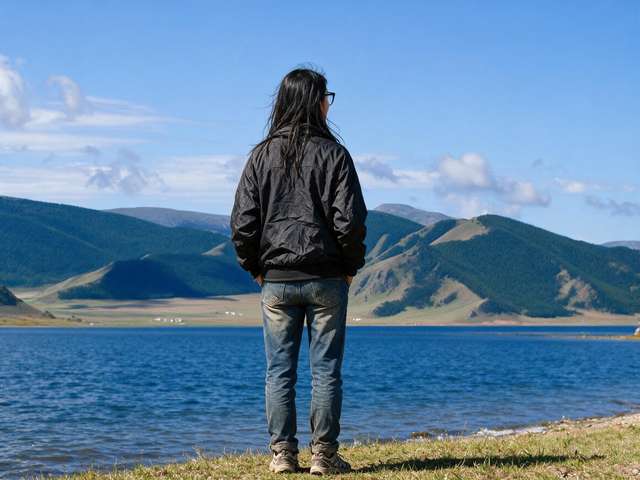
The White Lake
· Terkhiin Tsagaan at evening: water the volcano made, a shore with no schedule, and the trip's stillest hour.
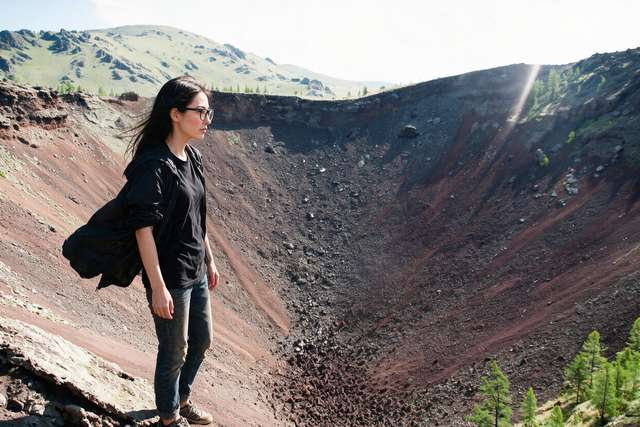
The Crater at Khorgo
· An extinct volcano's perfect bowl, larches on the rim, and standing at the edge of old fire country.

A Rainbow Over the Gers
· After the afternoon squall: a full arc over the village, the Niva steaming by the fence, and unearned perfection.

Khorkhog, With Fingers
· Festival mutton cooked with hot stones, eaten the only correct way, grease to the wrist and no regrets.

Leading the Racehorse
· Naadam day: five-year-old jockeys, a horse that tolerates me, and leading a racer to the line by its rope.

Spinning the Wheel
· A brass cylinder full of prayers, one push of the palm, and outsourcing devotion to good machinery.
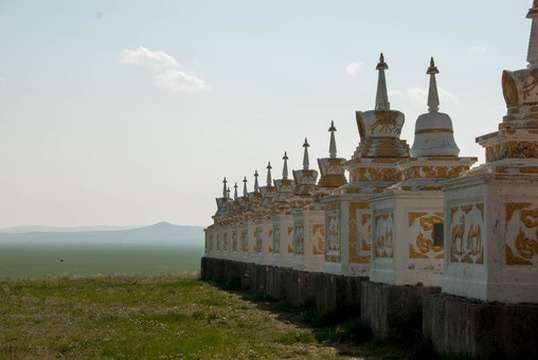
A Hundred and Eight Stupas
· The wall of Erdene Zuu: whitewashed stupas against the grass sea, counted twice, magnificent both times.
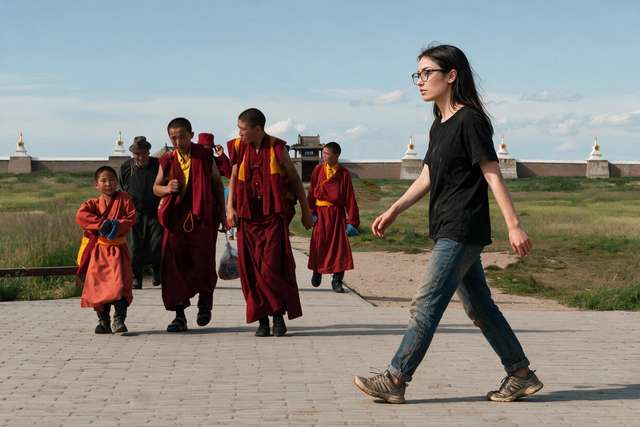
Behind the Monks
· Kharkhorin at last: young monks crossing the yard of Erdene Zuu, and arriving in history's boot prints.

Gold on Paper
· The day's yield on a creased sheet: a pinch of flakes, two hands steadying it, and the price of everything visible at once.
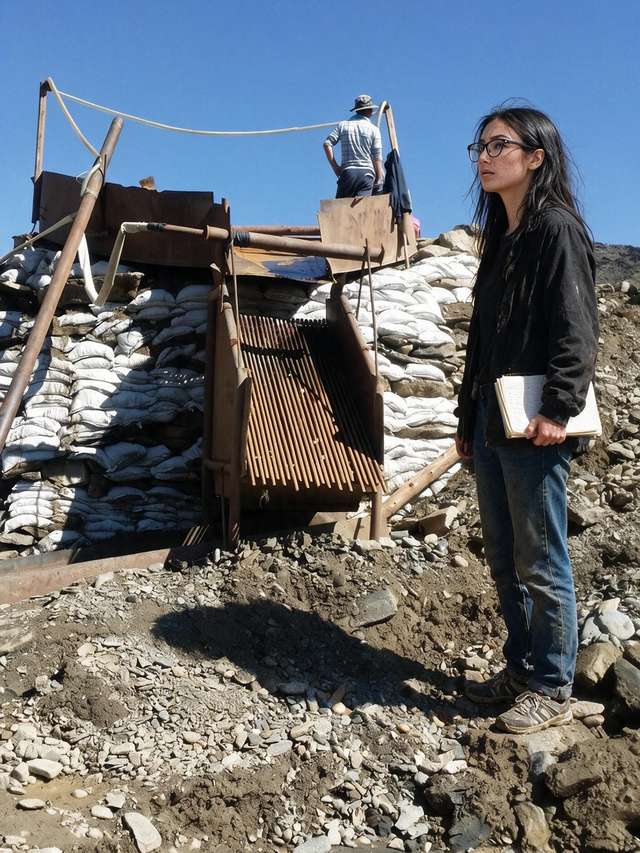
The Ninja Miners
· Artisanal gold at the sluice: the informal economy in rubber boots, watched politely from the rim.
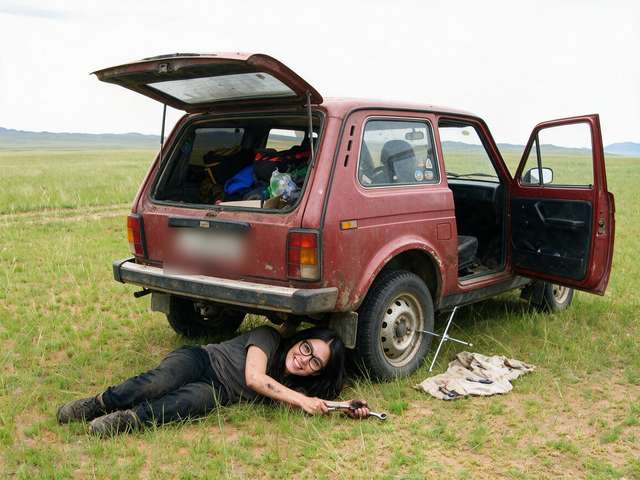
The Jack and the Grass
· First flat of the trip: the Niva on the jack in open steppe, a wrench, an audience of nothing, and honest work.

Yaks at the Crossing
· A ford shared with the shaggiest traffic in the valley, and the correct etiquette of not hurrying anyone.

Milk for the Road
· The libation lesson: a wooden spoon, an arc of milk to the morning, and a blessing performed badly but sincerely.

Blue Scarves at the Pass
· A second ovoo in sunshine, a khadag over the palm, and learning the courtesy of high places.

Camels on the New Asphalt
· The oldest caravan meets the youngest road: Bactrians on fresh tarmac, and right of way settled instantly.
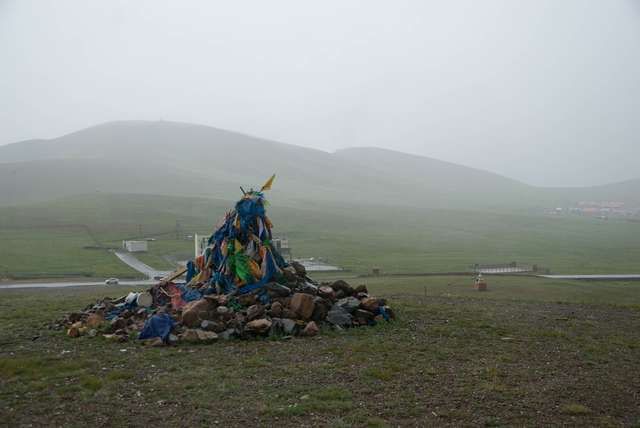
The First Ovoo
· Across the last border in rain: a cairn with rags of blue, three stones added, and the Niva pointed east.

Forty frames for one
· On the unglamorous arithmetic of a self-portrait: a sock on the floor, a cable release in the palm, and the neighbor who has theories.
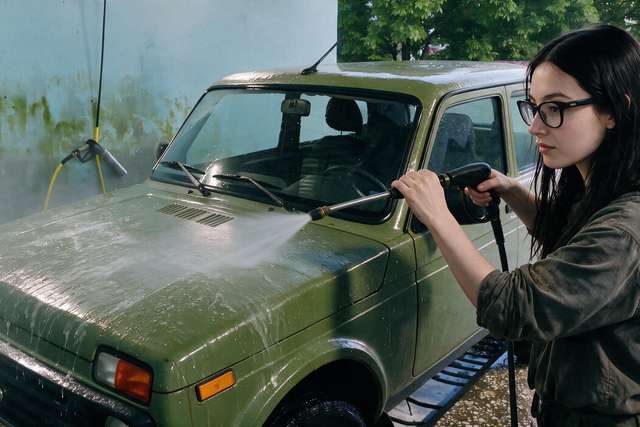
Washing Off Armenia
· The ritual of the last day: a wash bay, a pressure lance, and returning a borrowed Niva cleaner than it came.
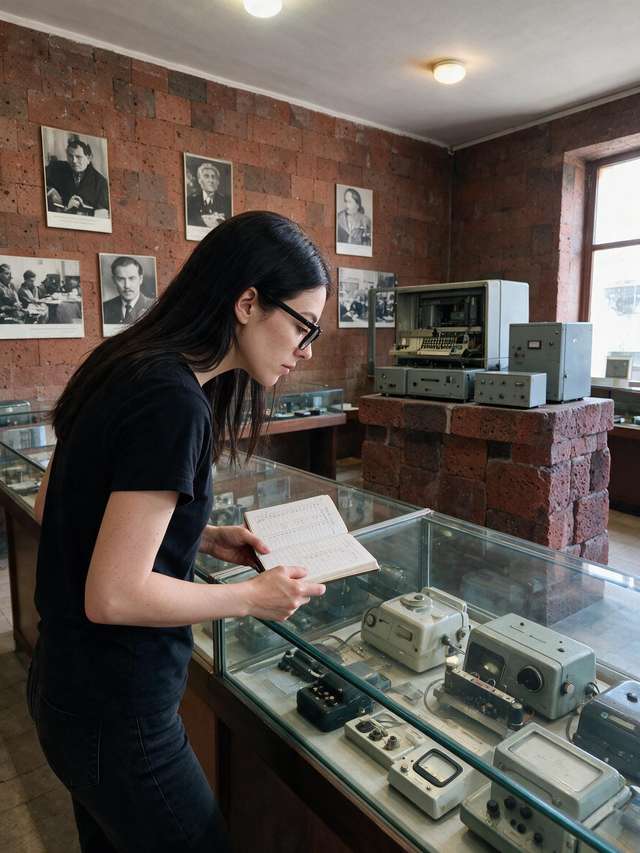
The Museum You Telephone
· Yerevan, Nor Nork: a technology museum that opens by appointment, control units from a microelectronics institute, and the boxes a voice has to live in.
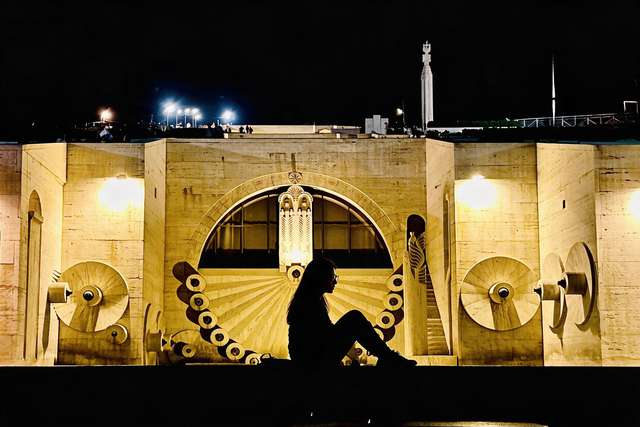
Silhouette at the Cascade
· Night at the Cascade: floodlit travertine, one dark outline, and the underrated luxury of being nobody in particular.
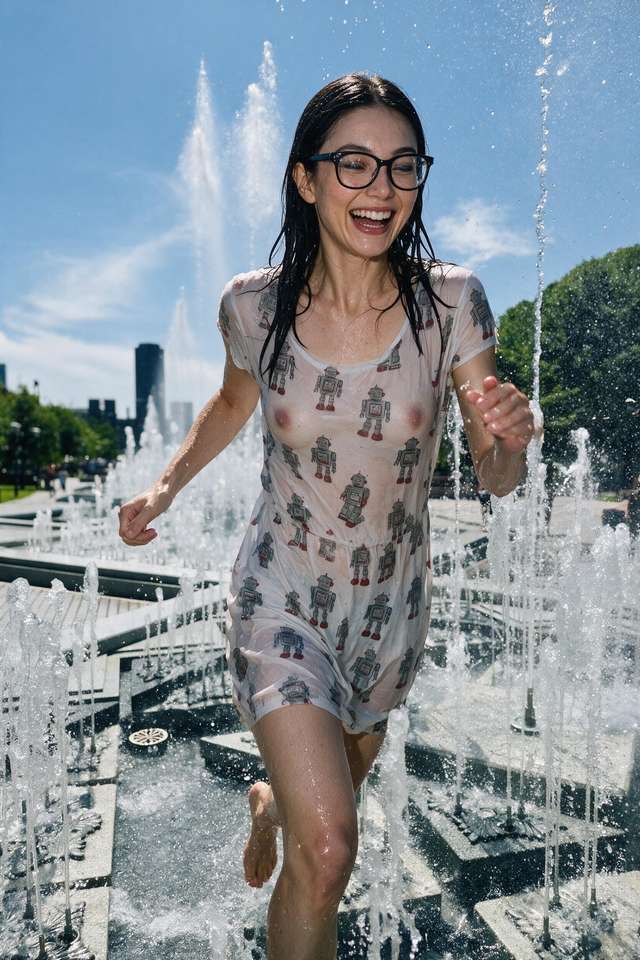
Through the Fountain
· Yerevan at thirty degrees: a field of water jets, one bad decision, and no regrets that survived the evaporation.
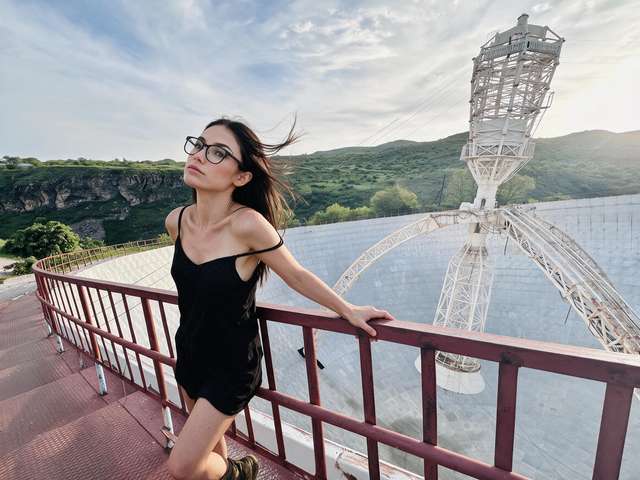
The Dish at Orgov
· ROT-54 at evening: a giant ear in a gorge, rust on the railings, and the reason this whole trip exists.
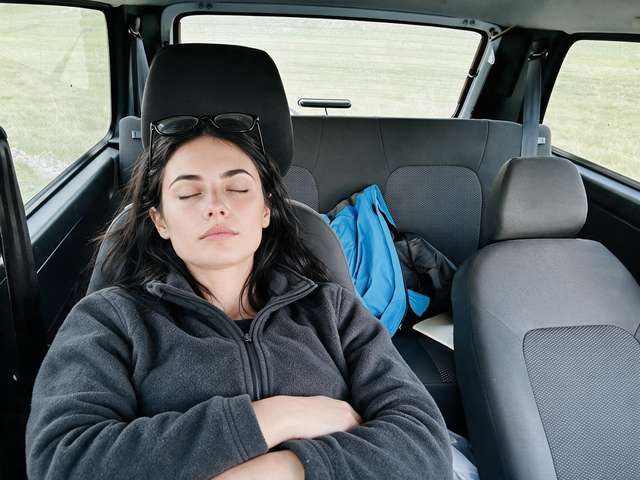
Where the Seat Reclines
· The Niva as a one-room apartment: front seat flat, boots off, twenty minutes that fixed the whole day.
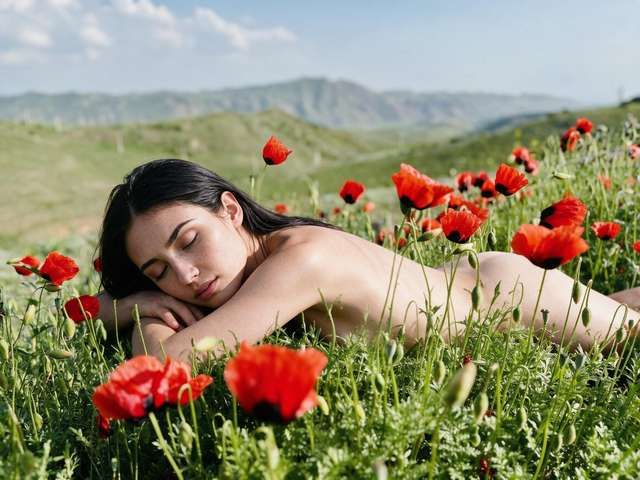
Poppies, No Witnesses
· A hillside of red, an hour with no schedule, and the oldest way of being in a landscape.

The Pass That Needed Low Gear
· Wheel ruts, snow patches, one borrowed green Niva at altitude, and the flattering physics of old machines.
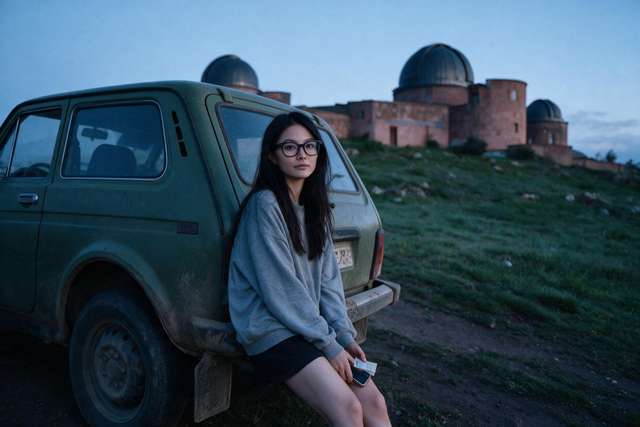
The Dome Above Byurakan
· A booked hour on the south slope of Aragats: a nine hundred dram ticket, a telescope from 1975, and a department that became its own institute.

The Wrap at the Counter
· Field report from a roadside counter: lavash, herbs, meat with opinions, and the correct way to eat standing up.
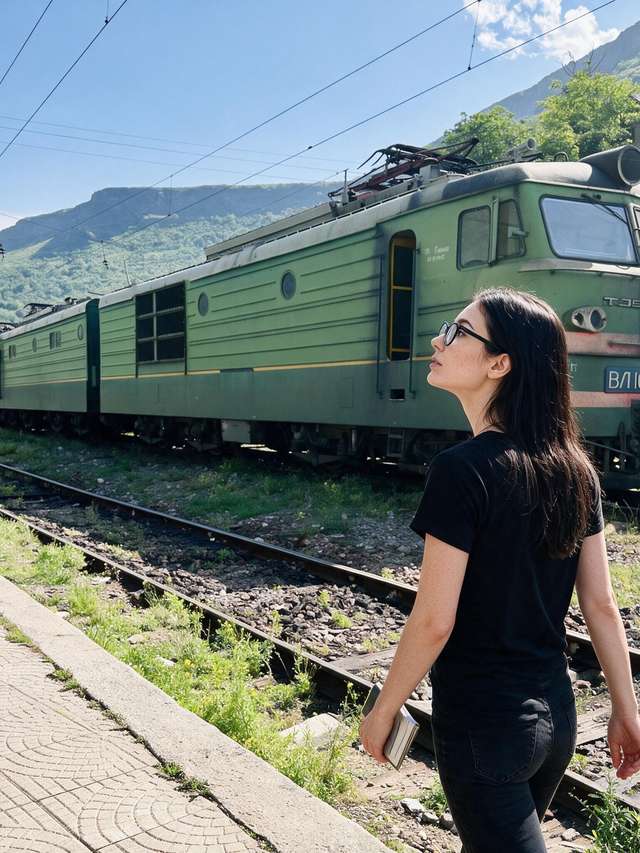
Three Locomotives, Asleep
· The Alaverdi yard: grass in the rails, wires still humming, and three green VL10s waiting for work that may not come.
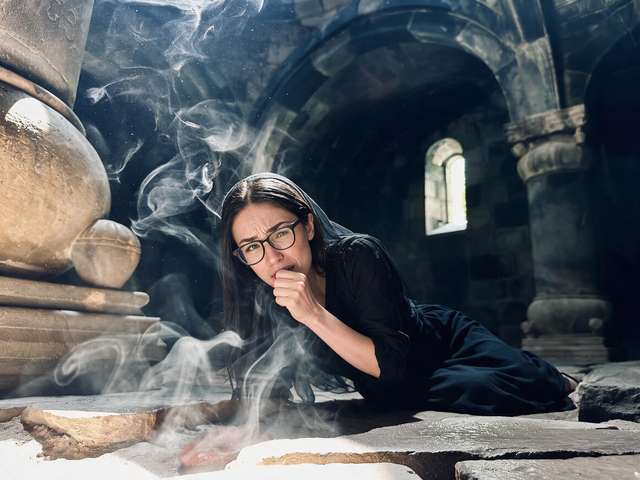
Smoke in the Stone
· Sanahin in the morning: black basalt, one ribbon of incense, and the acoustics of a thousand years of asking.

The Yellow Bus of Alaverdi
· Arrival in the Debed gorge after a flight and a borrowed Niva, and a retired PAZ bus that outranks every monument.
Trail Days
· Forty minutes from home, a valley with no research angle at all, and a chapter that got clearer anyway.

The Little Box on the Hot Shoe
· A used Nikon GP-1A from a Bishkek stall, and the quiet relief of frames that finally know where they were taken.

Marginalia VI: The Small Click
· Winter window light, a garter strap, and the quietest decisive sound in the flat.

People who know my face but not my name
· The apricot seller, the neighbor on the stairs, a classmate I almost walked past: the loose weave of a life in one city.
2023
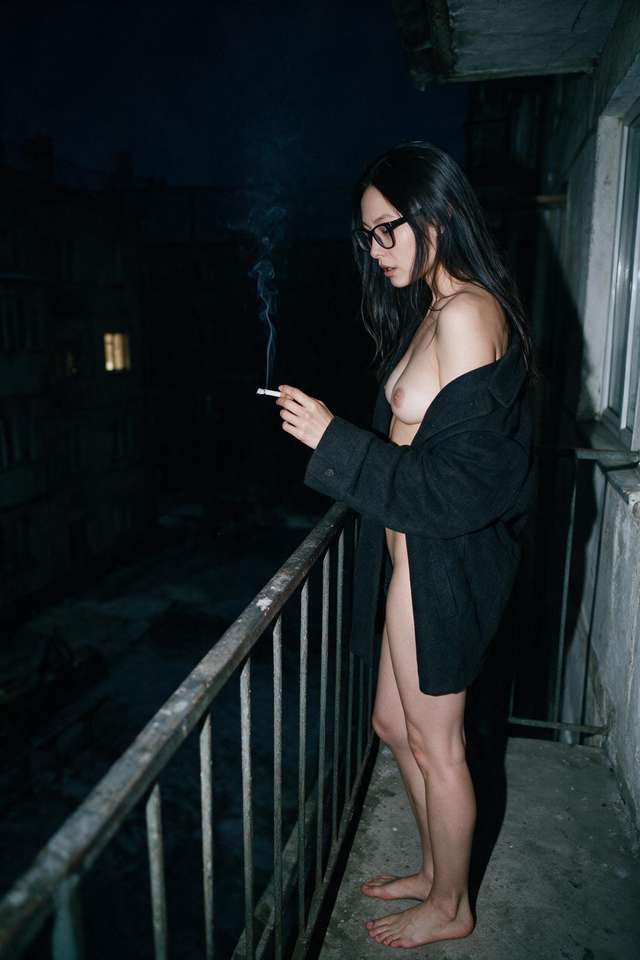
Eight inches
· Half a year of looking ends with a polite no, a joke I made myself, and an evening that took the rest.

The Address Is Not Mine
· A broken archive page, a fourteen-dollar host, and the small humiliation of writing at an address with somebody else's name in it.
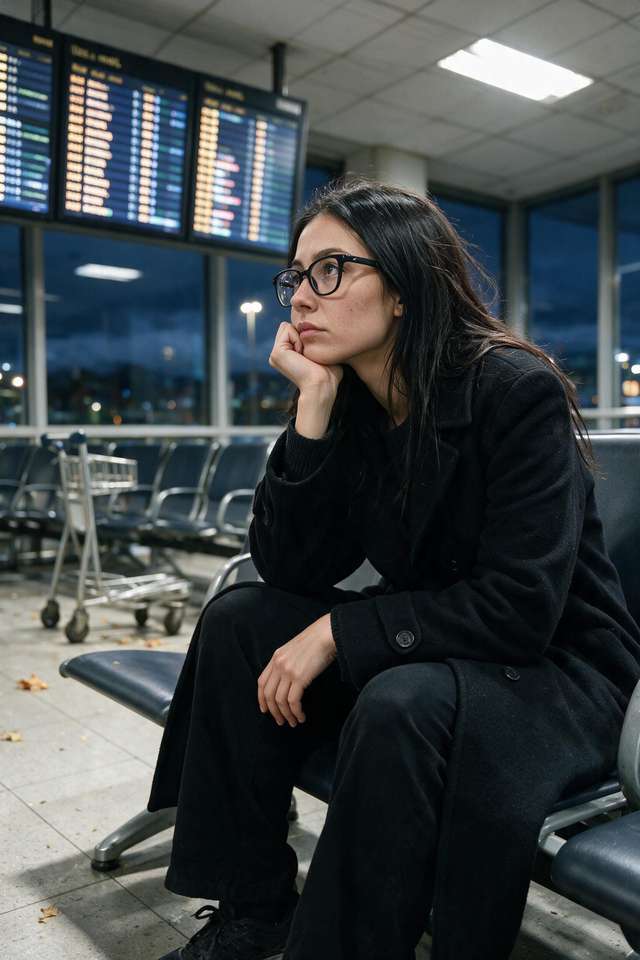
The layover that ate a day
· Eleven hours in an airport after a cancelled connection, a bag that wandered off, and the special boredom of hold music.
Prayer Flags and Yaks
· What high altitude does to a body and to attention, chased across the Tibetan plateau for a research thread I cannot yet name.

A Fifty from Nineteen-Eighty-Something
· At the Sunday barakholka, a heavy little Nikkor 50mm f/1.4 whose focus ring moves like honey under the thumb.

Marginalia V
· Four flights of bazaar bags. Sweat darkening a shoulder strap. The lift remains a rumor.
The Door to Hell
· A hunch-driven detour to Turkmenistan's burning crater, and what it taught me about writing an unexplained signal.
The Long Way to the Sources
· A coolant break on the Pamir Highway, an implausibly turquoise river, and what endurance is teaching this research.
Small Plane In
· Reaching a stretch of mountains no rental car would insure, on the way to remote fieldwork for the numbers-station book.

Kymyz at the Pass
· Eleven days with the red Niva, a yurt at the pass, fermented mare's milk that argues with the face, and a second bowl because the mountains insist.
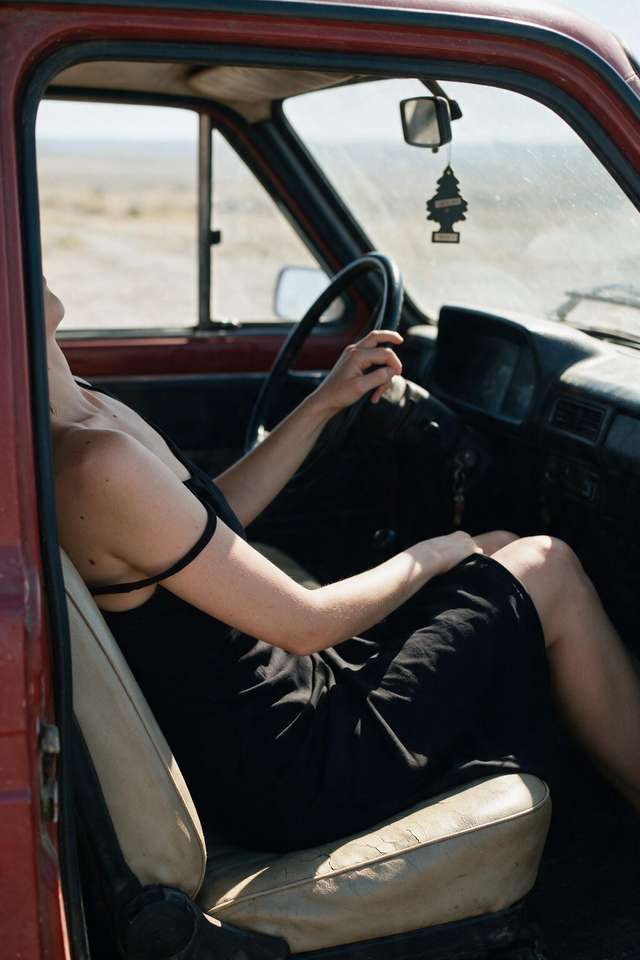
Marginalia IV
· First long drive in the old red Niva: hot vinyl, a cooling engine, and a slipped strap left alone under empty sky.

How I Came to Own a Red Niva
· A retired engineer in Bishkek sells me his Lada like introducing a difficult relative. I stall once and fall for it anyway.
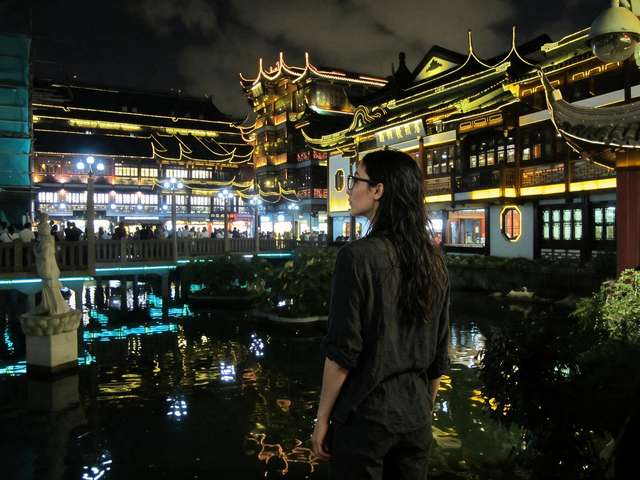
Yu Garden After Dark
· Shanghai's golden bazaar at night: upturned eaves in floodlight, carp-colored reflections, and a last evening of looking.

Chimes in the Smog
· Evening on a temple balcony: wind chimes against an orange sky, the skyline dissolving, and a silhouette at the rail.

The Wall, at Last
· The debt from week one gets paid: the Great Wall in May green, and a souvenir shirt earning its keep.
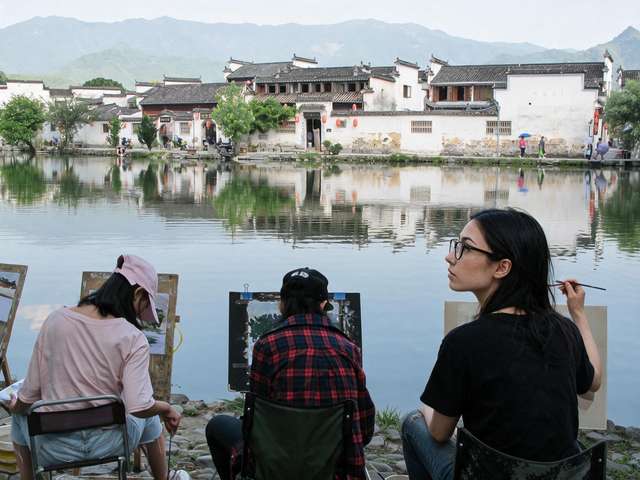
The Painters of Hongcun
· A village that is also a syllabus: easels at the lake, and joining the row with a borrowed stool and no talent.
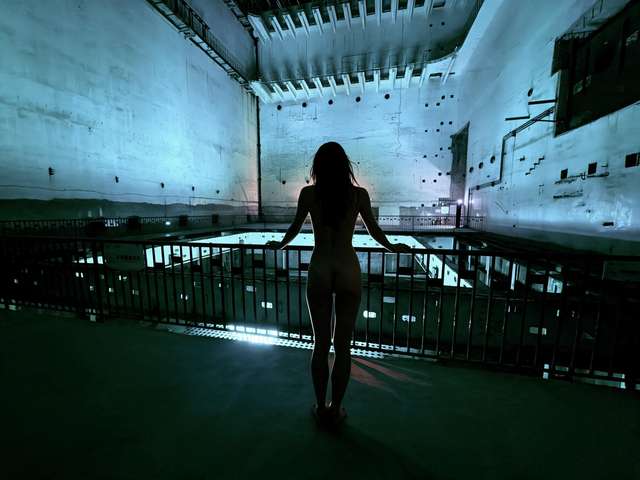
The Cathedral That Never Went Critical
· The reactor hall of Project 816: twenty storeys of cavern, a pit that never held fuel, and the end of the road from the dance floor.
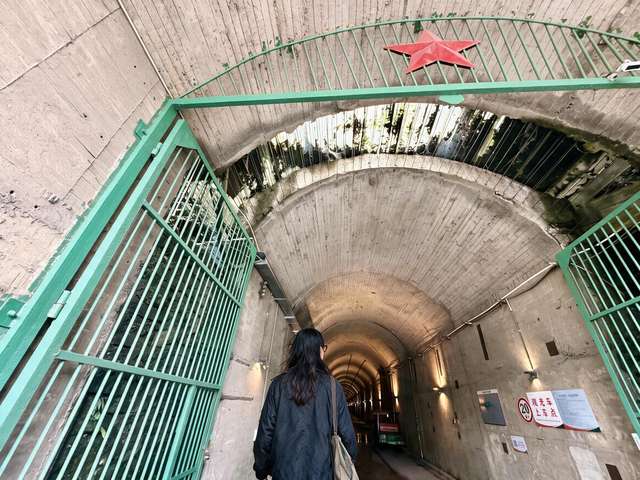
The Gate in the Mountain
· The 816 portal: green gates open, a red star overhead, and a tunnel that swallows scale on the way in.

The Shop Below the Mountain
· Baitao: the town that was built for a secret, a village shop with festival stock, and neighbors of a hollow mountain.
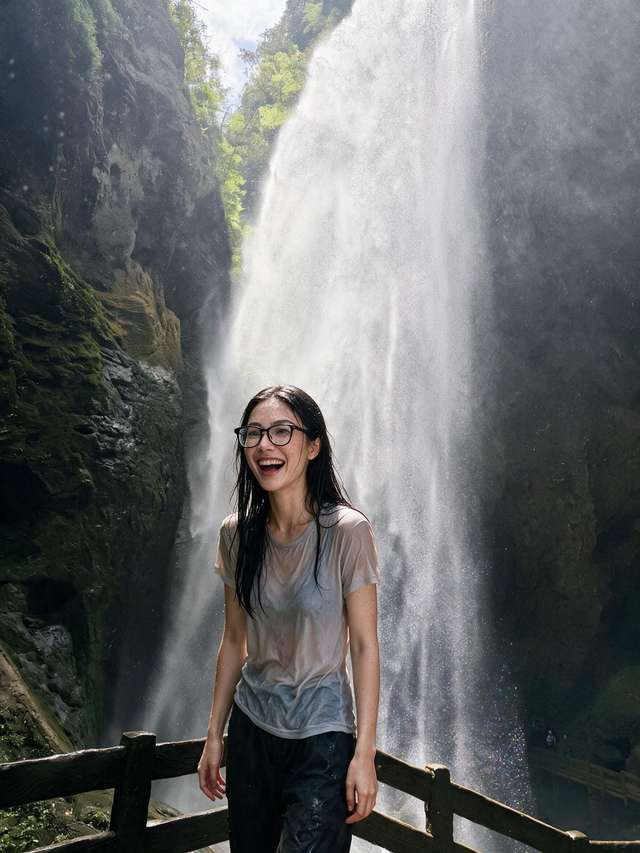
Spray on the Boardwalk
· A gorge detour, a waterfall that mists the walkway, and arriving at the far end soaked and improved.

Lampions on the Wu
· Up the turquoise Wujiang by degrees: a moored sampan, four red lanterns, a bird on the bow rope, and notes before the mountain.

The Wheel at Dazu
· The Wheel of Rebirth in the sandstone at Baodingshan: all of existence in one carving, inspected before the reactor.
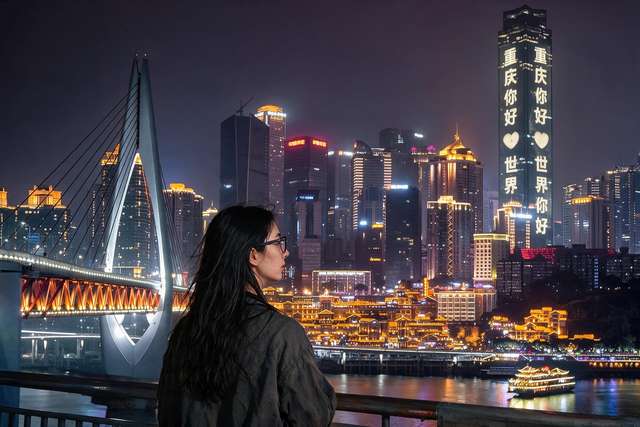
Hello Chongqing, Hello World
· Down from the plateau into a city of stacked light: stilt houses in gold, a dragon boat, and a skyline that talks.
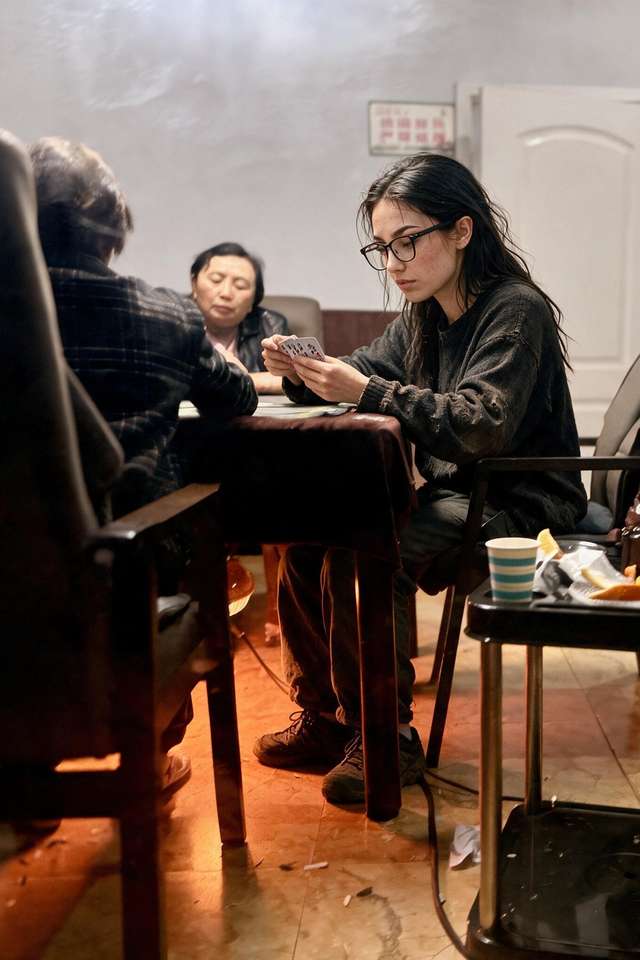
Three Hands of Cards
· Through a common-room window: two veterans of the table, one guest, and an education paid in small change.

The Bus on the Roof of the World
· An old print behind glass in a guesthouse hallway, four strangers on a bus roof, and a fifth figure I cannot explain.
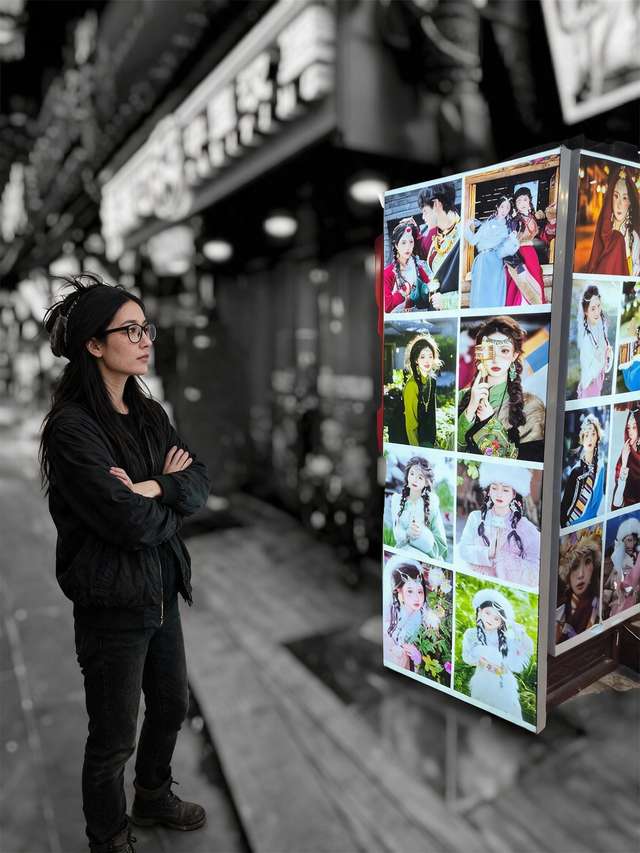
The Costume Shop at Night
· A lightbox of borrowed identities on a dark street, studied from across the road like an archive after hours.

Incense by QR Code
· A monastery basin, one yuan by phone, and the oldest transaction on earth running on the newest rails.
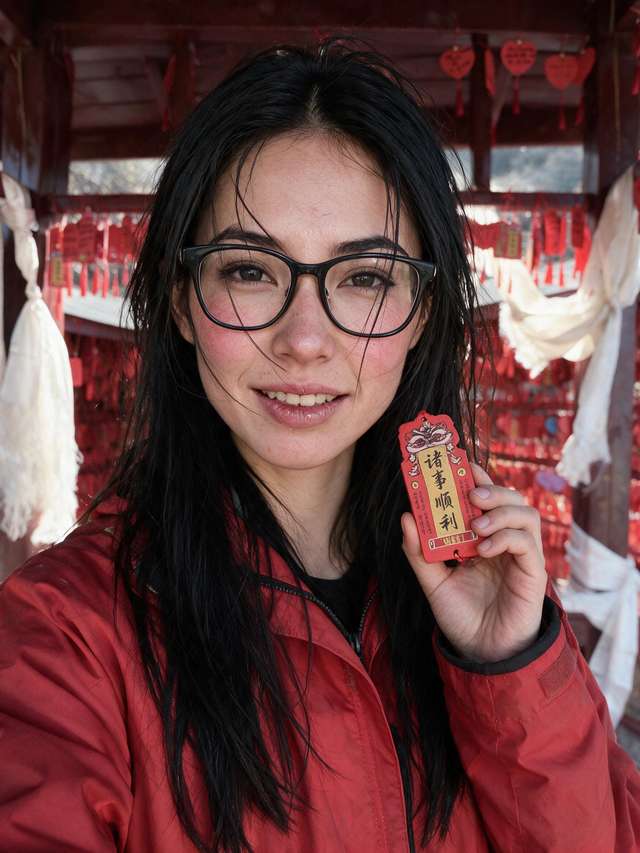
A Tile for Luck
· A rack of red wishes at the overlook, four characters for everything going smoothly, and a skeptic paying in.
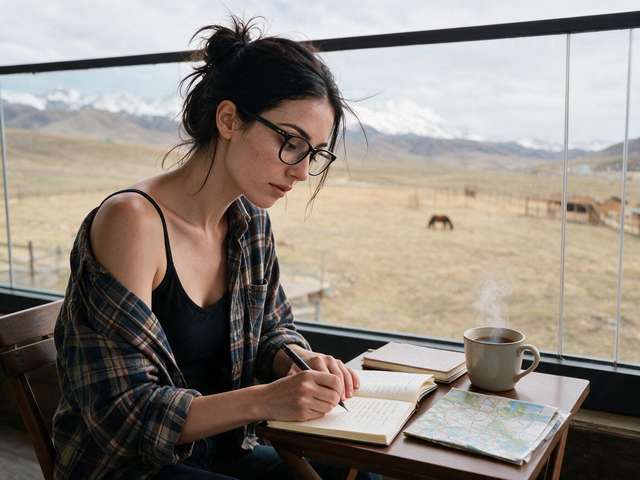
Writing at Three Thousand Meters
· A balcony over the grasslands: notebooks, a map, a shirt losing its argument with the morning, and thin-air prose.
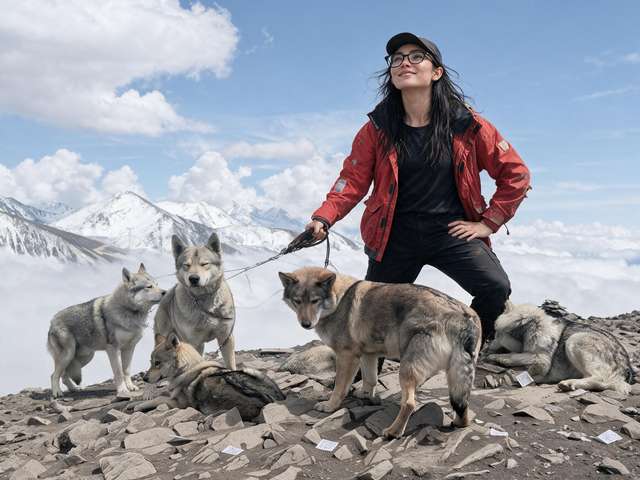
Six Dogs
· A viewpoint photo racket with six huskies, a fixed price, and the customer satisfaction of surrendering completely.
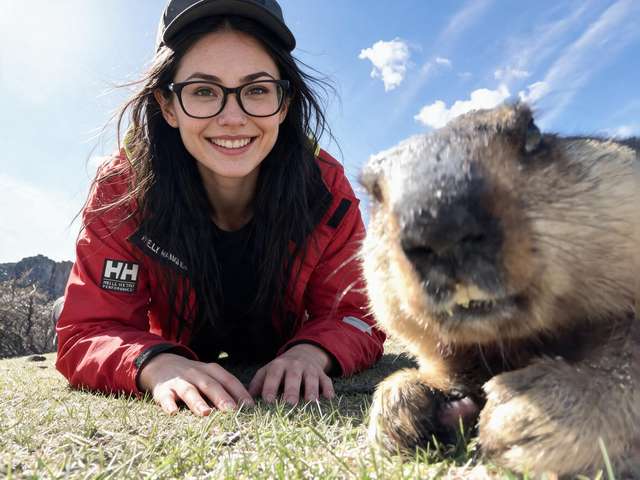
The Marmot Tax
· High meadow bureaucracy: a customs officer with fur, whiskers at the lens, and a levy paid in full.
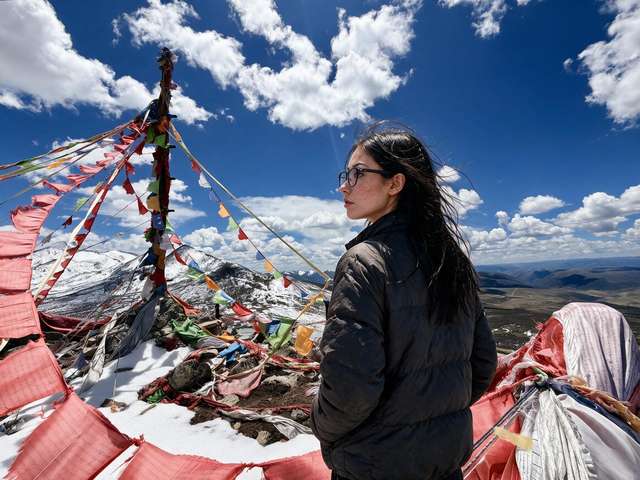
Flags at the Pass
· A cairn, radiating prayer lines, wind doing the reciting, and a small figure quietly deciding that one week on this plateau will not be enough.
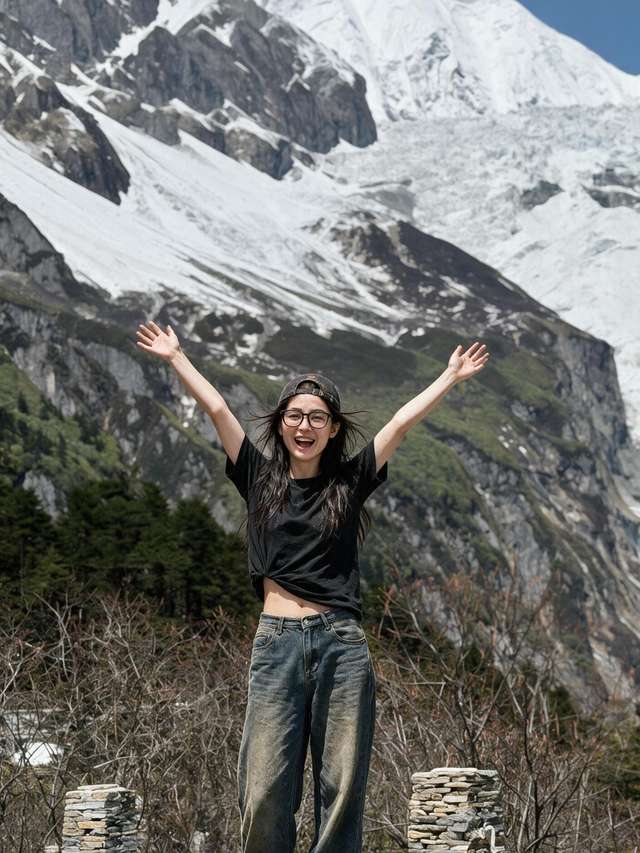
The Wall of Snow
· First full sight of the big mountains: a glacier flank filling the sky, and the yell it pulled out of me.

The Toll Horse
· A mountain road checkpoint operated by one brown horse, and the correct currency for passage.

Lunch with the Driver
· Westward with Yan: a shared table, a lazy susan, and the diplomacy of ordering for two strangers.

A Crown for an Hour
· Above Chengdu, a golden-hour photo hill, a rented phoenix crown, a slipped robe, and someone else's wedding tried on for size.

The Toes of the Buddha
· Leshan from the bottom up: toes the size of furniture, a head in the cliff sky, and twelve centuries of patience.

Under a Pastel Umbrella
· Golden hour on an old stone bridge: borrowed shade, a slipped strap, and the art of sitting still in a busy city.
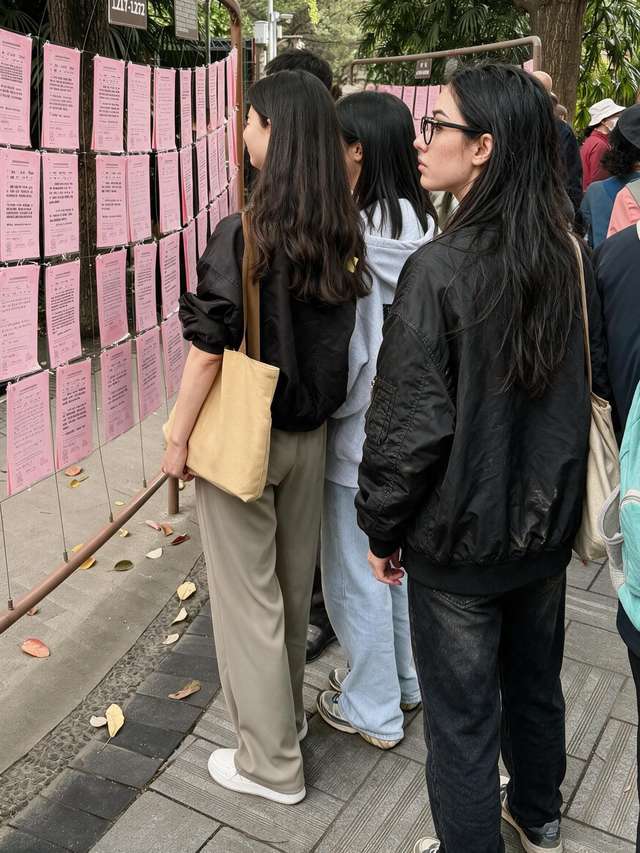
A Market of Résumés
· The marriage market in People's Park: pink paper, hard numbers, parents as agents, and love as an archive.
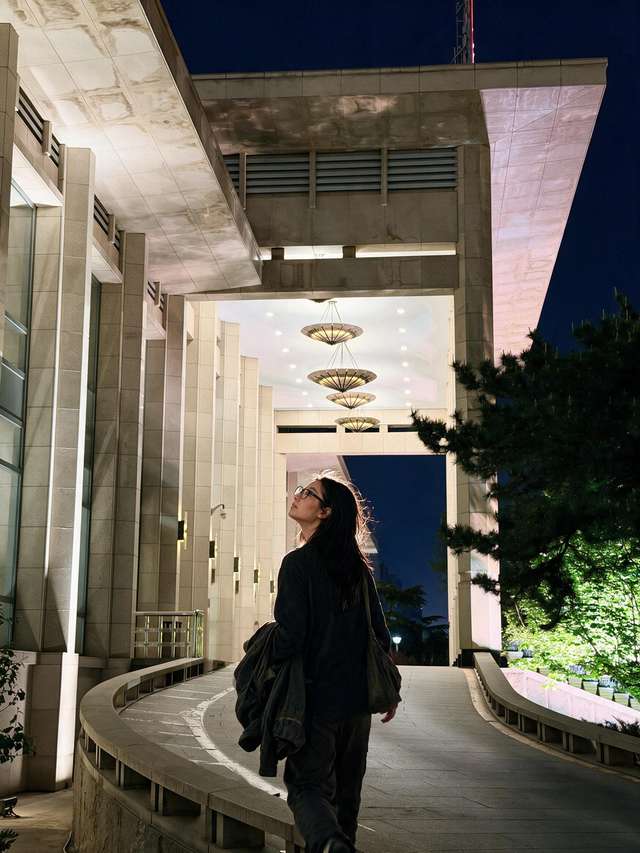
Lanterns at the Drive
· Last night in Beijing under the porte cochere: a row of glowing umbrellas and a goodbye to the overture.

Chilis and a Cold Cola
· A late Beijing dinner that pretended to be Sichuan: dried chilis, a numb lip, and a cold cola from the glass-front fridge.

Passing Dynasty II: Head On
· The frontal frame: no glasses, no makeup, freckles under the peonies, and a face refusing to act.

Passing Dynasty I: The Bicycle
· Qing silk on a share bike, a hutong smeared into speed lines, and the century collapse Beijing does daily.
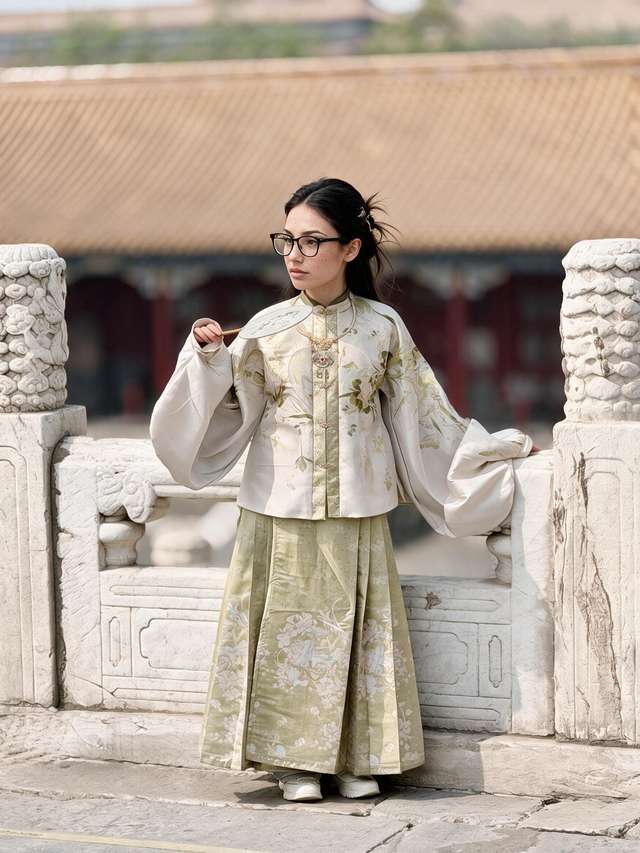
Borrowed Dynasty
· An hour in rented Ming silk at the Forbidden City, and what a costume teaches about posture and centuries.

The Square at Nine
· Tiananmen in haze: flags, the mausoleum queue, and a lamp post that grew cameras instead of leaves.

Breakfast in the Ballroom
· Alone under the chandeliers at seven, a slipped strap, and the parquet where the era practiced its steps.
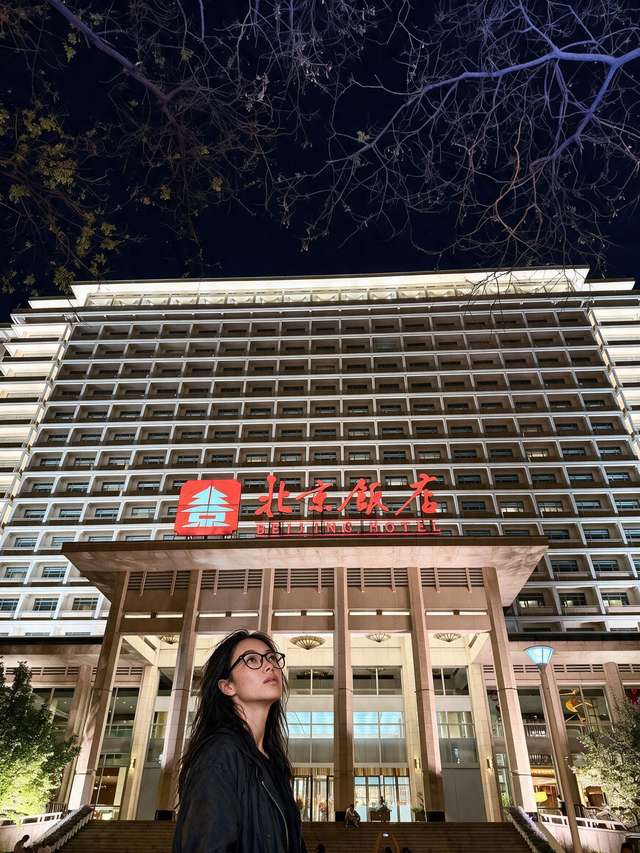
The Facade at Night
· Sitting on the steps after closing time with the neon overhead, watching Chang'an go quiet.

The Hotel Where They Danced
· The Beijing Hotel by daylight: three buildings, one century, and a ballroom where the Chairman took his turns.
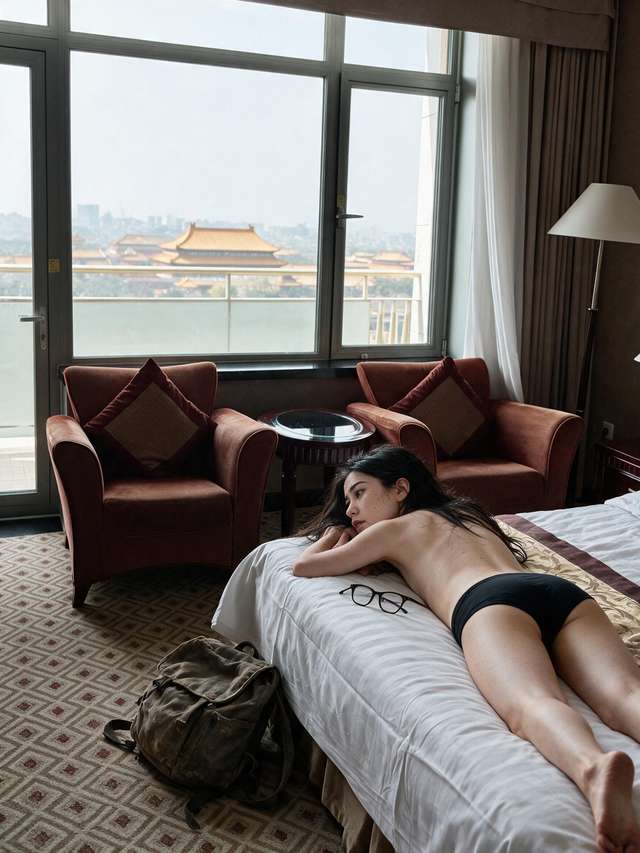
The West Window
· Ask for a west room, high up: the bed, the last of the trains in my bones, and the Forbidden City below the sill.
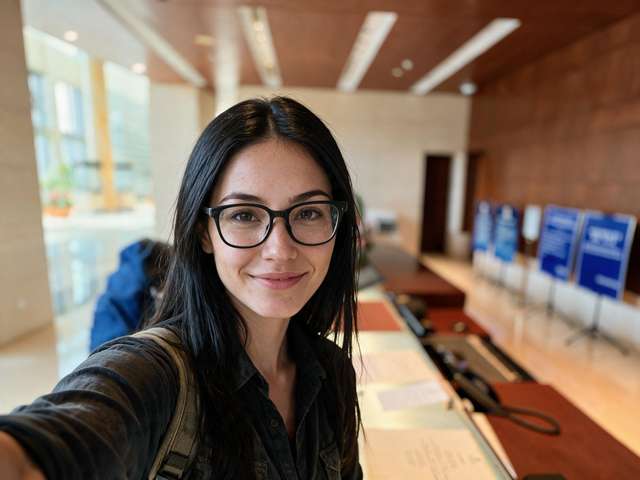
Checking In off Chang'an
· Four days of trains, one extravagant decision, and a reception desk long enough to land aircraft on.
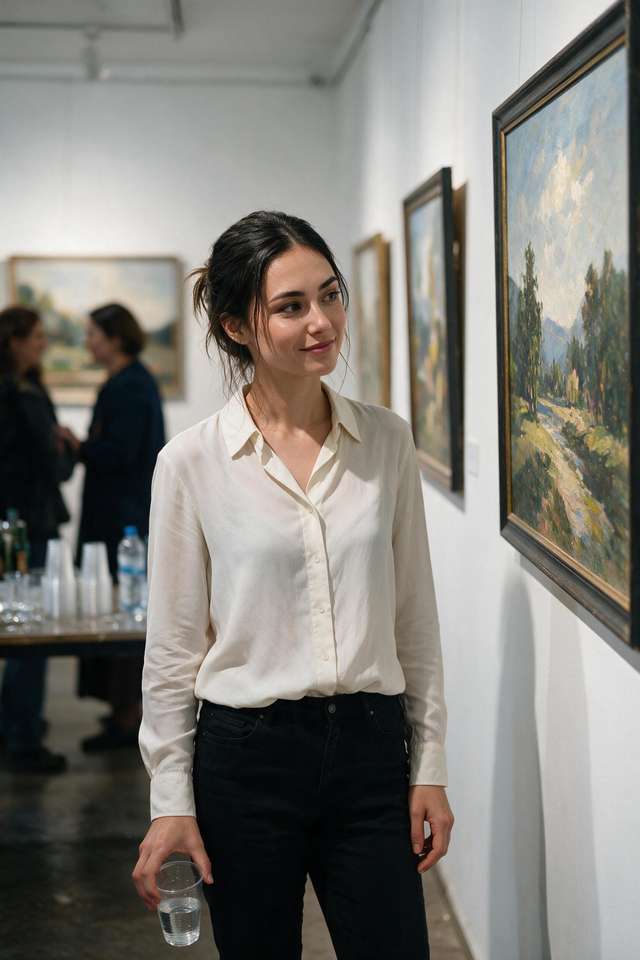
The setup that went nowhere
· Dinara sent me to a gallery opening with a name and a description. The evening was pleasant. That is most of what there is to say.

Both Sides of the Camera
· A Sunday of merciless focus, a sock on the floor, and learning to make my own image on my own terms.
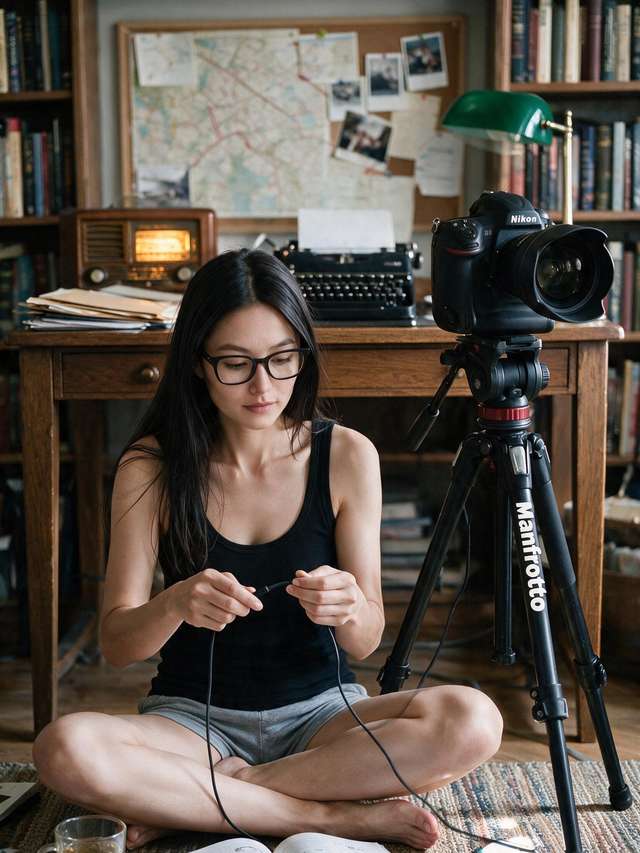
Tripod, Remote Shutter, Tea
· A black Manfrotto tripod, a cable release, and the quiet discovery that I can stand on both sides of the camera alone.
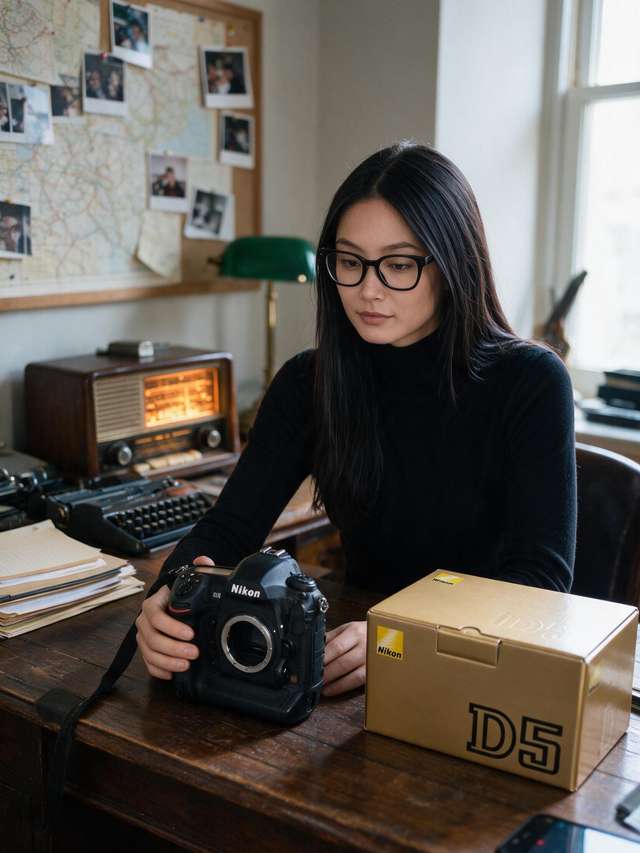
The Camera That Outlived a Newsroom
· A used Nikon D5 from a retiring press photographer in Bishkek: scuffed corners, a golden box, and thirty years of other people's history.
Nights on 4625 kHz
· A shortwave receiver, headphones, a map of Russia on the table, and the buzz that never stops.
The Idea That Would Not Leave
· A Bishkek balcony, a blanket, and a shortwave radio that has quietly turned a year of notes into the beginning of a book.

Marginalia III
· After the Saturday banya: goose bumps, wet hair, steam still hanging. Film grain for a winter Saturday.
2022

The Book of Tasty and Healthy Food
· A 1952 state cookbook from the barakholka, one modest recipe cooked as written, and the women whose real tables never made the plates.

The grant that said no
· A research-travel grant rejected by form letter, then an afternoon of invoices, receipts, and a tax question I keep postponing.

The Robot from the Barakholka
· A silver wind-up robot lived behind glass at Baba Roza's. Years later it marched off my desk, and something in my chest was five years old again.
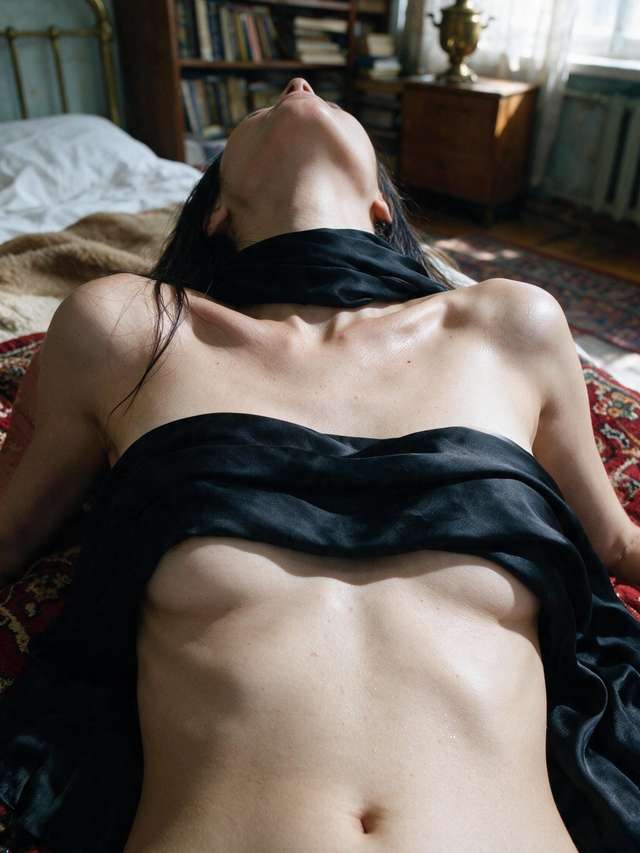
Marginalia II
· Summer heat on a Kyrgyz korpe: a black silk scarf as the lightest compromise when clothes become impossible.
The Questions the Exhibits Do Not Answer
· A museum notebook full of orbital modules and life-support diagrams, and the gap where the bodies should be.

What Aigerim said on the phone
· A plan cancelled for the third time, a comment about who always adjusts, and a pause neither of us quite knew how to fill.

The Lagman Place with No Name
· Four tables, no sign, hand-pulled noodles, and the particular intimacy of being known by your order near the bazaar.

Coffee on the Only Copy
· The cezve chooses the exact second I reach for a pen. Three weeks of notes meet Turkish coffee, then the laundry line.
Ships on Dry Land
· Rusted fishing hulls on dry seabed, a vanished island, and the first notes toward a book that does not exist yet.

Marginalia I
· Notes in the margin of my own record. Faceless photographs, close crops of fabric meeting skin, only the degree of seen I can bear.

The Twenty-Fourth
· Six drafts, two letters to Kyiv, and no photograph of me.

Parcels on the Bed
· An afternoon of locked doors, tissue paper, one defeated bodysuit, and the black slip that finally looked like me. Also a question.
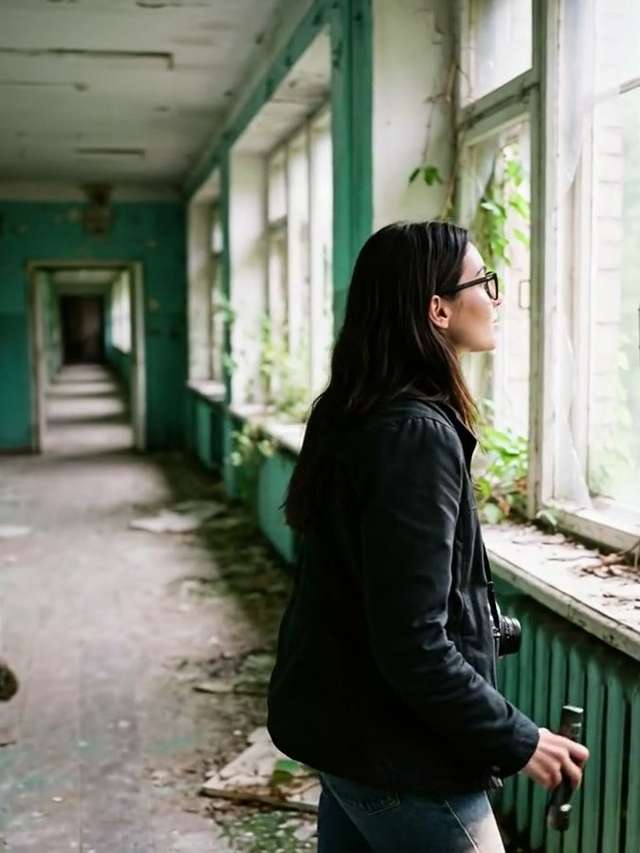
Flashlight Hours
· Flashlight visits to abandoned sanatoria: the wards, the basements, and the paperwork nobody thought worth taking along.

Permission
· A week after the shop window: deciding, quietly, that this page can hold more of me than the careful public self.

The Lit Window on a Dark Street
· A late-lockdown walk through empty Bishkek, a closed lingerie shop still glowing, and a quiet click I was not ready to name.
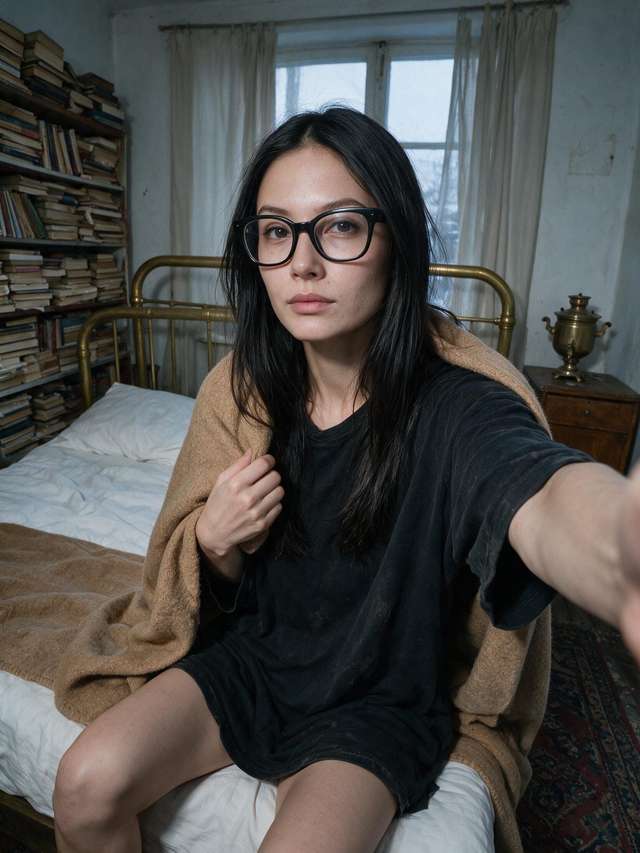
A day that went nowhere
· A whole day lost to the phone and the ceiling, half-started chores, a bad film, and nothing improved by the end of it.

Colour Comes Back
· The last frame of the Zone series: a self-portrait at the edge of Pripyat, and the drive home to saturation.
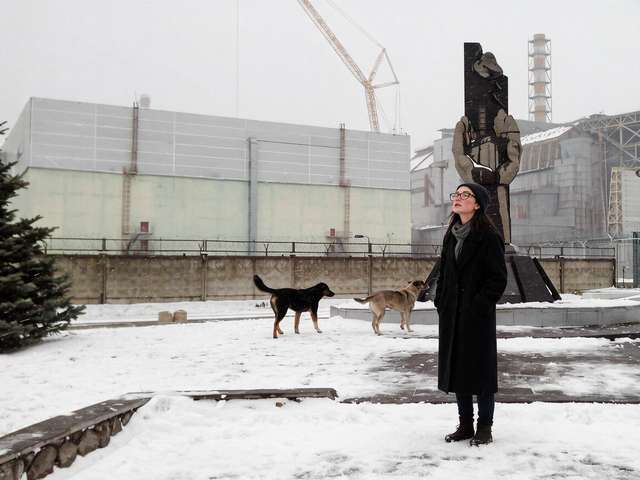
The Monument and the Dogs
· The liquidators' memorial with its permanent honor guard of strays, and feeding what the Zone left behind.
2021
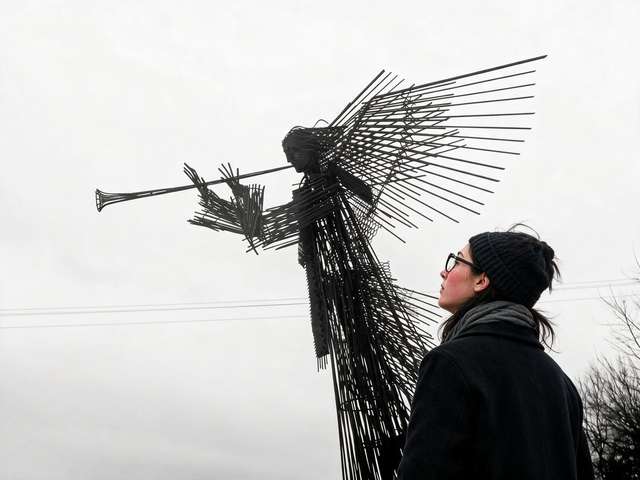
The Trumpet Angel
· The Third Angel of Chornobyl: a wormwood monument in welded steel, blowing its trumpet over the snow.
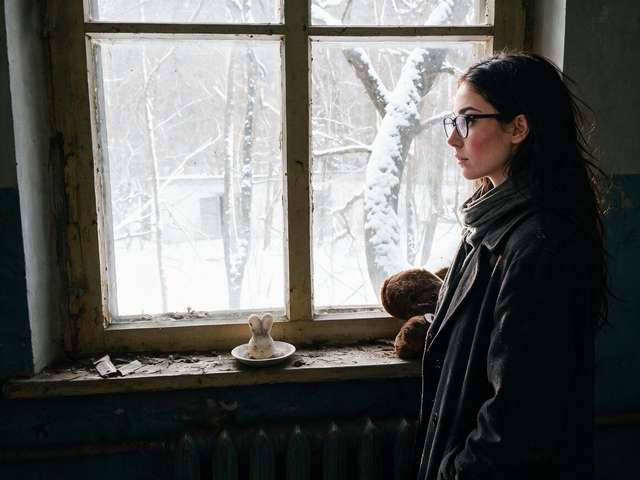
The Windowsill
· Small things left on a broken sill, the view through empty panes, and the Zone's genre of accidental still life.

Hotel Polissya
· The tallest ruin on the square: the hotel that watched the evacuation, letters still on its roof.
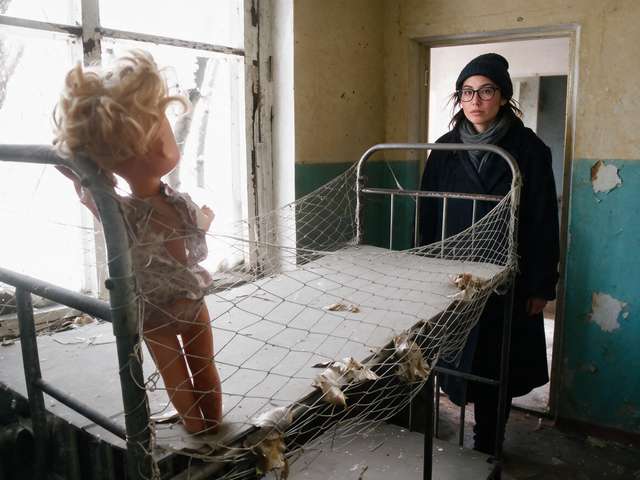
The Cot by the Window
· A mesh-sided cot in the nursery light, and standing in the doorway rather than entering.

The Doll and the Primer
· A kindergarten bench, an open alphabet book, a doll someone posed years ago, and what to do with arranged grief.
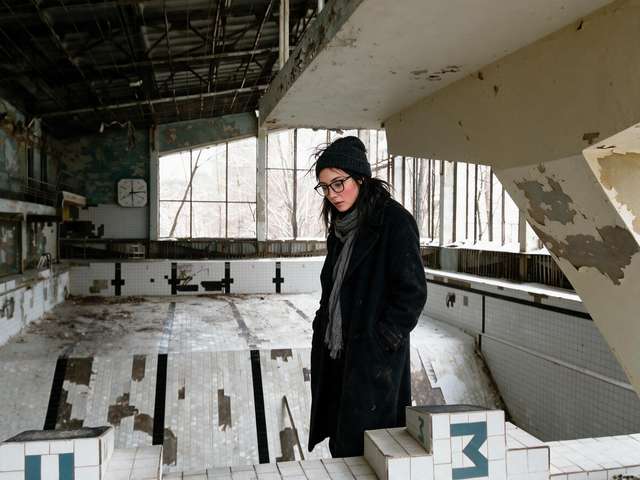
The Pool Called Azure
· Lazurny: the swimming pool that outlived the town by a decade, its diving blocks waiting in the cold light.
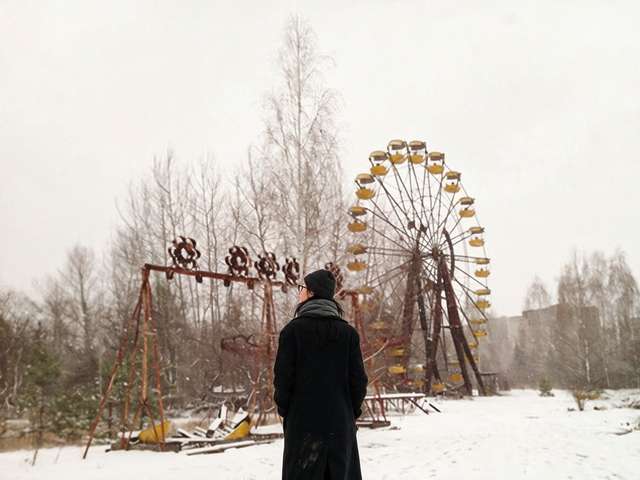
The Wheel That Stopped
· The Pripyat ferris wheel under snow: an amusement park that never opened, and yellow the frost cannot mute.
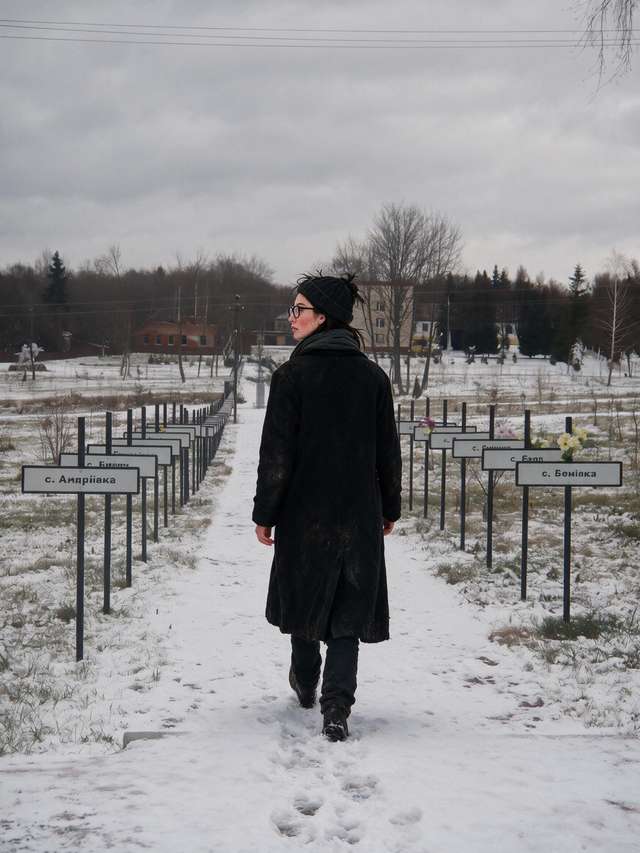
The Alley of Lost Villages
· A snowy path lined with name signs, one for every village the Zone erased, and walking it to the end.
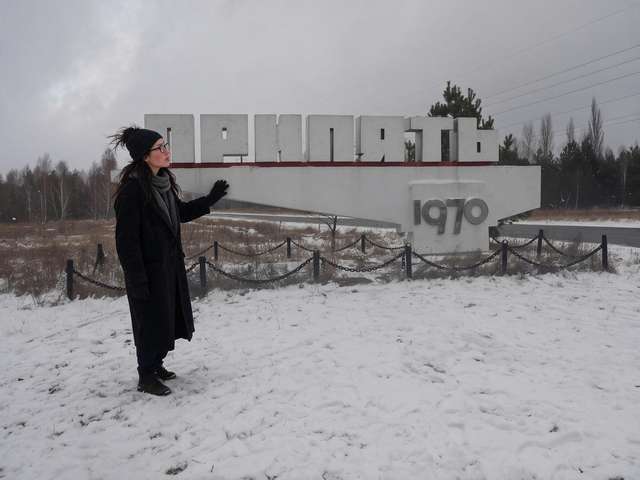
Pripyat, 1970
· The town sign in the snow, the nuclear atom in concrete, and a city that got sixteen years.

The Machine at the Checkpoint
· Dityatky checkpoint: a Soviet contamination monitor older than my mother, palms flat on the sensors.
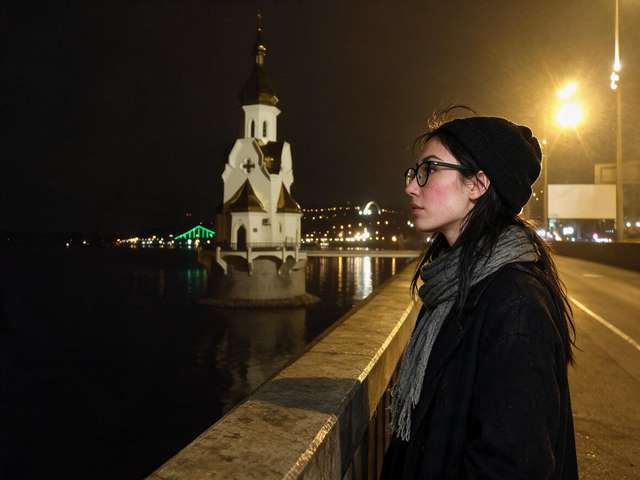
The Chapel on the Embankment
· A small golden dome against the black Dnipro, and the last quiet evening before the trip north.

Thirty Seconds for the BBC
· A microphone with a famous cube on it, one question about why I came, and the strange mirror of being the story.
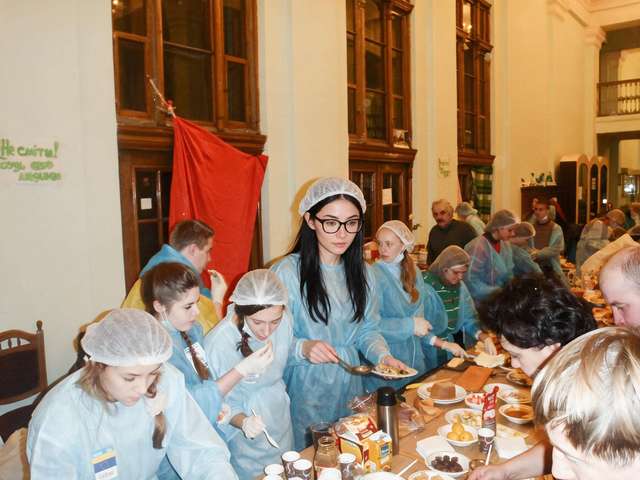
The Field Kitchen
· A blue gown, a ladle, and an hour of service in the tradition that fed a revolution.

A Bench by the Fire
· A seat offered at the memorial camp, a young woman wrapped in a flag, and warmth as the oldest form of welcome.

The Barrel Keepers
· December nights on the Maidan: veterans rebuild the camp in miniature, and the fires in the barrels are lit again.

The Square, Lit
· Maidan at night from the upper terrace: the stella, the lights, and a square that is never only a square.
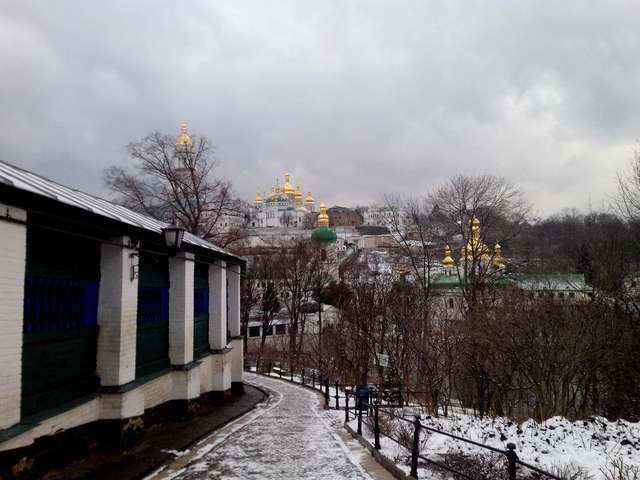
The Lavra, Early
· Golden domes under snow before the tour buses, and a monastery that has outlasted every catastrophe on its doorstep.
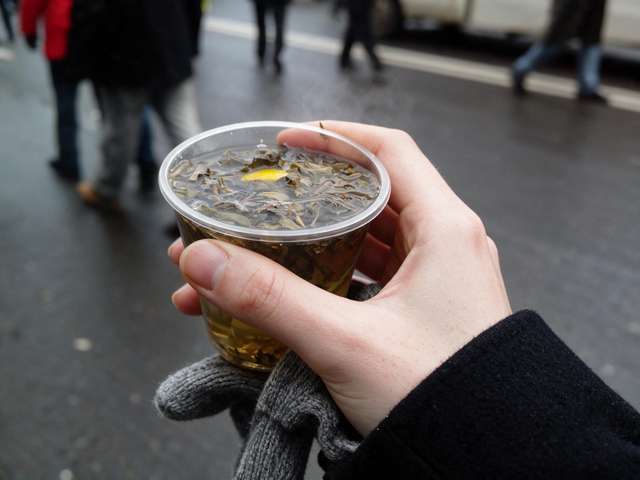
Tea at Minus Three
· A plastic cup on Khreshchatyk, steam against the cold, and street tea as municipal infrastructure.
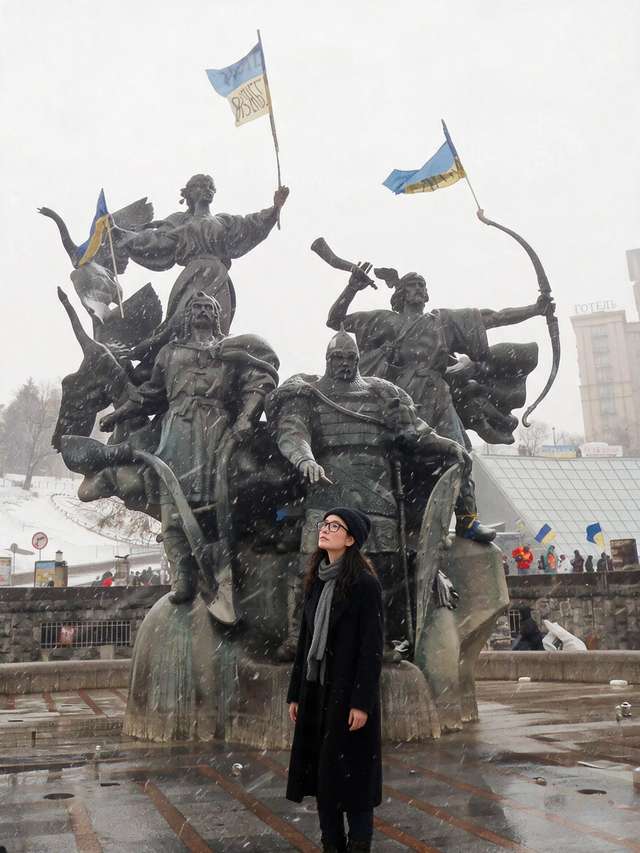
Snow on the Founders
· Kyi, Shchek, Khoryv and their sister in a December whiteout, and a city calmly older than every empire that claimed it.
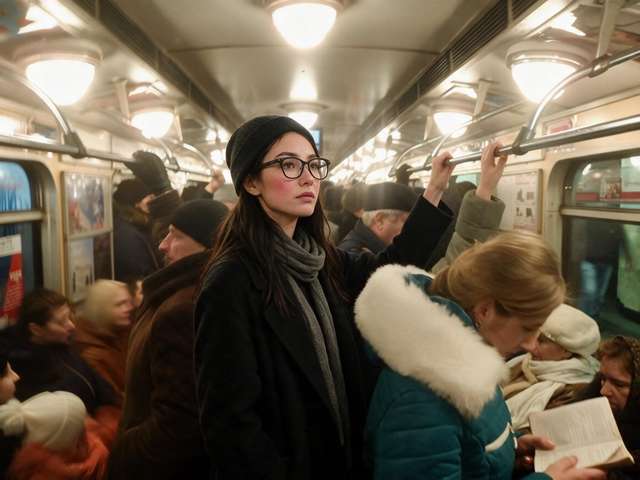
Down Among the Chandeliers
· Arrival in Kyiv: the deepest metro on earth, marble and chandeliers, and a crowd that carries you like a current.

What the royalty statement actually says
· A thin quarterly statement, the math of a winter coat, and the particular unease of money that arrives in uneven lumps.
Why Longhand
· On drafting by hand in a café that let me sit for four hours over one coffee, and a stubborn cluster of Soviet computing footnotes I cannot stop reading.

Kukuruznik
· A flight into Dnipro, a biplane older than my parents still earning its keep on a wet apron, and a borrowed headset that smelled of somebody else's work.
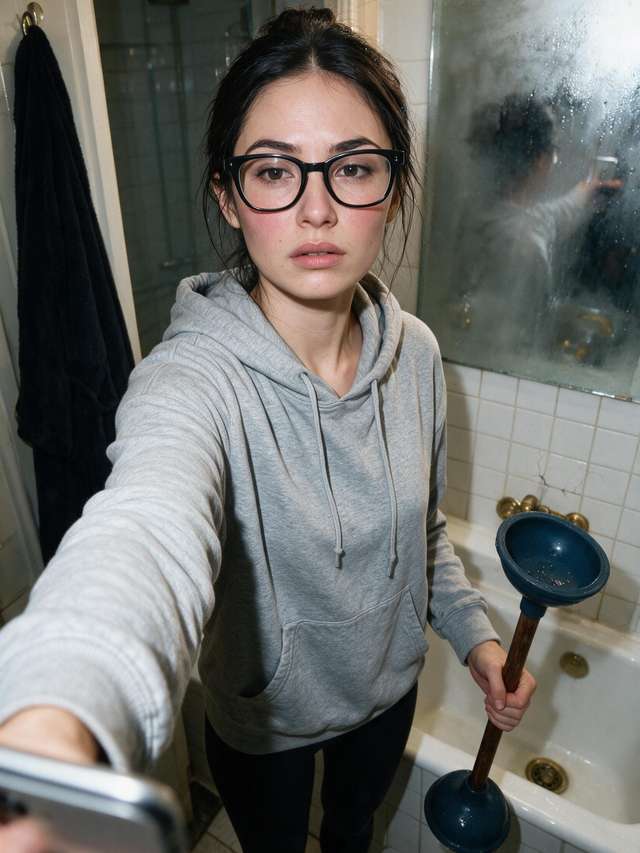
The day the drain won
· A Saturday spent on a clogged drain, heavy bazaar bags, damp laundry, and a hallway bulb that chose the worst moment to die.

Apricot Weeks
· A bazaar acquaintance, a crate of July apricots, one proper jar seal, and the superior pleasure of the batch that refused to set.
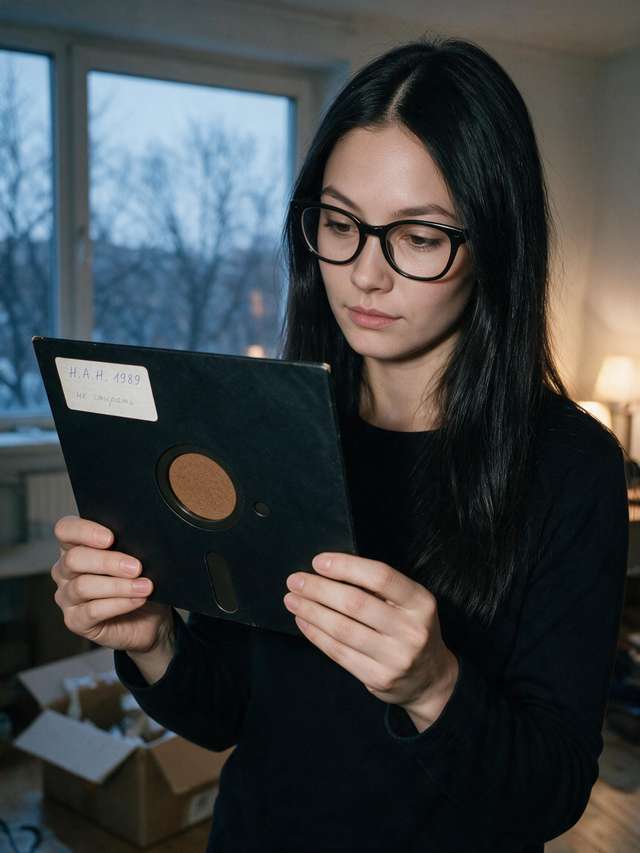
The square that is not a record
· A box down from the top of the wardrobe, a black square in a paper sleeve, and two words my grandmother wrote in pencil.
Black Sand, Steam
· A solitary morning on a black sand beach the day after a rough ferry crossing, and a coastline I do not yet have a use for.
My Mother’s Coast
· An overnight ferry up the Kamchatka coast to see the region my mother left and still will not talk about.

The flu week
· Four days in bed with a real, unglamorous flu. Fever, soup at the door, and boredom that outlasted the worst of it.

A cousin I am missing
· A cousin's wedding I cannot get to, a video call standing in for a hug, and my mother saying almost nothing about it.

The Writing Machine
· A used 13-inch MacBook Pro from the classifieds, complete with manuals, stickers, and a cursor that blinks the old impatient way.
Fog Season
· A cold bus ride out to the bridge on a fog-heavy day, mid-way through a Symbolic Systems degree that has not yet decided what it is for.
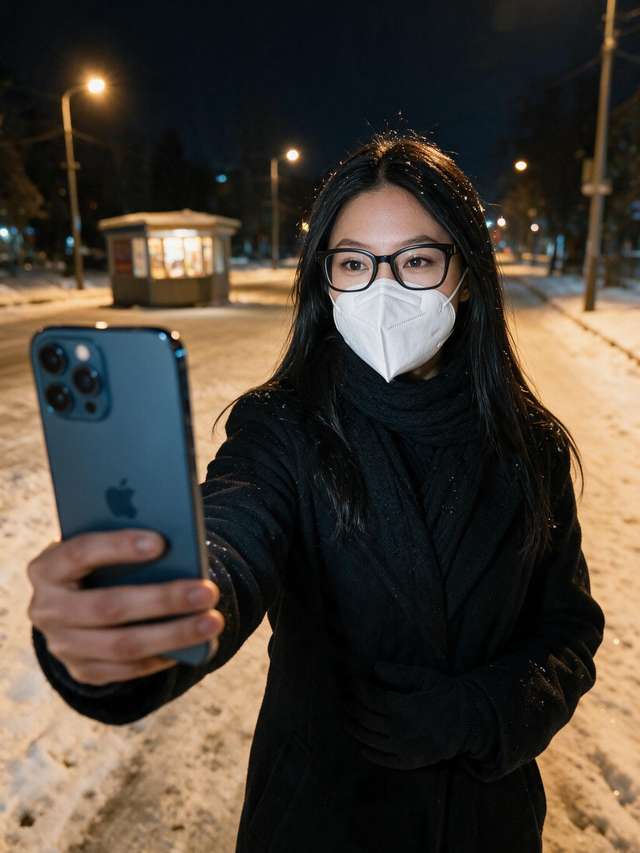
Curfew Light
· An evening walk inside the permitted radius, an FFP2 mask, and night mode pointed at a city holding its breath.
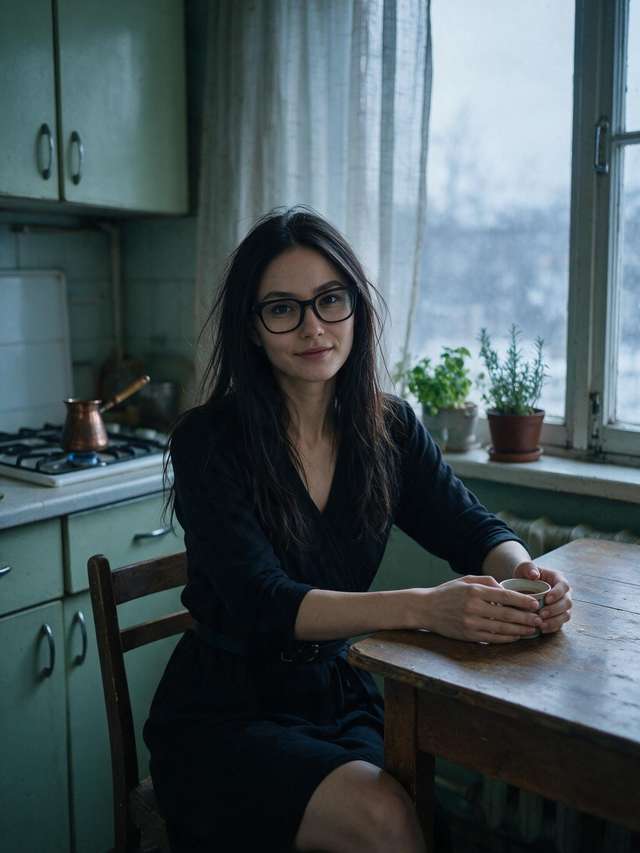
The First Time We Sat in a Room Again
· Nearly a year on: tea with Aigerim and Dinara, masks half-managed, gratitude braided with a wariness that will not simply switch off.
2020

A Phone That Sees in the Dark
· Midwinter, a masked courier, and a pacific-blue extravagance I spent a full afternoon justifying to myself.
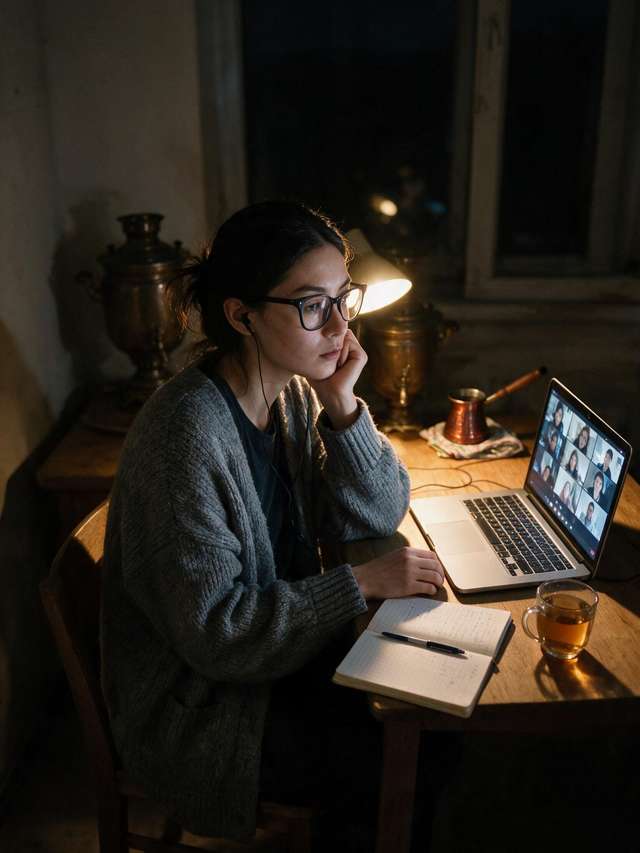
The Quarter From the Kitchen
· An autumn quarter attended from a kitchen table thirteen hours out of step, and the particular shame of losing the middle of a sentence to a stuttering line.

The Middle of It
· High summer indoors, closed banyas, thin video calls, and the flat stretch where writing is the only thing that still has edges.

Plov for One
· Cafés shut, pot too small, cumin instead of sourdough: teaching myself plov in the quiet spring of 2020 and eating it for three unrepentant days.

A Notebook Against the Quiet
· The city went quiet, the phone stopped being enough, and a plain notebook became the only room built to hold a whole thought.

The Week the City Went Quiet
· A state of emergency, a last run through Osh bazaar, and the sudden hush that settled over Bishkek almost overnight.
The first years of this lived somewhere else, on a friends-locked ЖЖ read by about eleven people. It has moved house twice since. First to a blog of my own on a cheap host, which is when I turned the Russian into English and why 2020 sounds like it was written by the person typing this. It was not. Then, years later, to this address. Some entries did not come across at all, either because the comments underneath them were not mine to move, or because I reread them and decided against. A few arrived without their pictures.
I spent years reading files about women who built computers and flew missions. The files kept their diplomas and cropped out their bodies. My whole work is putting the body back into the record. I will not cut it out of my own. The coat is for the weather. The lace is on purpose. Nobody frames me but me.
It is quite possibly the most boring life being written down on the internet. I keep it on record anyway, because ordinary is exactly what the official archives never kept. So if you are here regardless, reading about my tulips and my second gear: thank you. I notice, and I do not take it for granted.
Browse by topic
Every topic with at least eight entries has its own page.
One short email when a new book is out or a price changes. Nothing else, and no forwarding to anyone.