Machines That Remembered for Us
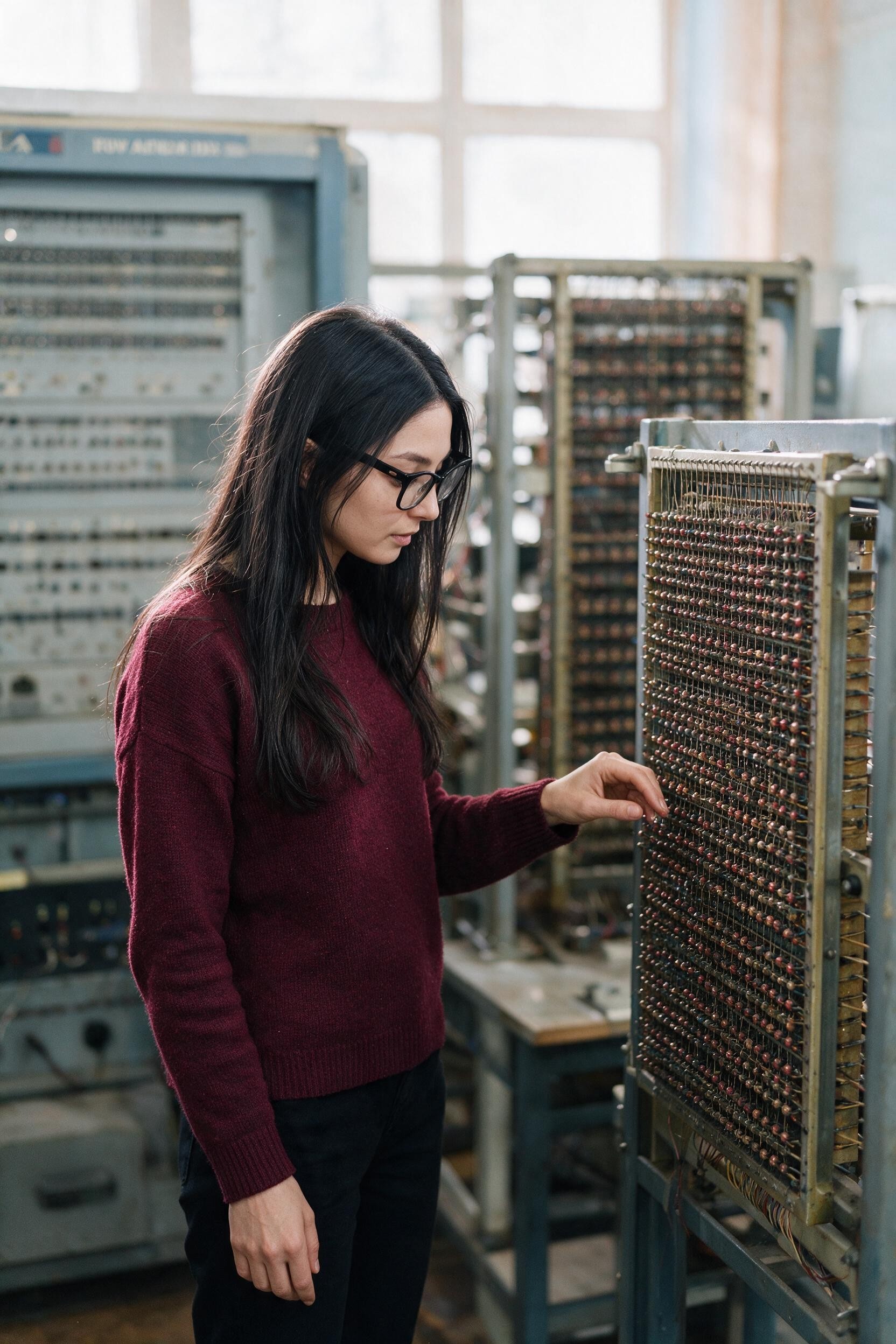 ←→
←→The Polytechnic computing museum does not announce itself with drama. You walk in out of ordinary Kyiv light and find cabinets of iron and glass that once held whole departments of calculation, rooms where arithmetic was a collective act.
I went early, before the school groups, and stood a long time in front of machines whose names I had already written into fiction years ago. This time I was not hunting for a scene. I was hunting for the grain of the real thing: the hum that is no longer there, the labels in careful Cyrillic, the sense of how much human patience lived inside the hardware.
Ternary Dreams is finished and out of my hands, which is not the same as being out in the world. Returning to its historical roots feels strangely unburdened. I no longer need a plot to justify the hours with catalogs and oral histories. I can simply ask what these rooms meant to the women who ran them, who debugged at night and whose names rarely made the commemorative plaques. The novel used that silence as pressure. The essay I am shaping now wants the silence as subject.
I took pages of notes I will never dramatize: voltage tolerances, shift schedules, the particular smell of warm insulation that a docent mentioned in passing. Research after the last proof is a different craft. You are not stealing fire for the story. You are trying, at last, to set the record a little straighter, or at least to admit how crooked it still is. By noon the museum had filled with teenagers on phones. I left with ink on my fingers and the old ternary logic still ticking somewhere behind my eyes.

One short email when a new book is out or a price changes. Nothing else, and no forwarding to anyone.