The Camera That Outlived a Newsroom
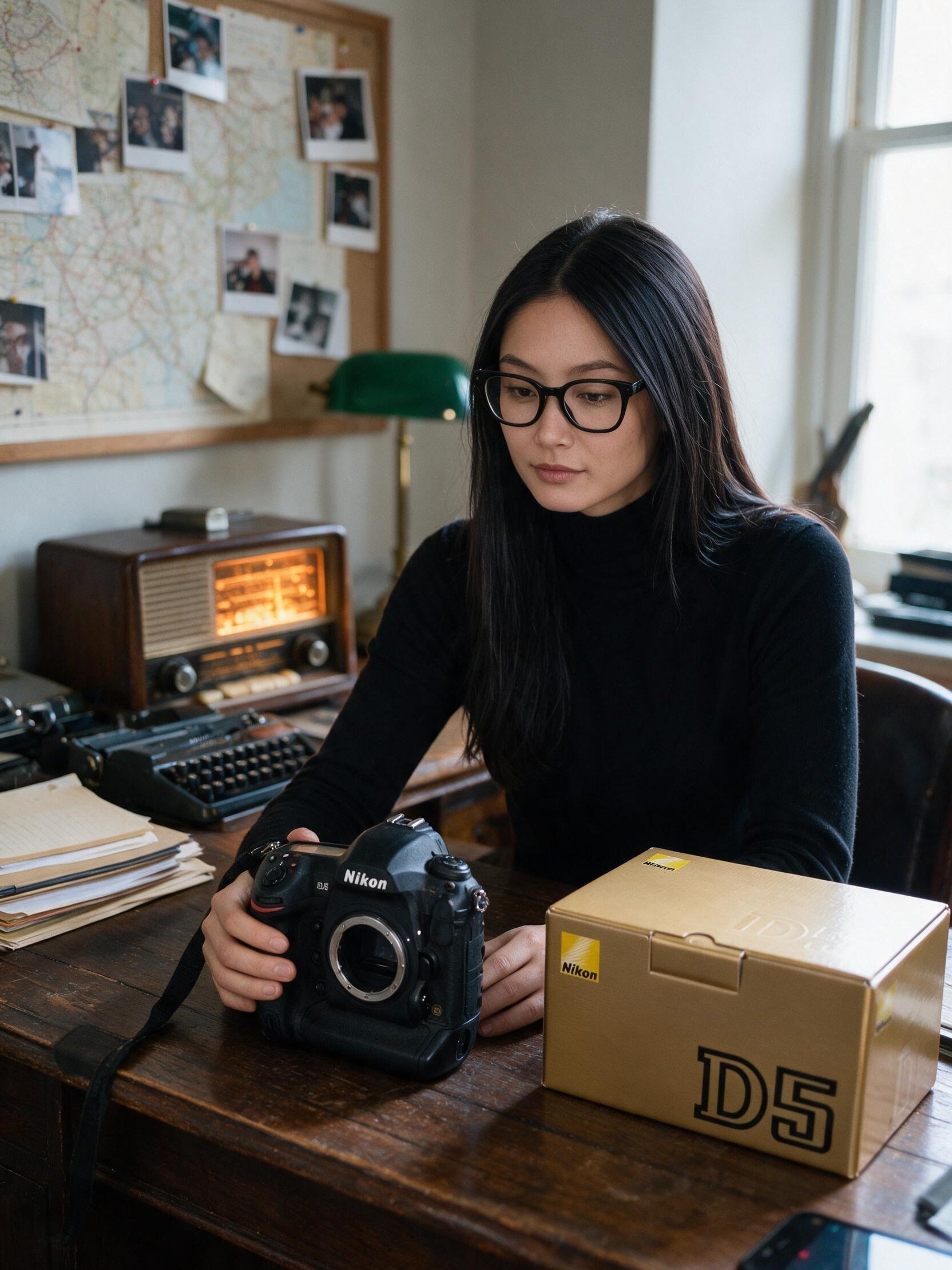 ←→
←→I had outgrown the phone for the kind of looking my work now asked of me. A photojournalist retiring after thirty years agreed to sell me his Nikon D5, a heavy professional body that sat in the hands like a fact. We met at his flat; his wife brought tea and then left us to the business of transfer.
He spent an hour telling me what thirty years had looked like through his viewfinders, elections, floods, funerals, two revolutions, and then, more quietly, what this last body of his had actually been present for since he bought it: the October crowds of 2020, the empty pandemic streets, a thousand ordinary assignments that turned into history only afterward. I stopped thinking of it as a tool and started thinking of it as an archive I was somehow being allowed to carry forward.
He had kept the golden Nikon box all these years. His wife wanted the shelf space back, he said, not unkindly, and patted the cardboard as if apologising to it. Inside, the cut foam still held the shape of the body. The camera itself was scuffed at the corners in the precise way of things that worked for a living, black paint worn to a softer graphite where straps and bags had rubbed.
I paid what we had agreed and rode home with the weight of it in my bag, conscious of every curb. On the kitchen table it looked almost military beside the samovar. I did not take a picture that first evening. I only charged the battery and ran a thumb along the worn corners, trying to hear his decades and its few loud years without inventing either.


One short email when a new book is out or a price changes. Nothing else, and no forwarding to anyone.