Kukuruznik
 ←→
←→I flew into Dnipro on a ticket that cost less than the taxi from the airport, and took a slow local train the last stretch south, into a city that makes engines. That was the reason for the trip. I have been reading about Soviet industry the way other people read novels, and this is where a great many of the engines came from: the radials that hung on the noses of aircraft across a continent, built in one plant, fitted to airframes designed a thousand kilometres away. I wanted to stand where the noisy end of that history actually lives.
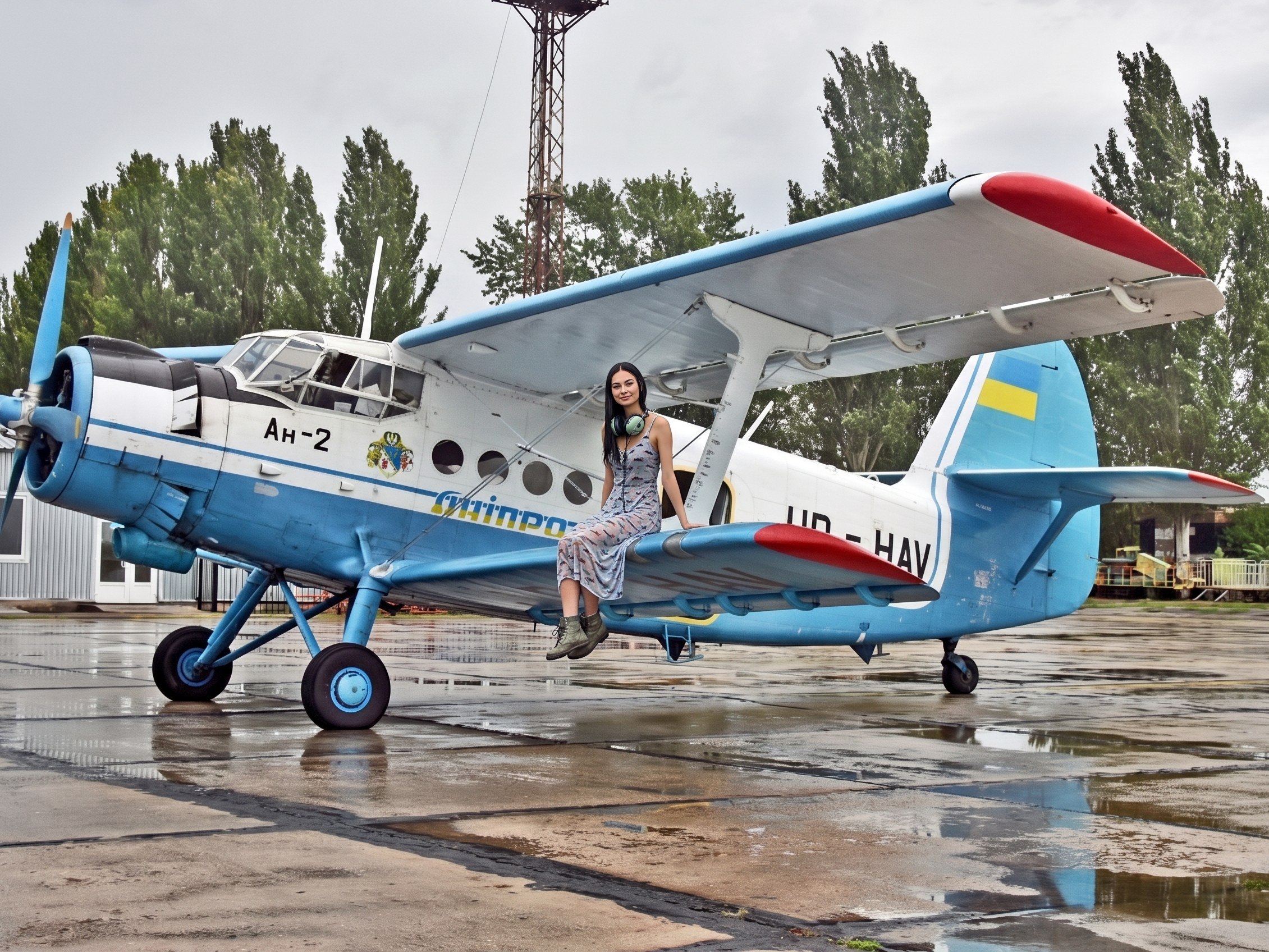
What I did not plan on was the aeroplane. It was parked on the apron in white and blue with red wingtips, a biplane, which in this century is a sentence that needs explaining. The Antonov An-2 stayed in production for more than half a century, which in aviation is close to unheard of. It was designed for collective farms: to dust crops, to carry a dozen people or a dozen sacks, to get off a field in a few hundred metres and land back on the same field. Everyone here calls it the kukuruznik, the maize duster, with the affection reserved for machines that never had the decency to become obsolete.
Up close it is enormous and completely unembarrassed. Nine cylinders in a ring at the front, a propeller I could not have got my arms around, struts and bracing wires and a fabric-covered wing you can put your hand flat against and feel drum. The undercarriage is tall and splayed like something built to be dropped rather than landed. Nothing about it is streamlined. Everything about it works.
A man in overalls who had been doing something patient to the tail let me sit up on the lower wing, having first pointed out exactly where I was allowed to put my weight, and then lent me his headset because I said I wanted to know what the crew hears. Green ear cups, a padded band gone shiny, a coiled cable. On the ground it does nothing but make the world quieter and smell faintly of somebody else's working day. I sat there longer than the photograph needed.
“This one will outlast me,” he told me, and said it the way you say a thing you have decided to believe. I wrote it down without checking it, which is not like me, and I have decided to leave it unchecked.
The train back was slow and the afternoon had gone grey and wet. Somewhere around the second hour I made a list of everything on that airframe that had no aerodynamic purpose and was there anyway, because somebody in 1947 thought a machine ought to be repairable in a field by a man with two spanners. It is the longest list in that notebook.


One short email when a new book is out or a price changes. Nothing else, and no forwarding to anyone.