ДС-158
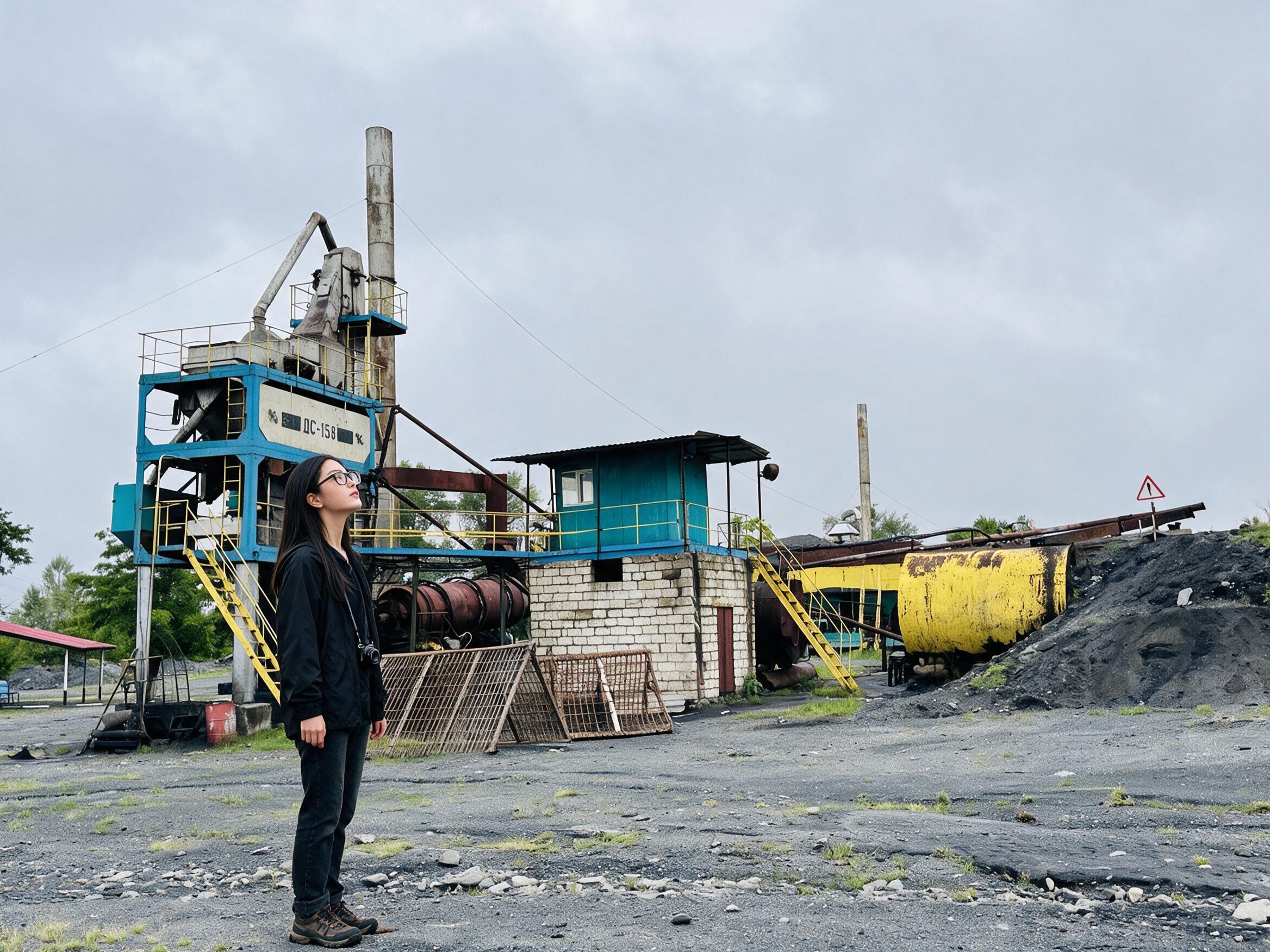 ←→
←→Beside the road north stands a dead asphalt plant, blue steel, rusted silo, the type designation ДС-158 still stenciled where the paint has held, a machine introducing itself politely from the afterlife. I stopped, of course. Regular readers know that abandoned industry is my roadside religion, and this one had its name tag on.
The gravel apron had no fence, no gate and nobody to ask, which is how most of my best afternoons begin. I copied the stencil into the notebook letter by letter, then stepped out the distance from the silo to the control cabin. A man stopped his pickup to ask whether I had broken down. He left the engine running, asked once, and waited for the whole answer, which was the trouble. I said I was fine, twice, and started the pacing over. A factory comparison sheet gave me the rest that evening: 56 tons an hour, a batch of 750 kilograms, 45 seconds of mixing.
The DS-158 mixed the roads of a whole district once; the roads outlived the plant, which is either irony or exactly the plan, depending on your economics. I walked the gravel yard with the camera, cataloguing conveyor angles and the turquoise control cabin where somebody's thermos once steamed against exactly this kind of grey sky. I photograph these plants the way other travelers photograph churches, and the comparison is not flippant: infrastructure is the region's confession of what it believed in. This one believed in roads. I drove on, on its product, which felt like the correct salute.



One short email when a new book is out or a price changes. Nothing else, and no forwarding to anyone.