A diary in code
 ←→
←→The heart of the new work, as it stands, is almost embarrassingly simple. A grandmother’s diaries, kept not in a locked drawer but in a code built from balanced ternary. Not metaphor. Actual encoding: symbols that can hold that third state, pages that look like nonsense until you understand the base they stand on. I wanted privacy that felt of its era and its intelligence, not a modern lock dropped into the past for convenience.
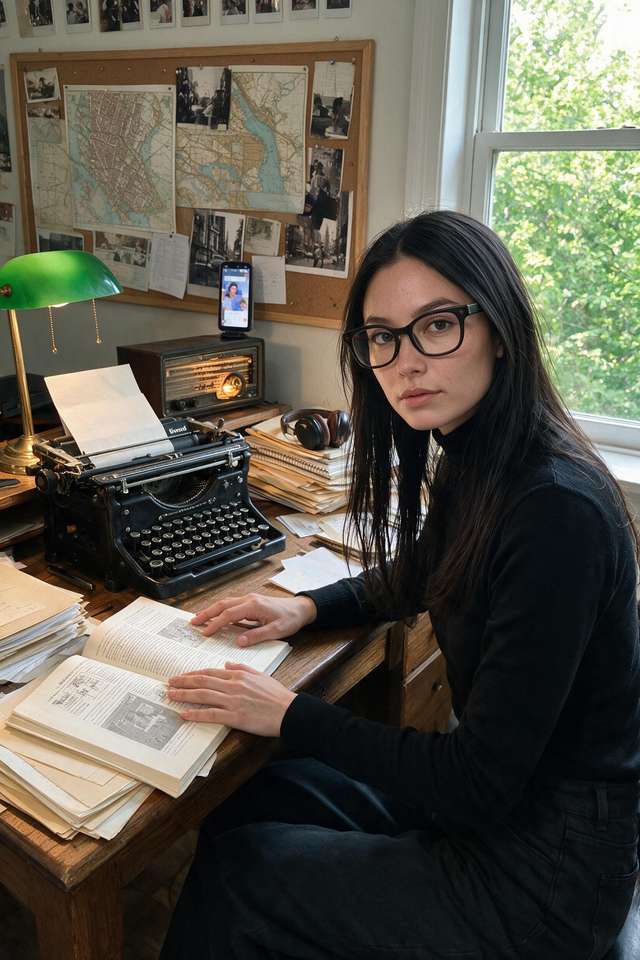
What it looks like in practice is slow and slightly absurd. I sit at the desk with a pencil, March putting down more snow than March has any business putting down, and convert fragments by hand before I trust any conversion to a screen. You feel the difference in your wrist. Binary is a snapped decision. Ternary asks you to hesitate, to leave a value unsettled on purpose. Encoding a sentence about an ordinary afternoon becomes a small act of resistance against the idea that everything must resolve. Decoding it later is like listening for a station that only comes in at night.
The real machine behind the impulse is Setun, the balanced ternary computer designed under Nikolai Brusentsov, the only one of its kind produced serially in the USSR. I am careful not to claim more than that bare fact allows. I do not need the full legend. I need the existence proof: that someone built a working argument for a third state and put it into the world, however briefly, however much the later consensus preferred to forget the experiment.
So the diaries will borrow that permission. A woman writing her life in a logic the wider record did not favor. Whether the novel can carry the weight of that device is the work ahead. For the moment I am only learning how a private day feels when you refuse to let it collapse into yes or no.

One short email when a new book is out or a price changes. Nothing else, and no forwarding to anyone.