Vladimir Kotelnikov
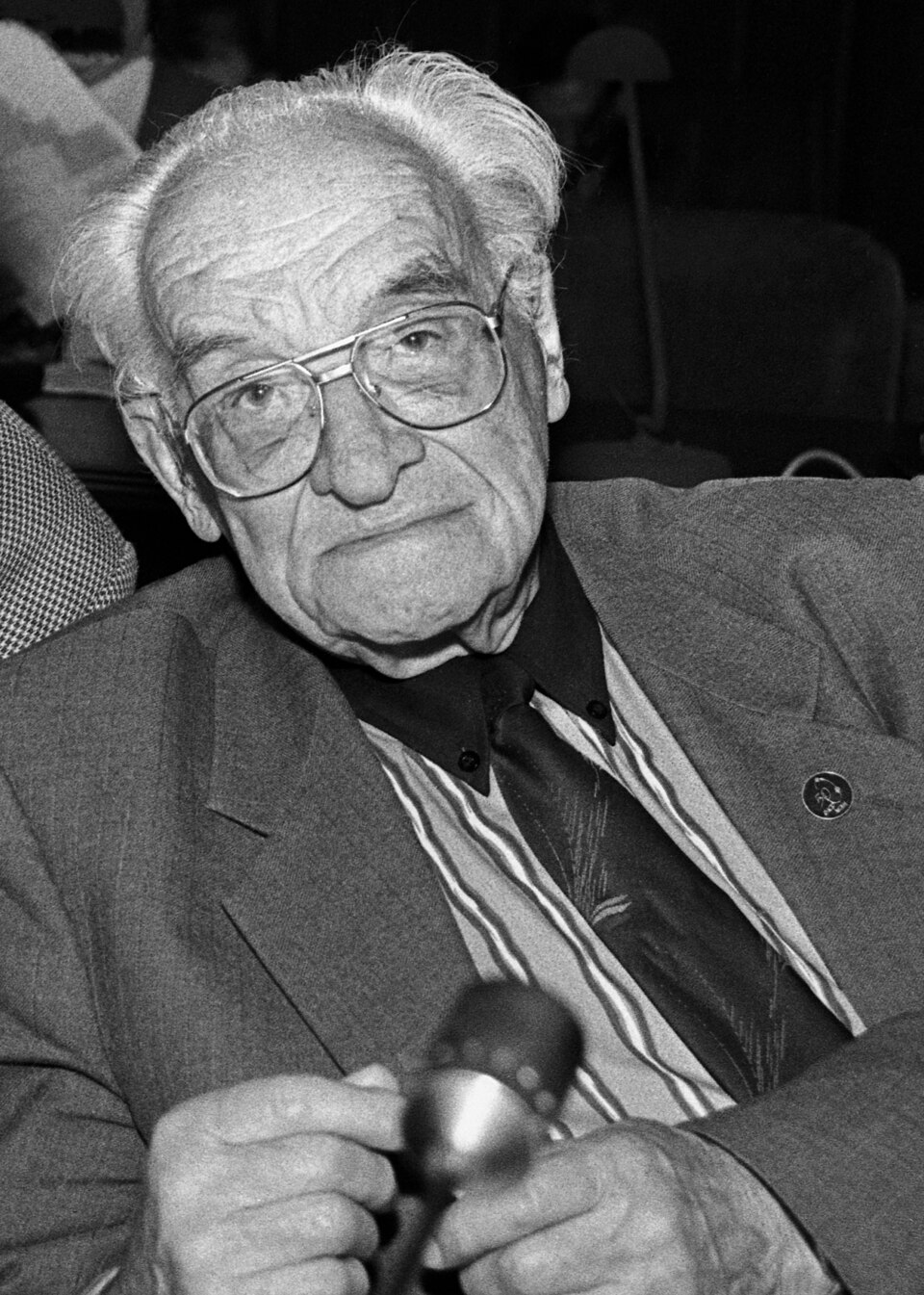
Soviet information theorist; independent proof of the one-time pad
Timeline - Kotelnikov in the record
5 referenced events from the UVB-76 - The Buzzer archive.
Vladimir Aleksandrovich Kotelnikov is born in Kazan into a family of scholars. He becomes one of the Soviet Union's leading radio and information scientists.
Kotelnikov publishes the sampling theorem, first presented in a 1932 report, in an engineering context, the rule that tells you how often you must measure a signal to reconstruct it perfectly. It underlies all digital transmission of voice and data.
In a wartime report conventionally dated to 1941 though no verified source confirms the year, Kotelnikov proves the perfect secrecy of the one-time pad, independently of Shannon. The proof reportedly remains classified. Two men on opposite sides of an emerging Iron Curtain reach the same conclusion.
Kotelnikov leads Soviet radar ranging of Venus from 1961 to 1964, and later the radar mapping of the planet in 1983 and 1984, bouncing radio pulses off another planet and reading the faint echo, a triumph of the same signal-in-noise science that underlies both radar and the decoding of a distant numbers station.
Kotelnikov dies in Moscow at 96, honoured as a founder of Soviet radio science, radar astronomy and information theory, the East's answer to Shannon.
The research file for this dossier holds 6 verified source entries, 6 of them distinct works. The sources page lists every one of them with what it covers, how it was reached, and the sharpest point at which this page and its sources come apart.