Bion Space Monkeys
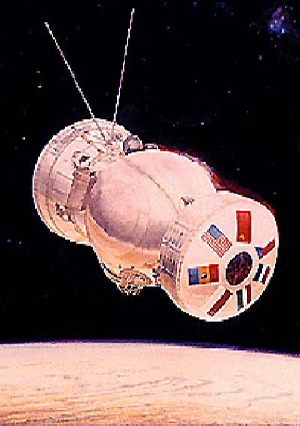
Sukhumi's rhesus 'cosmonauts'
Bion Space Monkeys in the timeline
The first monkeys arrive at the new primate station on the Black Sea coast of Abkhazia. Of some fifteen apes shipped, only two baboons and two chimpanzees survive, the nucleus of the world's oldest medical primate centre.
Germany invades the USSR. The Sukhumi monkeys are evacuated; Soviet biomedicine is thrown into the service of survival, and penicillin is tested on the station's apes.
The Sukhumi station opens a radiobiology programme on monkeys whose findings will lower accepted human radiation-safety limits, of grim relevance after Chernobyl.
The first artificial satellite stuns the West and launches the space race. Soon the Sukhumi station will train monkeys to ride Soviet spacecraft.
The primate station begins training monkeys for spaceflight, supplying the rhesus 'cosmonauts' who will ride the Bion satellites into orbit.
The rhesus macaques Abrek and Bion, trained at Sukhumi, orbit the Earth aboard a Bion satellite and return alive, the first Soviet monkeys in space.
As Georgian and Abkhaz forces fight over Sukhumi, monkeys are shot in their cages or turned loose to starve. Of some 7,000 animals, only around 300 survive; the institute splits and relocates to Russia.