MESM
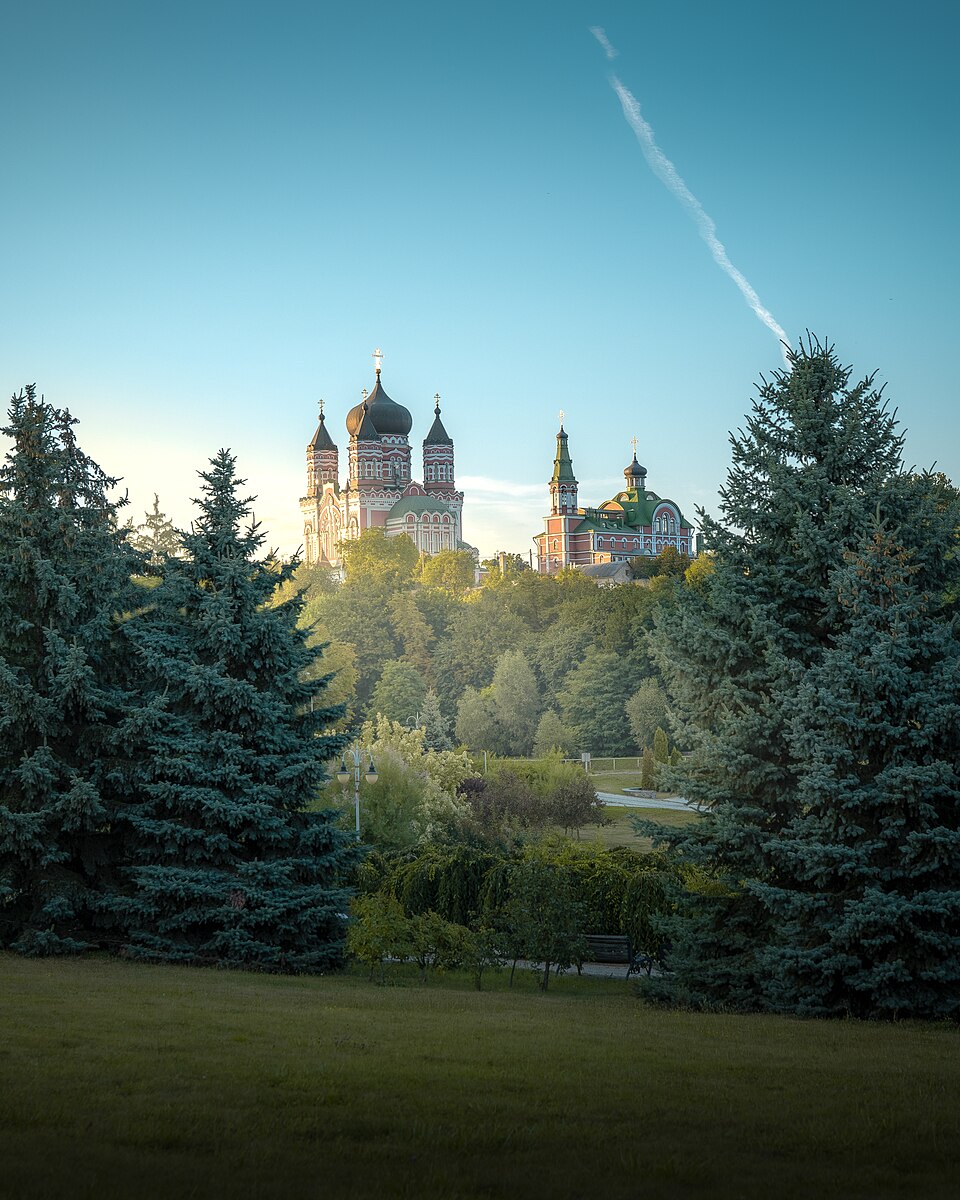
First stored-program electronic computer in continental Europe
MESM in the timeline
Konrad Zuse completes the electromechanical Z3 in Berlin. His later Z4 is among the electromechanical predecessors that complicate the MESM's claim to be 'Europe's first computer'.
With about 12 engineers and 15 technicians, several of them women, Lebedev builds continental Europe's first stored-program electronic computer. Night shifts run until 3-4 a.m.; the 6,000 glowing tubes turn the room 'tropical' so the ceiling is torn open; lunch breaks mean volleyball with the comedians Tarapunka and Shtepsel.
In spring she defends her candidate dissertation and enters Lebedev's laboratory, becoming, alongside Lev Dashevsky, one of his two principal collaborators on the MESM.
Shkabara leads the development and debugging of the MESM's control unit and the control system of its magnetic drum memory, while serving as party organizer of the lab, organizing a collective that 'worked titanically without regard to the clock' in the half-ruined monastery, alongside engineers Gladysh, Abalyshnikova, Zorina-Rapota and Okulova.
In late 1948 Sergei Lebedev's team of about 20 starts building the MESM in a war-damaged monastery in Feofaniya near Kiev, rebuilding the building themselves, chopping wood for heat, working round-the-clock shifts, many living above the lab. Lebedev scribbles ideas on cigarette packs at his favorite tree stump.
The USSR breaks the American nuclear monopoly. From 1952 the MESM performs secret calculations for rockets and nuclear weapons.
After graduating from the Ivanovo Energy Institute, where his diploma work used Lebedev's published stability data, he is accepted at the Institute of Electrotechnics in Kyiv, with Lebedev tuning his thesis toward magnetic elements for more reliable MESM/BESM-era machines.
The MESM executes a program for the first time in a public trial run. Built from cheap mass-produced radio tubes run at reduced load to stretch their lifespan tenfold, the machine performs about 3,000 operations per minute on 60 square meters.
The MESM executes its first test program (the calculation 2x2); on 4 January 1951 the first real computations follow. Some 6,000 tubes, 25 kW, about 50 operations per second, built by roughly 27 people, versus more than 200 for ENIAC.
She meets her future husband, mathematics graduate Oleksiy Yushchenko, seconded to her laboratory to write programs for the MESM. Together they work on ballistic and rocket calculations under academicians Keldysh and Lyapunov.
Isaak Bruk's team finishes the M-1 almost simultaneously with the MESM; the two teams knew nothing of each other due to secrecy. Bruk used captured German parts; Tamara Aleksandridi designed the CRT memory. Legend has it that Bruk, who distrusted women, hired her only because he mistook 'Aleksandridi' for a man's name.
Built in a semi-basement lab on Kaluzhskaya Street from German war-trophy parts, the M-1 begins trial operation almost simultaneously with Lebedev's MESM in Kiev; neither team knew of the other. Thanks to captured cuprox rectifiers it needs only 730 vacuum tubes and 15 square meters, making it the first machine in the world with all logic circuits on semicon
The MESM passes official state testing and enters regular service under a commission led by Keldysh. Team member Pogrebinsky recalled: 'You will be amazed, but there was no incredible excitement. We simply did not realize the event was epochal.'
The commission under Mstislav Keldysh accepts the MESM, the first stored-program electronic computer in continental Europe. From 1952 it performs secret calculations for rockets and nuclear weapons, running until 1957.
She becomes one of the USSR's very first programmers, at times the only woman in the MESM core. The machine has just 126 program cells and 62 data cells, works only in fixed point, and never runs by day because of voltage fluctuations: constraints that force ingenious tricks and spark her drive to automate programming. The family lives in a single room in th
The monograph 'The Small Electronic Calculating Machine (MESM)', written by Lebedev as early as 1949, appears. The team had been nominated for the Stalin Prize but came away empty-handed, the submission rejected 'without explanation' under decades of secrecy.
At the end of the year the family moves to Feofania, where the MESM stands in the former monastery, into half a peasant hut with a stove and an outdoor toilet. She rises first and goes to bed last: cutlets fried at 6 a.m., then calculations at the desk lamp; a colleague remembered her reading a dissertation 'while frying blini'.
On her own initiative she develops a translator that automatically generates machine code from a formula, an early step toward compilers, born of the MESM's brutal constraints.
This object is named in 6 verified source entries across 3 dossiers of this book. The entries sit with the people who built or used it, which is where the research recorded them.