M-13
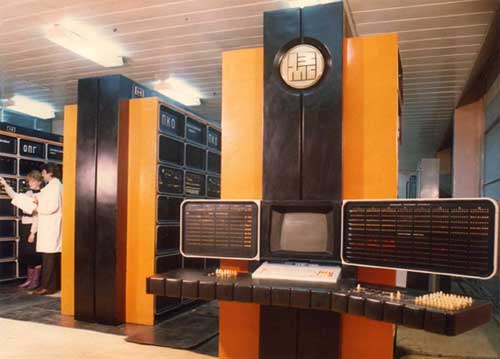
Fourth-generation multiprocessor for real-time radar processing, up to 2.4 billion ops/s
M-13 in the timeline
Built on large-scale integrated circuits, the M-13 included a signal-processing unit rated at up to 2 billion operations per second, a first in Soviet practice.
Mikhail Kartsev, builder of the M-4/M-10/M-13 early-warning computers, dies; forcing his machines into serial production had wrecked his health, and the second time he did not survive it. His institute is named after him only ten years later.
His heart, already scarred by a massive infarction, failed under the strain of the final months. Series production of the M-13 began in 1984 without him; ten years after his death NIIVK was given his name.
Series production of Kartsev's fourth-generation multiprocessor M-13 begins at the Zagorsk Electromechanical Plant, two years late and a year after its chief designer's death. Its specialized vector signal-processing section reaches an equivalent 2.4 billion operations per second.
In the USSR's final year, a complex of six M-13 machines passes state trials and goes on continuous round-the-clock real-time duty. Production ends in 1992 after eighteen sets, the close of the real-time computer line Kartsev began with the M-4 in 1957.
This object is named in 2 verified source entries across 1 dossier of this book. The entries sit with the people who built or used it, which is where the research recorded them.