Soyuz
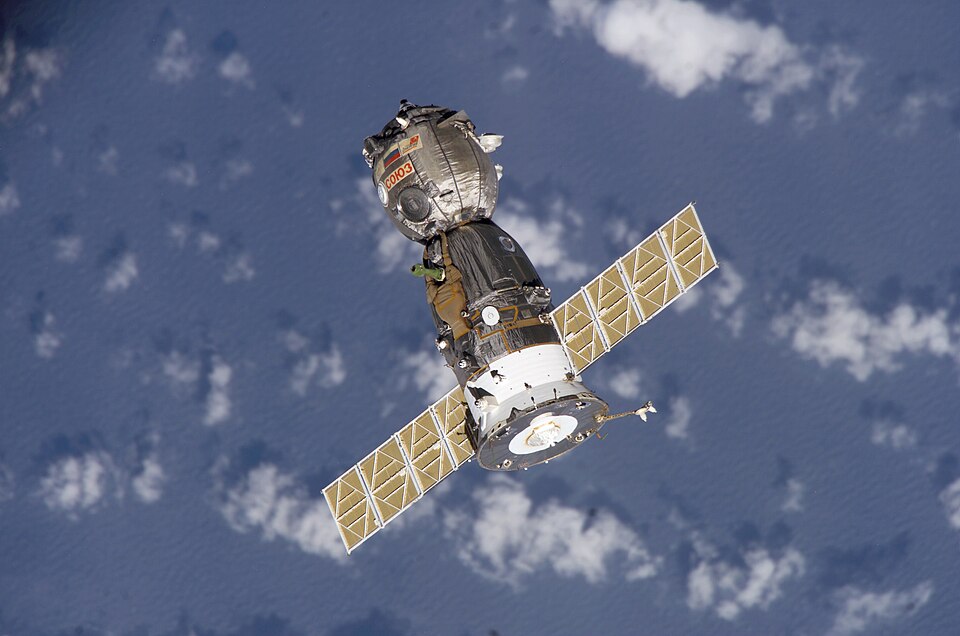
The workhorse crew ferry, flying since 1967
Soyuz in the timeline
Appointed chief designer of long-range ballistic missiles, Korolev builds the bureau (OKB-1, later Energia) in Kaliningrad near Moscow that will produce Sputnik, Vostok and Soyuz.
From 1951 Chertok leads control-systems design for Sputnik, Vostok, Soyuz and the stations, at the technical heart of every mission.
The R-7 Semyorka, the world's first intercontinental ballistic missile, makes its maiden flight. Its descendants (Vostok, Voskhod, Soyuz) will fly for seventy years.
At Korolev's bureau, Feoktistov is a lead designer of the Vostok capsule that carries Gagarin, and then of Voskhod and Soyuz, the engineer who drew the ships. The year he moved onto the Vostok work is not established by the research behind this archive.
Vladimir Komarov dies when Soyuz 1's parachute fails to deploy, the first in-flight fatality of any space programme. The rushed, half-tested spacecraft becomes a warning the engineers had raised in vain.
Gagarin serves as backup to his friend Komarov on Soyuz 1 and reportedly argues that the spacecraft is not ready. Komarov flies and dies.
Two Soyuz dock and two cosmonauts spacewalk from one to the other, the techniques (rendezvous, docking, transfer) that make a permanent station possible.
Returning from three weeks aboard Salyut 1, the crew of Dobrovolsky, Volkov and Patsayev die when a valve opens during reentry and depressurises the cabin. They are found dead in their seats, the only humans to die in space. Pressure suits are made mandatory forever after.
The deaths of the Soyuz 11 crew end Kamanin's career; he retires from the cosmonaut directorate in August 1971.
Leonov and Stafford shake hands through a joined hatch: détente made visible. It is the first international crewed docking, a dress rehearsal for the partnerships of the 1990s.
Commanding the Soviet side, Leonov shakes hands with Tom Stafford through the joined hatch, the symbol of détente and the template for the international stations to come.
Savitskaya flies to Salyut 7 aboard Soyuz T-7, pointedly ahead of the first American woman in space. By the often repeated story, her male crewmates offer her an apron and she declines.
A planned all-female Soyuz mission that Savitskaya would command is cancelled; no source in this archive gives a reason. She leaves active cosmonaut service in October 1993 and enters the Duma in December 1995.
After 437 days Polyakov insists on walking the few steps from the Soyuz to a chair, a deliberate demonstration that a crew could land on Mars and function after the journey.
This object is named in 7 verified source entries across 5 dossiers of this book. The entries sit with the people who built or used it, which is where the research recorded them.